
In short
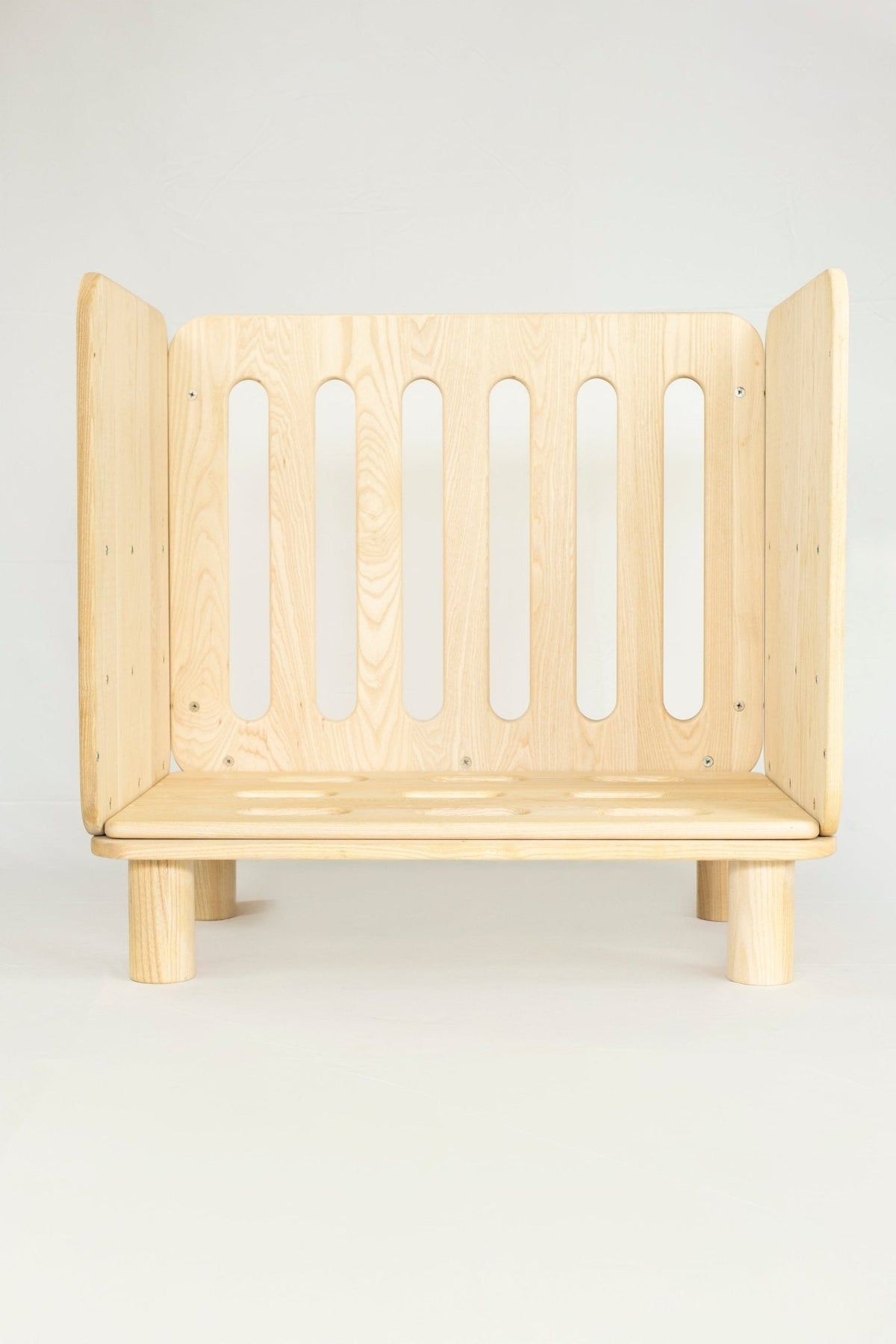
 Kokozi co-sleeping crib
Choosing where your baby sleeps in the first months is one of the most important decisions for families. If you are looking for a wooden co-sleeper crib, you are probably drawn to the visual warmth, the sturdiness of natural materials and the closeness of sleeping next to your baby without taking over the double bed. In this guide we go through the criteria to consider to find the right model for your home and night-time routines.
A co-sleeper crib is a children's sleeping space designed to attach firmly to the parents' bed by temporarily removing one of its sides. This way the baby has their own independent surface while staying within arm's reach.
Choosing solid wood over plastic structures, synthetic textiles or chipboard brings three key qualities:

The market offers different co-sleeping options depending on their time span and degree of versatility:
Safety in children's sleep must prioritise strict compliance with the design and manufacturing standards that apply to children's furniture. When comparing models, check the following details carefully:
Solid wood stands out not only for its aesthetic presence, but also for how it responds to the practical demands of parenting:
Unlike melamine or MDF panels, which use synthetic industrial resins and glues, solid pine is a living, breathable, warm material. This nobility of materials brings visual calm to the space and outstanding mechanical resistance to daily wear.
Moreover, when furniture is conceived under circular economy principles, the wood can be restored, sanded or put back into new cycles of use once the baby stage ends, avoiding the usual fate of ephemeral children's furniture: the storage room or the landfill.

Planning the layout of the bedroom makes night feeds and shared rest much easier:
If you are also setting up the changing area, we explain how to choose a wooden changing table for a dresser. And when your child outgrows the crib, we explain it in low floor bed: when and how to move on from the crib.
At Circulari we design our sleep pieces from solid pine with water-based varnish and local manufacturing in Barcelona. Both options have 3 base heights (19, 34 and 49 cm) and a removable side with a double safety mechanism:
Both models are part of our range of beds and cribs, backed by our circular system with a guaranteed return commitment so your home can evolve at its own pace without piling up unnecessary furniture.
| Nimbi mini crib | Kokozi crib | |
|---|---|---|
| Dimensions (width × depth × height) | 58 × 88 × 78 cm | 68 × 128 × 78 cm |
| Bed base heights | 19 / 34 / 49 cm | 19 / 34 / 49 cm |
| Floor space | 0.51 m² | 0.87 m² |
| Age | 0–1 year | 0–2 years |
To check that it fits next to your bed, measure the free space on that side. You will find the dimensions of the whole range in the kids furniture dimensions chart.
A children's sleeping space that attaches to the parents' bed with one side removed, so the baby sleeps an arm's length away on their own surface.
It offers structural stability, healthier indoor air thanks to water-based varnishes and greater durability than chipboard or MDF.
A reliable anchor to the bed, a side with a double safety system, height adjustment without gaps and finishes free of toxic substances.
Nimbi is a compact mini crib for the first months; Kokozi is a crib for ages 0 to 2 that can be used as an independent closed crib.
Thanks to Circulari's circular system you can return it so it is restored and gets a new life, instead of ending up in the storage room or the landfill.
Choose the ideal co-sleeper crib for your home
Solid wood, water-based varnishes and local manufacturing in Barcelona, made for calm co-sleeping.
See wooden cribs and beds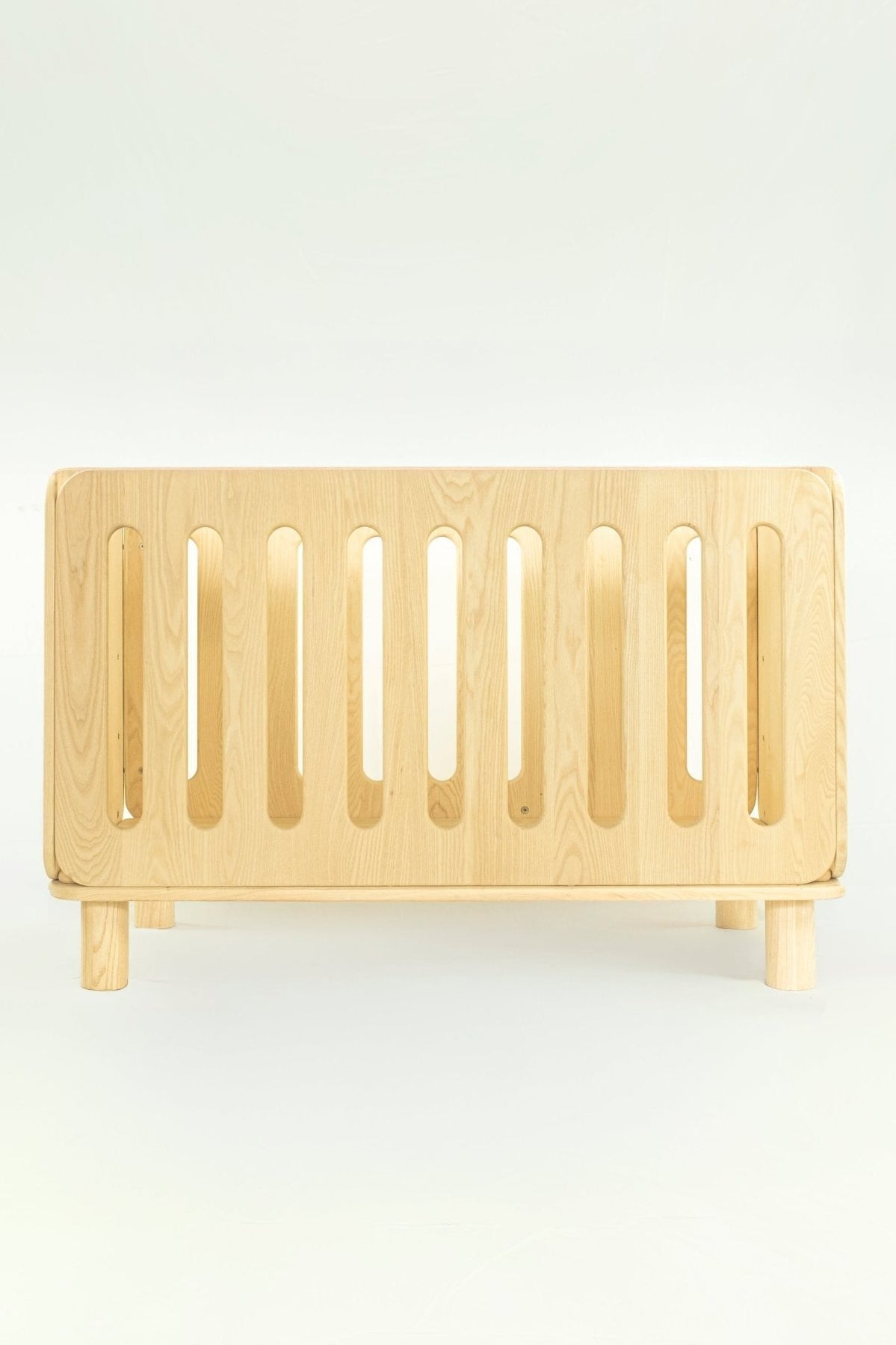
Cuna de madera maciza o cuna IKEA: diferencias y coste real
Read moreabout Cuna de madera maciza o cuna IKEA: diferencias y coste real
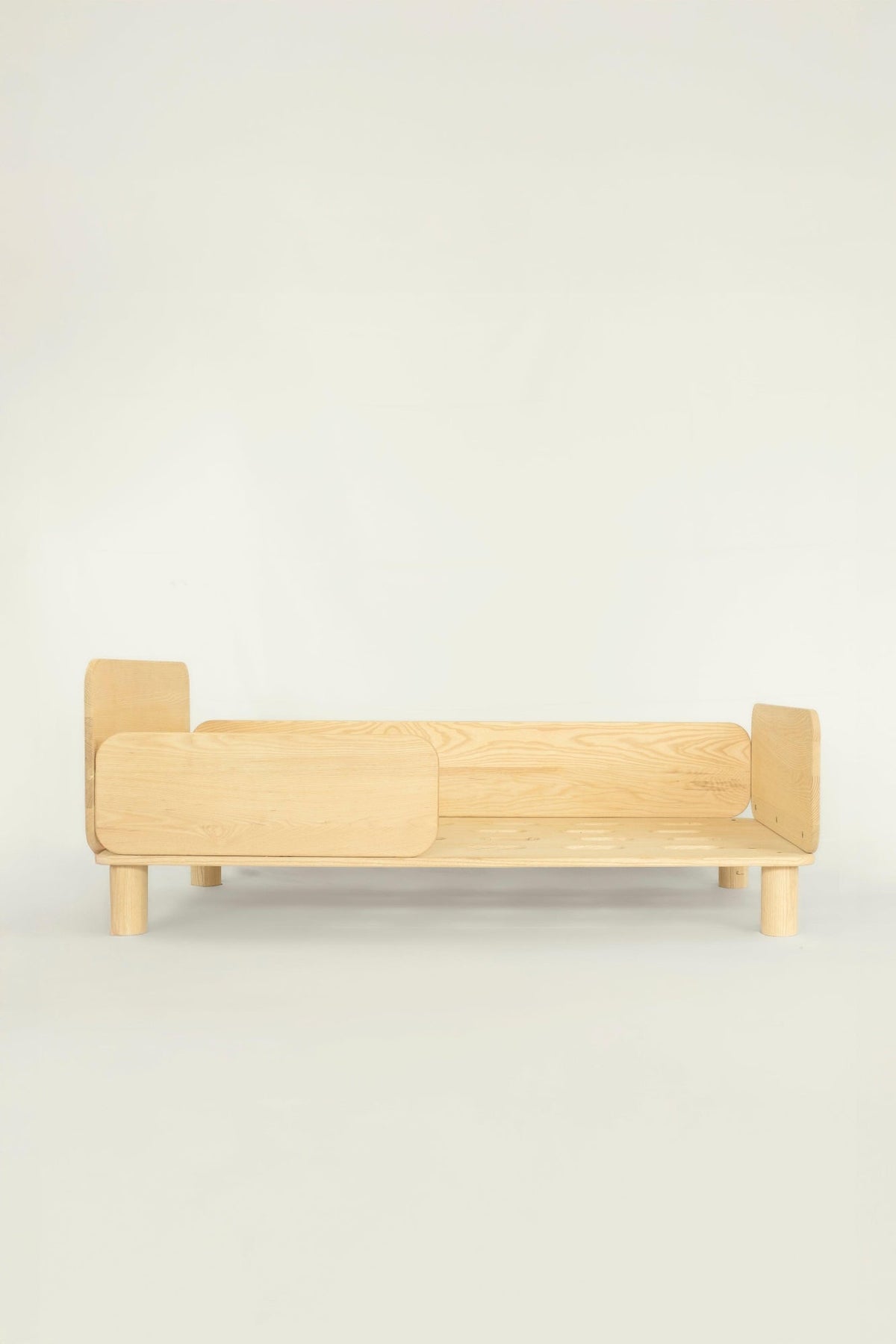
Kids furniture dimensions: chart for the whole range
Dimensions of every Circulari piece in one chart: width, depth and height, bed base, platform or seat height, age and floor space.
Read moreabout Kids furniture dimensions: chart for the whole range
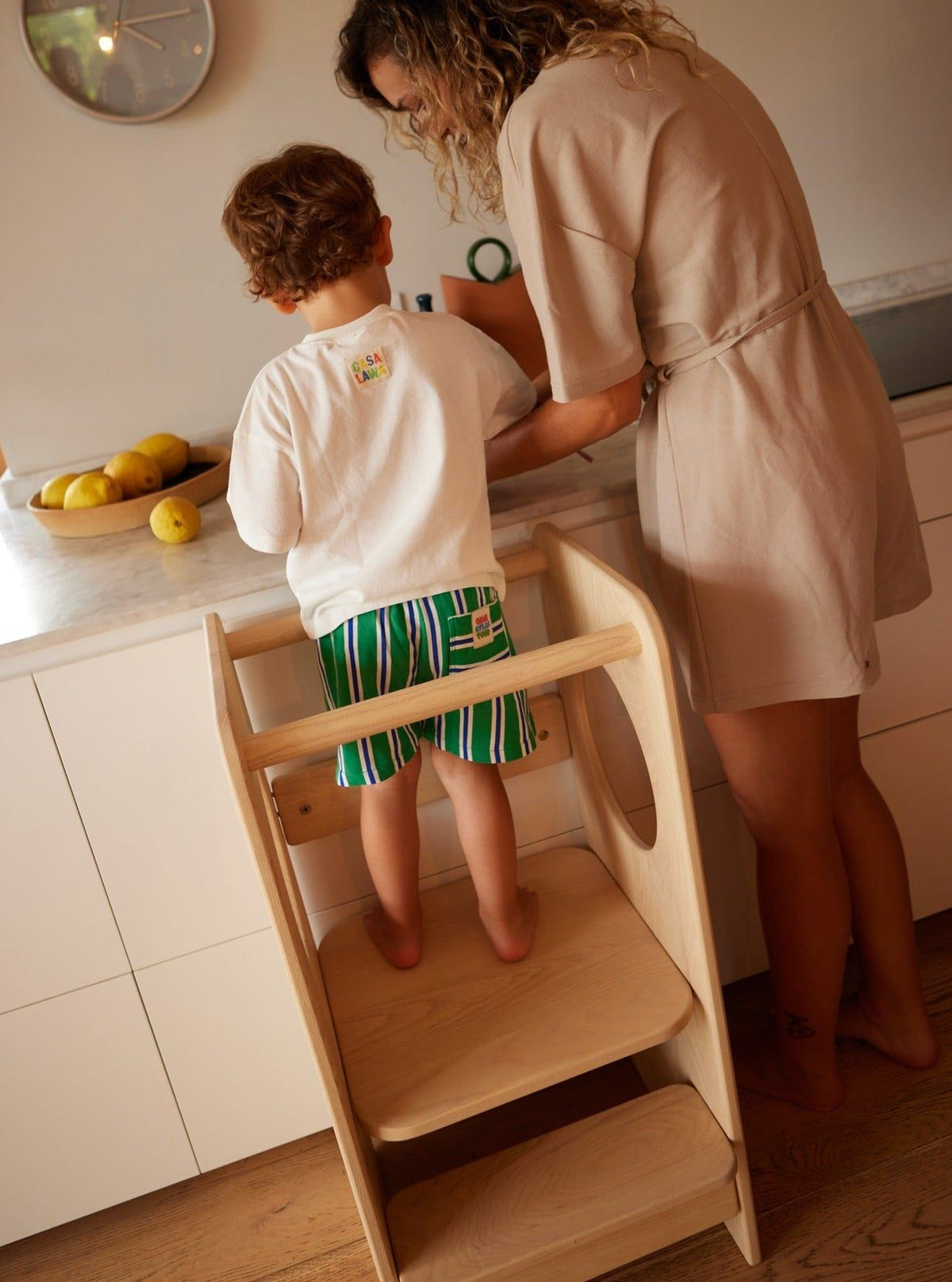
Learning tower or step stool: which to choose by age
Learning tower or step stool: how they differ in height, stability and use, when the Nubia bench is enough and when the Bambai tower is the better choice.
Read moreabout Learning tower or step stool: which to choose by age
Share: