
In short
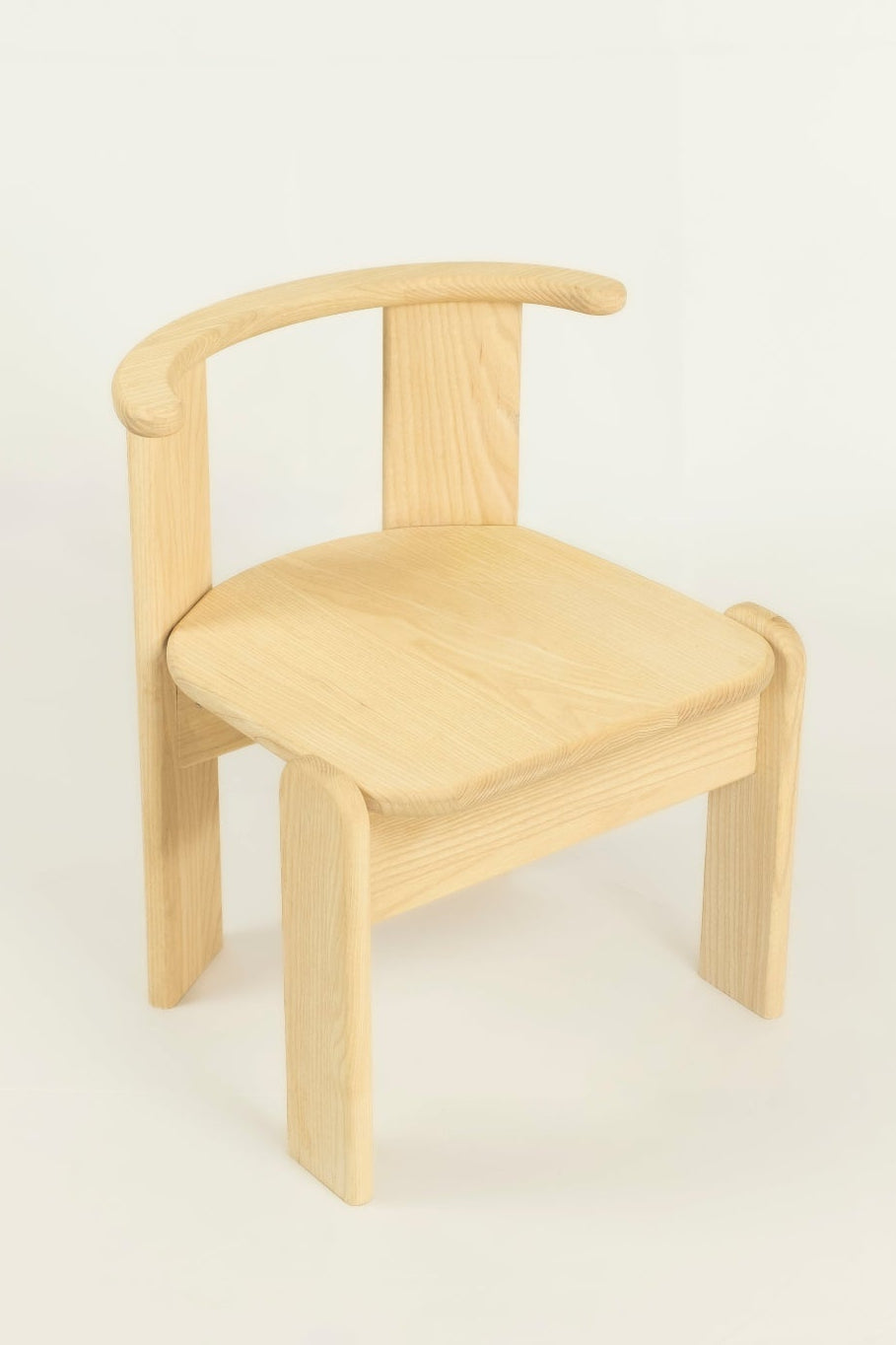
 Alune wraparound chair
Choosing an ergonomic desk chair for a child's room is not just an aesthetic matter. When children start to paint more calmly, leaf through their first books or do daily schoolwork, their body needs support that accompanies their bone and muscle development. Poor posture held for hours causes back tension, premature tiredness and loss of concentration when studying.
Unlike bulky office chairs designed for adults, children's furniture needs real proportions adapted to their body scale. In this article we look at what makes the difference in a kids' study chair, how to encourage correct posture in children and why a solid wooden children's chair offers a firm, calm and lasting base.
During early childhood and the first years of primary school, the child's skeleton is in full process of ossification and growth. Sitting on chairs that are too high, with dangling feet or backrests that push the shoulders forward, forces the body to compensate for the instability by tensing the lumbar and neck muscles.
An ergonomic desk chair designed for their age meets three essential goals:

When looking for furniture in general stores, we often find plastic models with swivel wheels that often become one more toy rather than a space for concentration. To ensure a comfortable, calm study experience, it is worth prioritising certain key elements:
The basic rule of children's ergonomics is the 90-degree rule: hips, knees and elbows should rest at approximately right angles when the child is seated at the work surface.
For ages 3 to 6, a seat height of around 31 cm is ideal to match children's tables and study surfaces at their scale. If the chair is too high and the feet hang in the air, the pelvis tilts backwards, arching the back harmfully. Conversely, a seat that is too low will put the knees above the hips, overloading the sacral area.
You can find solutions designed for these stages in our tables, chairs and desks section, where every measurement matches exactly your children's stage of development.

Having good furniture is the first step, but daily routine also influences postural health. These simple habits help establish healthy postural hygiene from childhood:
Designed specifically for ages 3 to 6, the Alune wraparound chair combines a Mediterranean design with serene lines and careful ergonomics. Its seat at 31 cm high and its characteristic curved backrest wrap around the contour of the body, offering firm lumbar support that invites good sitting without rigidity.
Made in Barcelona from solid pine and treated with toxic-free water-based varnish, Alune brings the sturdiness of four fixed legs, keeping away the distractions that wheeled chairs tend to cause. For those looking for a complete, harmonious corner, the Orian desk pack with Alune chair creates the ideal setting: a desk with built-in shelves, a cork panel and the chair perfectly matched in scale and style.
Moreover, thanks to Circulari's circular economy model, when your child grows and moves past this stage, you can return the pieces to be refurbished, recovering part of their value and avoiding unnecessary waste for the planet.
A chair is ergonomic when it lets both feet rest completely on the floor while the back rests against the backrest, keeping knees and hips at an angle close to 90 degrees, without the edge of the seat cutting off circulation behind the knees.
For early childhood a fixed chair with four support legs is preferable. Wheels add unnecessary mobility that distracts children, reduces stability when resting hands on the table and can encourage unstable postures.
Our solid pine pieces with water-based varnish are easily cleaned with a soft cloth lightly dampened with water. They need no harsh waxes or special chemicals to keep their natural warmth and soft feel.
A seat height of around 31 cm is ideal to match children's tables, so that feet rest on the floor and hips and knees form angles close to 90 degrees.
Thanks to Circulari's circular system you can return the pieces to be refurbished, recovering part of their value and avoiding unnecessary waste.
Design their concentration corner
Create a tidy, ergonomic study space made of local solid wood.
See the desk and chair pack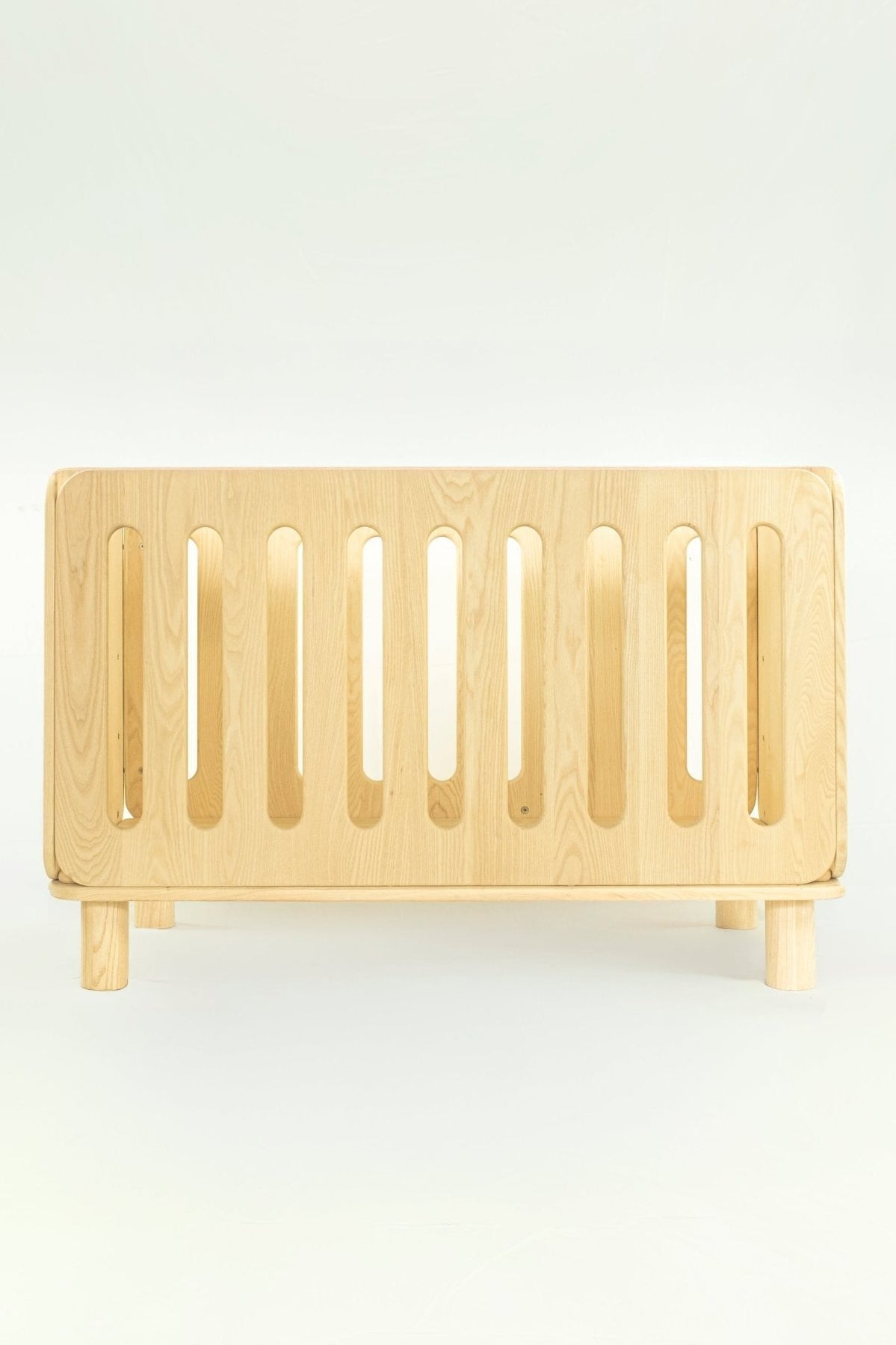
Cuna de madera maciza o cuna IKEA: diferencias y coste real
Read moreabout Cuna de madera maciza o cuna IKEA: diferencias y coste real
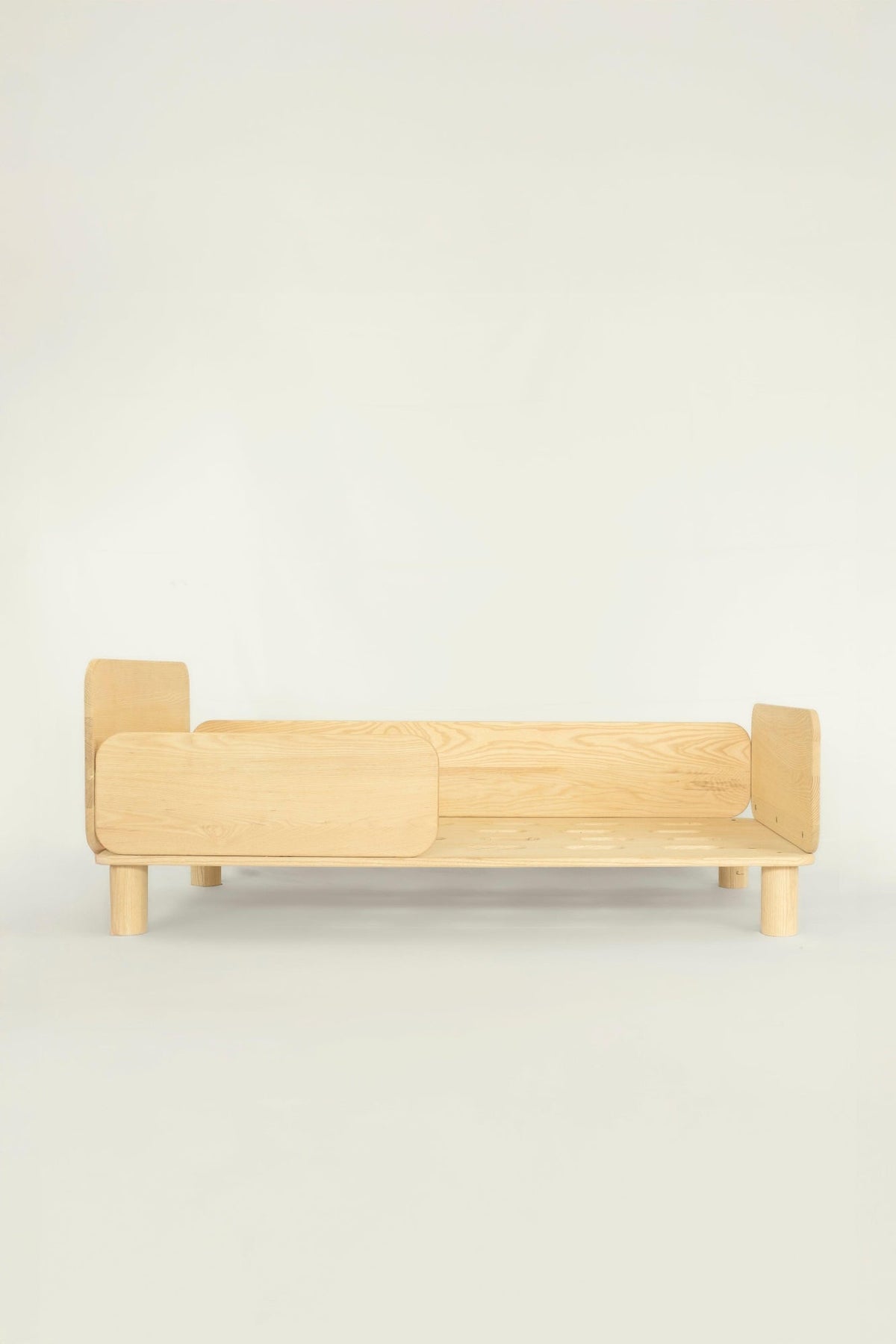
Kids furniture dimensions: chart for the whole range
Dimensions of every Circulari piece in one chart: width, depth and height, bed base, platform or seat height, age and floor space.
Read moreabout Kids furniture dimensions: chart for the whole range
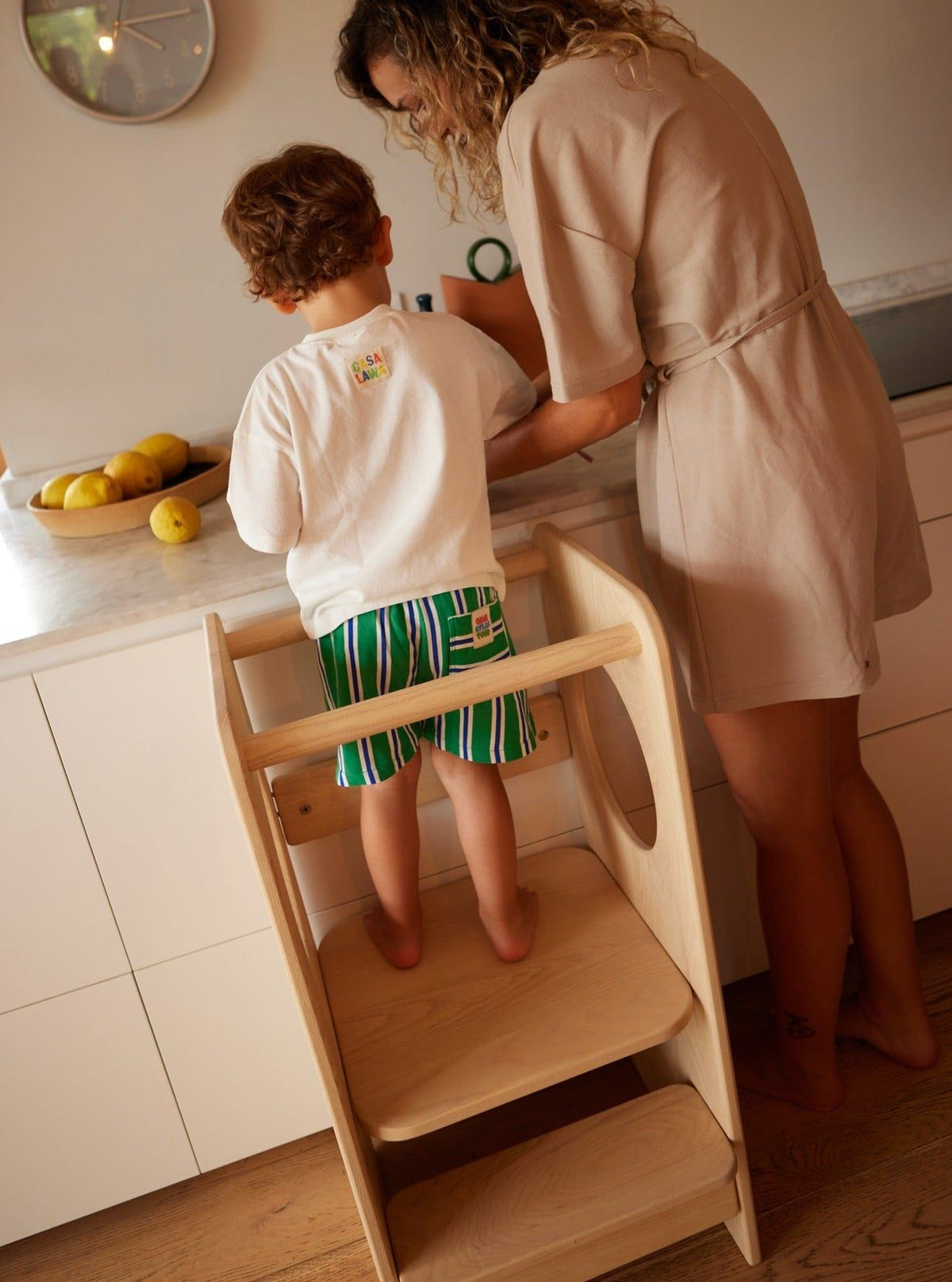
Learning tower or step stool: which to choose by age
Learning tower or step stool: how they differ in height, stability and use, when the Nubia bench is enough and when the Bambai tower is the better choice.
Read moreabout Learning tower or step stool: which to choose by age
Share: