
In short
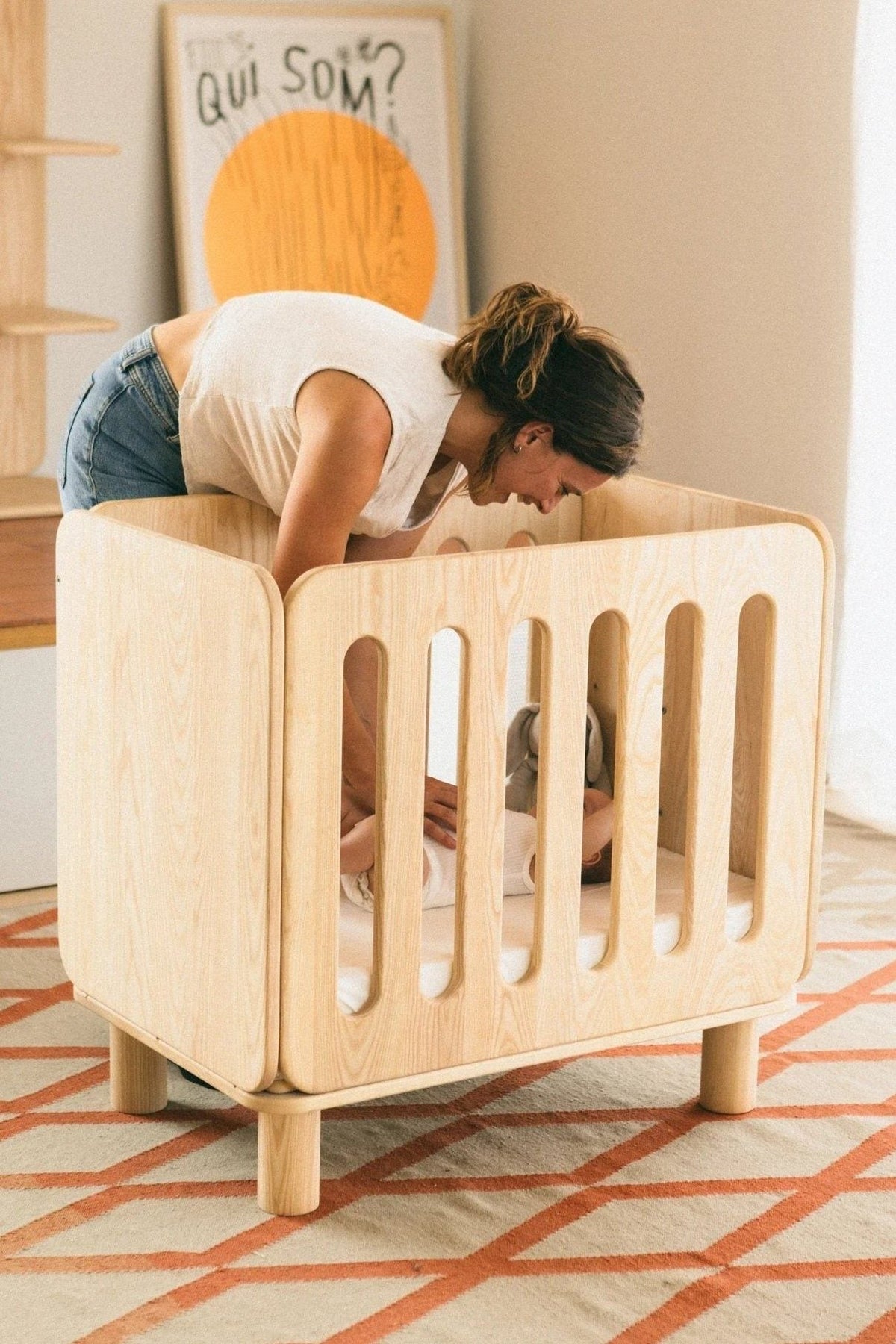
 Nimbi co-sleeping mini crib
Choosing children's furniture is one of the most decisive decisions in designing a family home. It isn't only about aesthetics or how it looks in the room: the materials a child lives with in their first years directly influence the air they breathe and the calm of their daily environment. That is why natural wood furniture has become the favourite choice for those seeking a healthy, serene and environmentally respectful space.
Compared with conventional alternatives derived from petroleum, chipboard and synthetic laminates, solid wood brings authenticity, real durability and a warm Mediterranean-inspired atmosphere. In this guide we explore why choosing real wood makes a difference to children's rest and development, how to identify it and how a circular model transforms families' relationship with furniture.
In early childhood, children spend many hours in their bedroom: sleeping, playing on the floor, exploring with their hands and chewing the surfaces within reach. The material environment around them has a real weight on their everyday wellbeing.
Solid wood is a living, noble material. It offers a pleasant texture to the touch, a stable weight that gives solidity to each piece and a clean visual presence that conveys serenity. Unlike plastic or cold finishes, natural wood furniture ages gracefully: it doesn't chip at a touch or become useless after a small knock, but allows maintenance and care over the years.

A clear example of how solid wood looks after the first months of life is the Nimbi co-sleeping mini crib, made of solid pine with three base heights to allow close, safe rest free of artifice from birth.
One of the biggest challenges for indoor air quality in homes is volatile organic compounds (VOCs). A large part of conventional children's furniture is made of pressed-fibre boards (MDF or chipboard), whose production uses synthetic resins and glues that can continuously release formaldehyde and other gases into the room.
The main benefits of natural wood include:
At later stages, when it is time to leave the crib, a low bed with refined lines such as the Mimoa 140 mini bed lets little ones gain autonomy to get up and down by themselves in an environment free of synthetic fumes and harsh varnishes.
Choosing sustainable children's furniture means looking beyond the moment of purchase. Childhood is a stage of rapid growth: the needs of a newborn are not the same as those of a three- or six-year-old. In the traditional linear "buy, use and discard" model, many families end up piling pieces in storage rooms or throwing perfectly good furniture away after only a few months of use.
Real environmental commitment doesn't lie in buying single-use furniture made thousands of kilometres away. It lies in a circular model that combines three essential pillars:
This approach lets you enjoy eco-friendly furniture for kids designed to last and circulate, instead of feeding landfills with disposable chipboard pieces.
In today's market it is common to find confusing commercial terms such as "oak effect", "natural wood finish" or "wood veneer". In most cases these are particle boards or MDF covered with a plastic film that imitates the grain pattern. To tell authentic natural wood from imitations, look at several details:

A carefully designed piece that highlights the warmth of solid pine is the Alune wraparound chair, designed with a curved backrest that supports the posture of children aged 3 to 6 during drawing and reading time.
At Circulari we see children's furniture as a bridge between family health and respect for the planet. Our pieces are born in Barcelona with a clean Mediterranean aesthetic, where solid pine finished with toxic-free water-based varnish takes pride of place.
Each product is designed to precisely meet the needs of each developmental stage: from cribs and low beds that foster autonomy to storage solutions and play areas that put everything within reach of the little ones. And most importantly: when a stage closes, our circular system lets you return the piece so it can continue its cycle in another home, making your purchase a truly conscious and sustainable decision. You can explore all our pieces in the catalogue of natural wood furniture.
European solid pine and oak are two of the most prized woods in children's furniture. Solid pine stands out for its warmth, structural lightness, great resistance to everyday use and sustainability in local cultivation, as long as it is treated with water-based varnishes with no harmful compounds.
No. For day-to-day cleaning it is enough to wipe with a soft cloth lightly dampened with water and dry the surface well. Avoid abrasive chemicals, scourers or heavy waxes. If there is an accidental scratch, the surface can be gently sanded and renewed, which is impossible on laminated furniture.
Solid wood contains no synthetic binders or formaldehyde resins, so it doesn't give off toxic gases in the room. It also offers superior structural strength when assembled and disassembled, withstanding the pace of children's play without warping or breaking at the joints.
Look at the grain and knots, which never repeat; at the edges, where the grain continues without a visible joint; at the feel, slightly porous and mild; and at clear water-based varnishes.
With Circulari's circular system you can return it: it is collected, refurbished and starts a second life in another home, instead of ending up in the storage room or the landfill.
Furniture that cares for your little one and the planet
Solid pine pieces made in Barcelona, with toxic-free water-based varnish and designed to come back when your child grows.
See the full catalogue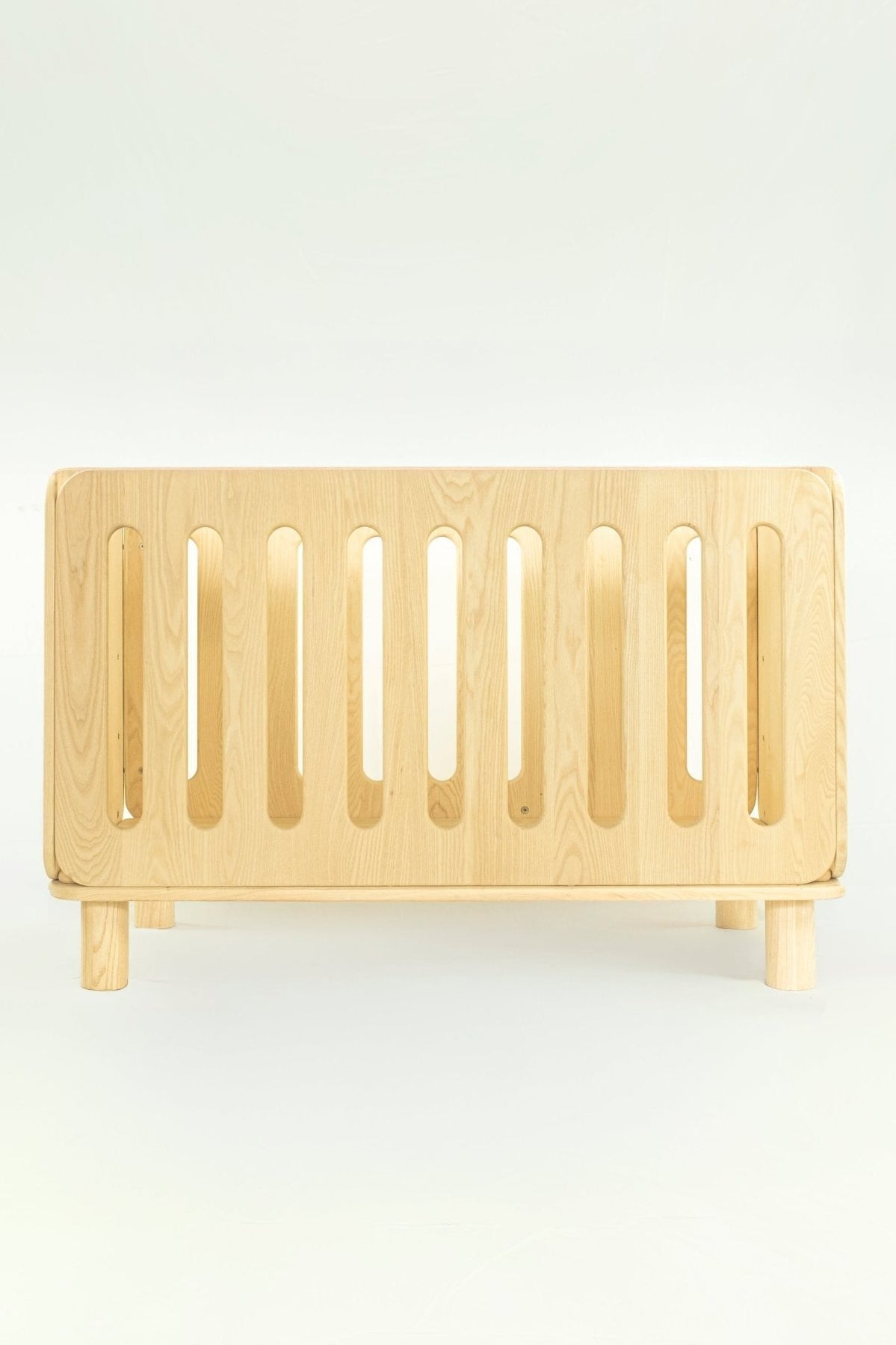
Cuna de madera maciza o cuna IKEA: diferencias y coste real
Read moreabout Cuna de madera maciza o cuna IKEA: diferencias y coste real
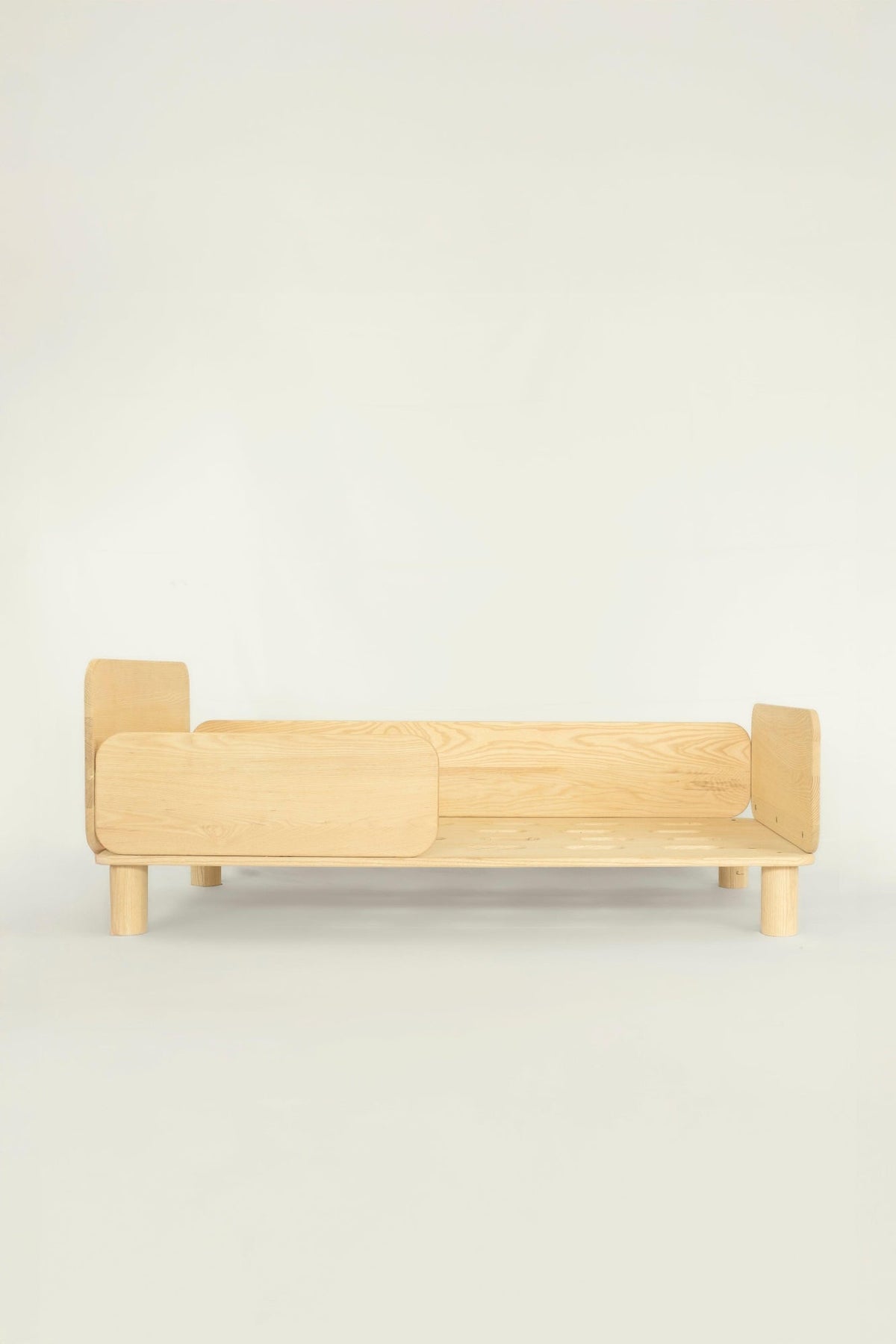
Kids furniture dimensions: chart for the whole range
Dimensions of every Circulari piece in one chart: width, depth and height, bed base, platform or seat height, age and floor space.
Read moreabout Kids furniture dimensions: chart for the whole range
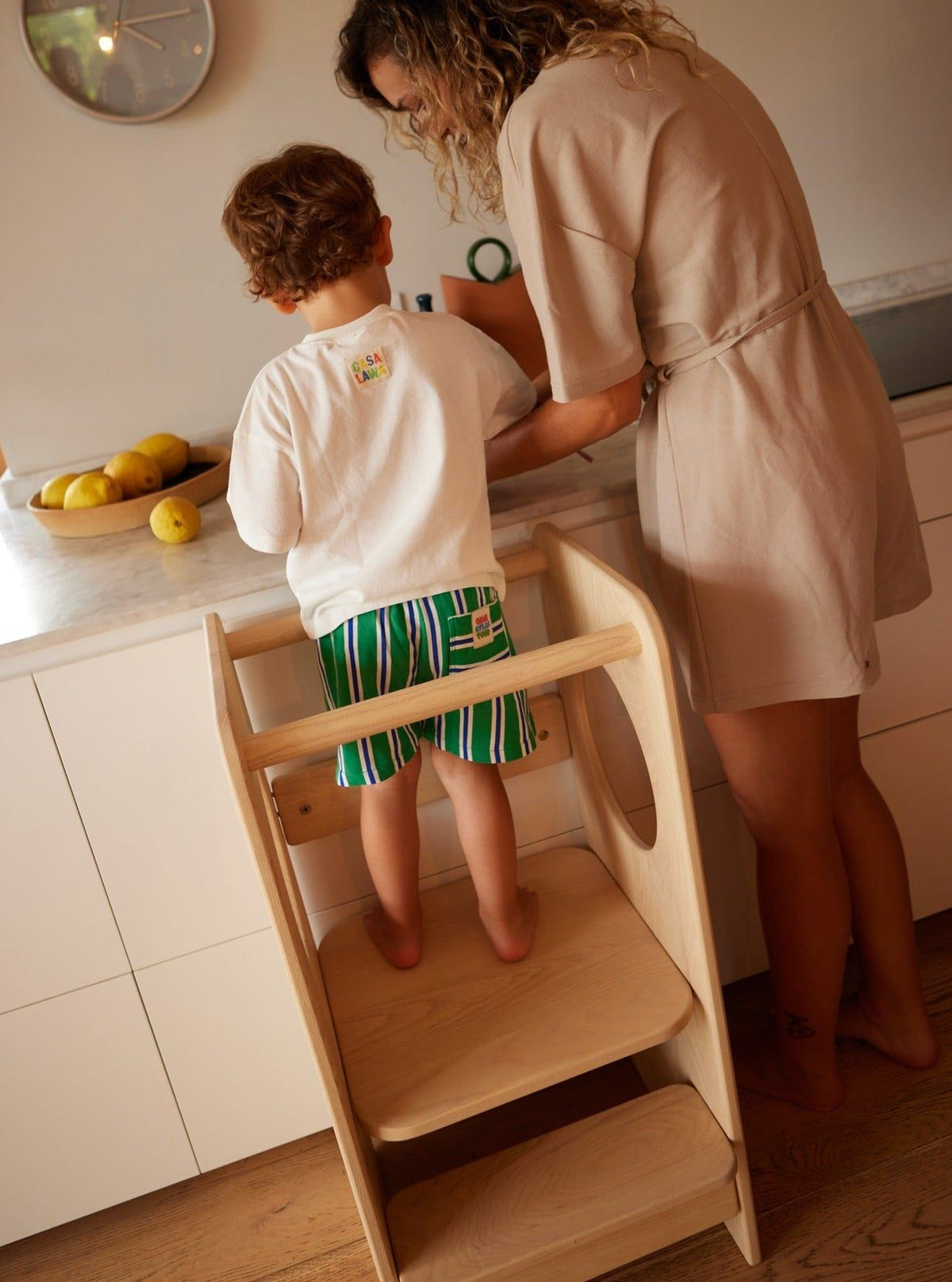
Learning tower or step stool: which to choose by age
Learning tower or step stool: how they differ in height, stability and use, when the Nubia bench is enough and when the Bambai tower is the better choice.
Read moreabout Learning tower or step stool: which to choose by age
Share: