
Un bebé pasa entre 14 y 17 horas al día durmiendo. La habitación donde lo hace no es solo una habitación: es el entorno en el que su sistema respiratorio, inmunológico y nervioso se desarrollan. Lo que hay en ese espacio —los muebles, la pintura, el colchón, los textiles— importa más de lo que la mayoría de las marcas quieren que sepas.

Esta guía cubre todo: desde los materiales de los muebles hasta la pintura de las paredes, pasando por el colchón, los textiles y la ventilación. El objetivo es que cuando termines de leerla, sepas exactamente qué buscar y qué evitar.
Los muebles: el mayor foco de tóxicos que nadie menciona
La mayoría del mobiliario infantil del mercado está fabricado con tableros de aglomerado o MDF pegados con resinas de urea-formaldehído. Esas resinas emiten formaldehído —un gas clasificado como carcinógeno por la OMS— durante meses o años después de la compra. El proceso se intensifica con el calor y la humedad, exactamente las condiciones de una habitación cerrada.
El "olor a mueble nuevo" que todos reconocemos es precisamente ese proceso de desgasificación. En adultos, en espacios ventilados, los efectos son menores. En la habitación de un bebé que duerme 15 horas al día a pocos centímetros de esa superficie, la exposición es prolongada y constante.
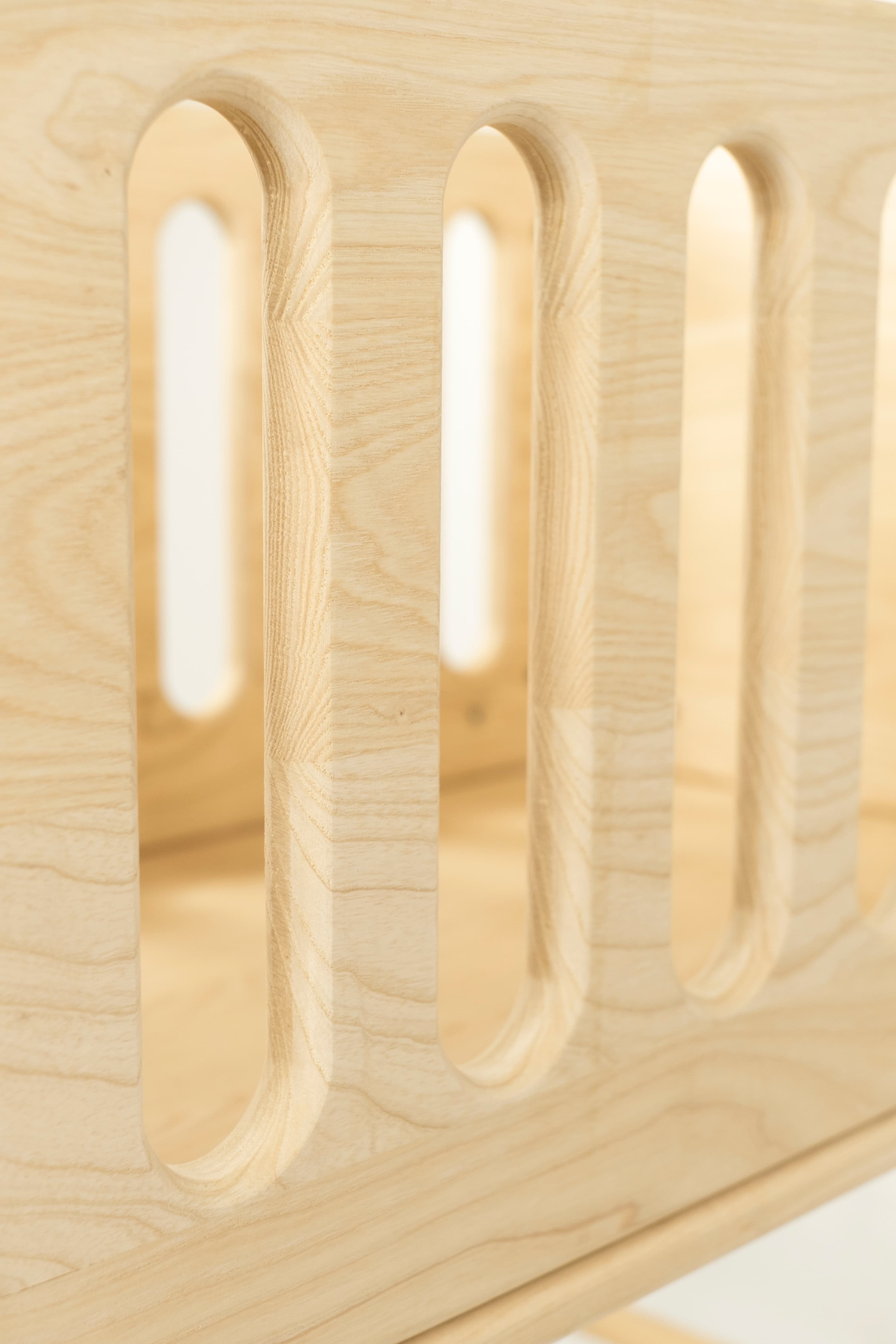
Qué buscar: madera maciza certificada (pino, fresno, haya, roble) sin tableros de partículas ni colas sintéticas. Si el mueble usa MDF o aglomerado, exige que sea clase E0 o E1 con certificación de laboratorio externo, no solo una declaración del fabricante.
Qué evitar: muebles sin especificación de materiales, acabados con laca de poliuretano o pinturas de base solvente, y cualquier producto que no pueda decirte exactamente de qué está hecho.

Los acabados: lo que no ves puede hacerte daño
Los COVs (Compuestos Orgánicos Volátiles) no provienen solo de los tableros: los barnices, lacas y pinturas industriales son otra fuente importante. Los acabados de poliuretano, muy comunes en muebles de precio medio-alto, emiten COVs durante su proceso de curado y después.
Qué buscar: barnices al agua, aceites naturales (lino, tung, cera de abeja), pinturas con base agua y certificación de bajas emisiones. En muebles infantiles, la certificación EN 71-3 garantiza que los acabados no contienen metales pesados por encima de los límites seguros.
Qué evitar: lacas de poliuretano, pinturas de base solvente, barnices sin especificación de composición.
La cuna o cama: los certificados que importan
Más allá de los materiales, la cuna o cama debe superar ensayos de seguridad estructural realizados por laboratorios externos acreditados. No basta con que el fabricante diga que "cumple la normativa europea": eso puede ser una autocertificación sin verificación independiente.
Las normas clave son la EN 716 para cunas (distancia entre barrotes, resistencia estructural, ausencia de huecos peligrosos) y la EN 747 para literas y camas elevadas. Pide el número de expediente del ensayo y el nombre del laboratorio que lo realizó. Si no te lo dan, sigue buscando.
El colchón: el gran olvidado
Muchos padres eligen con cuidado la cuna y compran el colchón más barato que cabe. Es uno de los errores más frecuentes, porque el bebé duerme literalmente sobre el colchón —con la cara a centímetros de su superficie— durante años.
Los colchones convencionales pueden contener espumas tratadas con retardantes de llama sintéticos, adhesivos con disolventes y tejidos con acabados impermeabilizantes que emiten compuestos perfluorados. Ninguno de esos materiales quieres en la habitación de un bebé.
Qué buscar: colchones con núcleo de látex natural (certificación GOLS), lana certificada (GOTS) o espuma sin retardantes de llama tóxicos (CertiPUR-EU). La funda debe ser de algodón orgánico certificado.
Qué evitar: colchones sin especificación de composición, espumas sin certificación, fundas con tratamientos impermeabilizantes sintéticos.
La pintura de las paredes: el tóxico más subestimado
Las pinturas convencionales contienen COVs que se liberan al aire durante semanas o meses tras la aplicación. En una habitación recién pintada, los niveles de VOCs pueden ser varias veces superiores a los del exterior.
Qué buscar: pinturas con etiqueta "0 VOC" o "low VOC" certificadas por organismos como Ángel Azul (Der Blaue Engel) o EU Ecolabel. Si puedes, pinta la habitación con varias semanas de antelación y ventila bien antes de que el bebé duerma allí.
Qué evitar: pinturas sin especificación de VOCs, pinturas brillantes de base solvente, cualquier producto que huela intensamente días después de la aplicación.
Los textiles: algodón orgánico o nada
Las sábanas, el protector de cuna y la ropa de cama están en contacto directo con la piel del bebé durante horas. Los textiles convencionales pueden llevar residuos de pesticidas (en el algodón no orgánico), colorantes azo y formaldehído añadido como estabilizante del color.
Qué buscar: algodón orgánico con certificación GOTS, lino natural, lana no tratada. La certificación OEKO-TEX Standard 100 garantiza que el textil no contiene sustancias nocivas por encima de los límites seguros.
Qué evitar: textiles sin certificación, microfibras sintéticas (que emiten microplásticos), tejidos con acabados antimancha o antialérgicos no certificados.
La ventilación: lo más sencillo y lo más ignorado
Ningún material, por bueno que sea, sustituye a la ventilación. El aire interior puede tener concentraciones de tóxicos entre 2 y 5 veces superiores al exterior simplemente por la acumulación de lo que emiten los materiales de la habitación.
La solución es sencilla: ventilar al menos 15 minutos cada mañana, incluso en invierno. Cruzar corrientes cuando sea posible. Y si la habitación acaba de ser pintada o tiene muebles nuevos, ventilar con especial intensidad durante las primeras semanas.

La lista de verificación completa
- ☐ Muebles de madera maciza sin aglomerado ni MDF, o con certificación E0/E1 verificada por laboratorio externo
- ☐ Acabados al agua sin poliuretanos, con certificación EN 71-3
- ☐ Cuna o cama con ensayo EN 716 / EN 747 por organismo acreditado (pide el número de expediente)
- ☐ Colchón con núcleo certificado (GOLS, GOTS o CertiPUR-EU) y funda de algodón orgánico
- ☐ Pintura con etiqueta 0 VOC o low VOC certificada, aplicada con semanas de antelación
- ☐ Textiles con certificación GOTS u OEKO-TEX Standard 100
- ☐ Ventilación diaria de al menos 15 minutos
Por qué en Circulari ya tienes la mitad resuelta
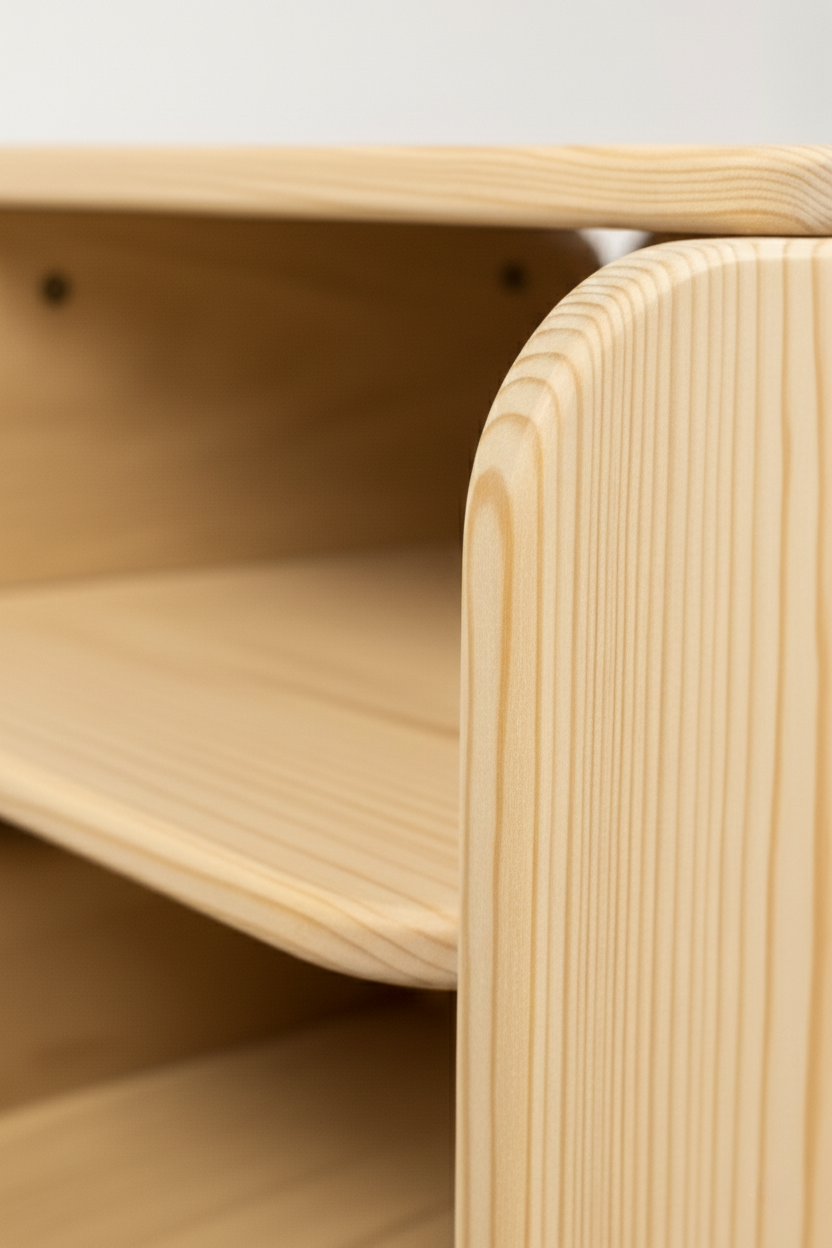
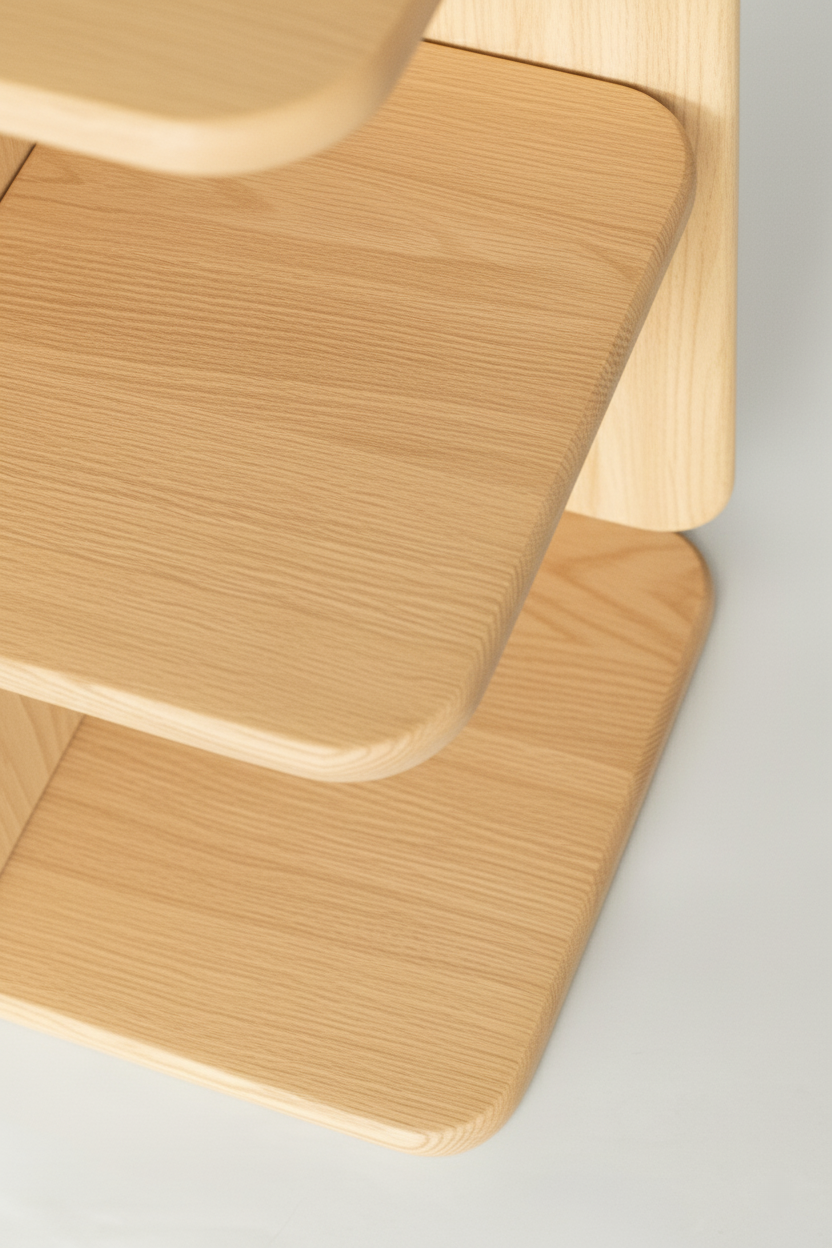
Los muebles de Circulari están fabricados en madera maciza de pino o fresno en nuestro taller de Barcelona, con barnices al agua sin COVs ni poliuretanos. Cada pieza cumple con la normativa EN 716 y EN 747 según corresponda. No tienes que preguntar de qué están hechos porque lo explicamos en cada producto y podemos verificarlo.
Y cuando tu hijo los supere, los recogemos en tu domicilio y te devolvemos hasta el 30% de su valor. La habitación de un bebé sin tóxicos no tiene por qué ser permanente: puede evolucionar con él, sin acumular muebles que ya no sirven y sin gestionar qué hacer con ellos.
Share: