

In short
 Pombi shelf
Constant clutter in the bedroom often causes frustration at home. When toys end up piled in opaque boxes or in unreachable corners, children lose interest or always depend on an adult to play and tidy up. Designing a proper toy storage system based on Montessori principles completely transforms this dynamic: it helps every object have its place and fosters calm in the family space.
A prepared environment does not seek the aesthetic perfection of a magazine, but practicality for real life. Through low-height furniture, natural materials and a careful selection of play materials, it is possible to support their everyday development while respecting their rhythms and abilities.
In the early stages of development, external order acts as a direct reflection of the child's mental structure. During what Maria Montessori called the “sensitive period for order” (roughly between the first and third year of life), little ones need clear routines and stable reference points to understand the world around them.
If the room has dozens of pieces mixed without criteria, the child feels overwhelmed by too many stimuli. By contrast, a calm environment where each game has a predictable location offers great benefits:
To achieve this, toy rotation is essential: instead of leaving the whole arsenal available, keep out only four to eight attractive options and store the rest in a closed cupboard, rotating them every two or three weeks.
Not all containers serve the same function in organizing the room. Choosing the right combination makes the difference between a functional space and an improvised storage room.
In the catalog of children's storage furniture we find three main solutions:

Children's furniture withstands intense daily use. Choosing solid wood over derivatives such as chipboard or plastic is not only an aesthetic choice, but a practical decision for well-being at home:
A basic principle of any adapted environment is that the child should not have to ask permission or constant help to reach what they need. If a shelf is above their line of sight, that piece of furniture is not designed for them, but for the adult.
Immediate visual access is key. In reading, for example, little ones do not recognize books by the spine, but by the illustrated cover. The Bilka book shelf lets you place stories face-out and at their height, helping them choose their stories with complete independence from their first year.

Likewise, dual-use furniture multiplies the possibilities of the bedroom. The Zupi toy chest, made of solid pine with water-based varnish, is not only for storing bulkier toys, but also works as a seat or auxiliary step to climb onto the bed.
When the bedroom's square meters are limited, the key is to make use of vertical surfaces and choose mobile pieces that free up the central walkway:

At Circulari we design every piece of furniture at a child's scale to support everyday development in a natural way. All our pieces are made in local workshops in Barcelona using solid pine with respectful and safe water-based finishes.
We believe in conscious consumption that respects the pace of families. Thanks to our circular system, when your children grow and their needs change, you do not have to store unused furniture or turn to second-hand platforms: we collect the pieces to give them a new life and you recover part of your investment for the next stage.
Going further: discover the wooden children's storage solutions for every age, how to choose a Montessori shelf (height, material and organization) and how our circular system works.
Low, open and visible: shelves at the child's height where each game has a clear place, so they choose what to play with and put it back without help.
Between four and eight attractive options. The rest is stored in a closed cupboard and rotated every two or three weeks, which favors concentration and keeps order.
Usually a combination: low open shelves for everyday items, a chest of drawers or drawers for textiles and costumes, and baskets or carts on wheels to group objects by family.
Use the walls with floating shelves, choose modular sets whose carts slide under the shelf, and use portable trays to mark out play zones.
Solid pine with a non-toxic water-based varnish withstands knocks and years of play and looks after the bedroom air. When they grow, Circulari's circular system collects the pieces to give them a new life and you recover part of your investment.
Create a tidy space adapted to their pace
Discover solid wood furniture at their height, made in Barcelona and with a circular return system.
See storage furniture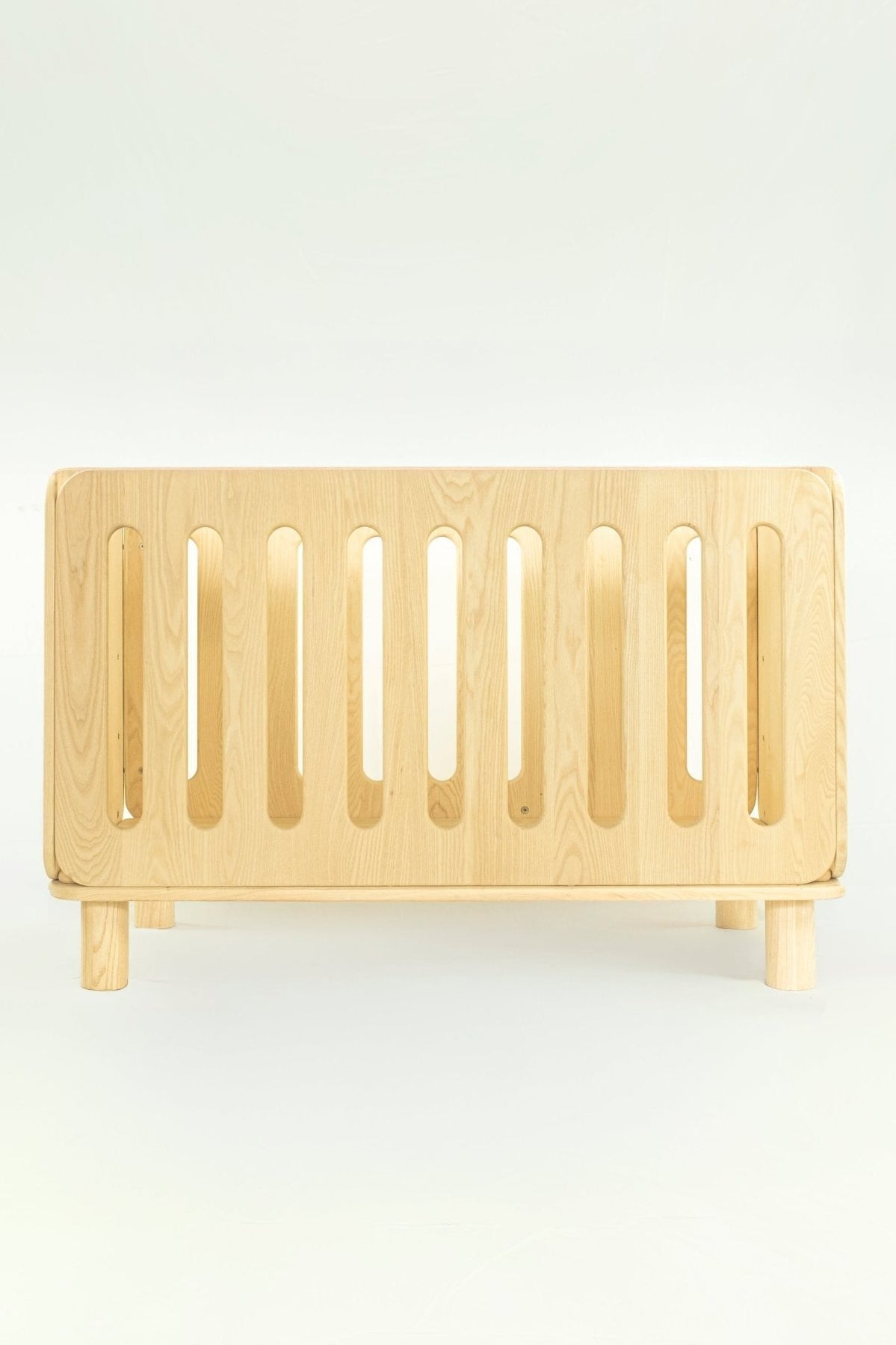
Cuna de madera maciza o cuna IKEA: diferencias y coste real
Read moreabout Cuna de madera maciza o cuna IKEA: diferencias y coste real
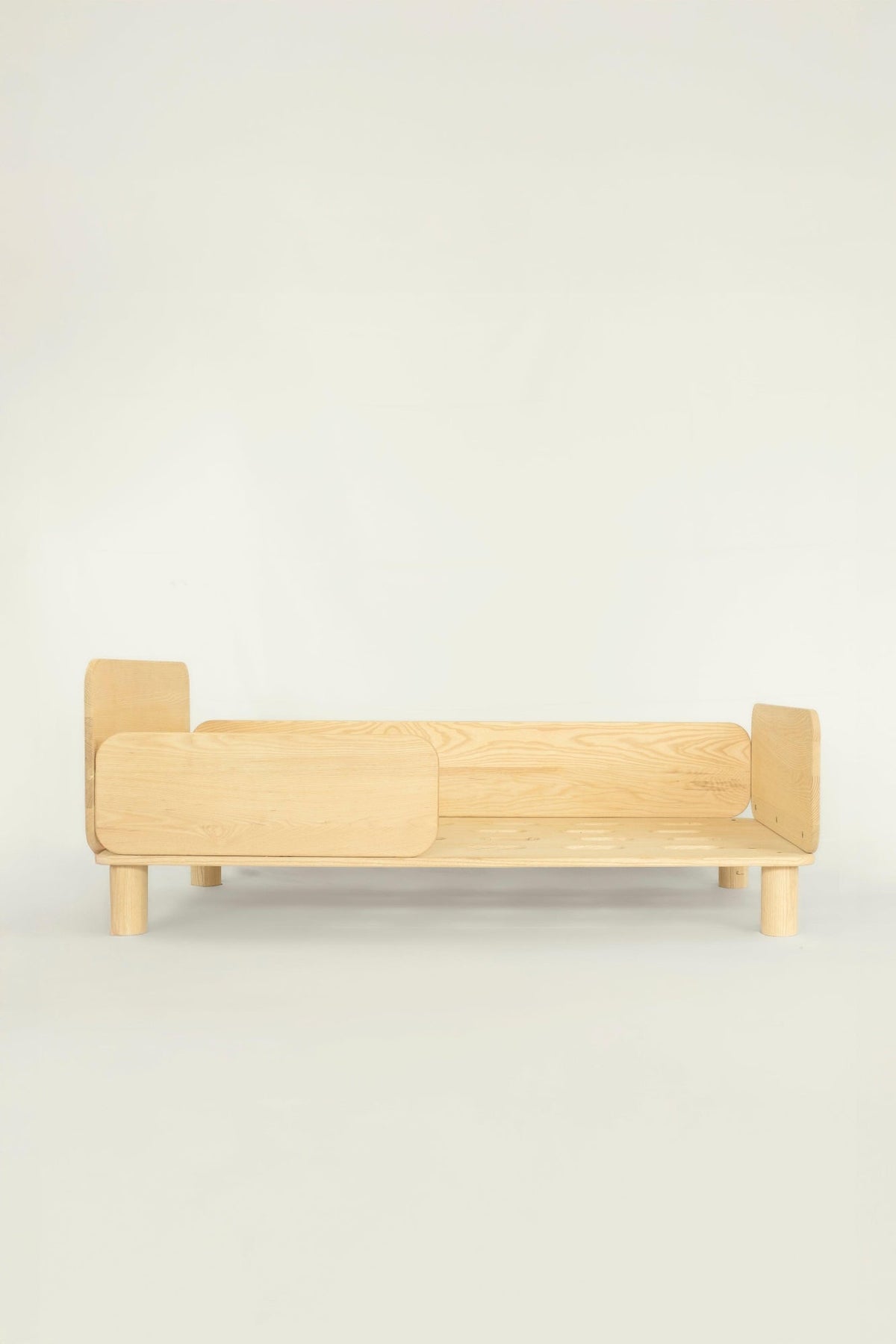
Kids furniture dimensions: chart for the whole range
Dimensions of every Circulari piece in one chart: width, depth and height, bed base, platform or seat height, age and floor space.
Read moreabout Kids furniture dimensions: chart for the whole range
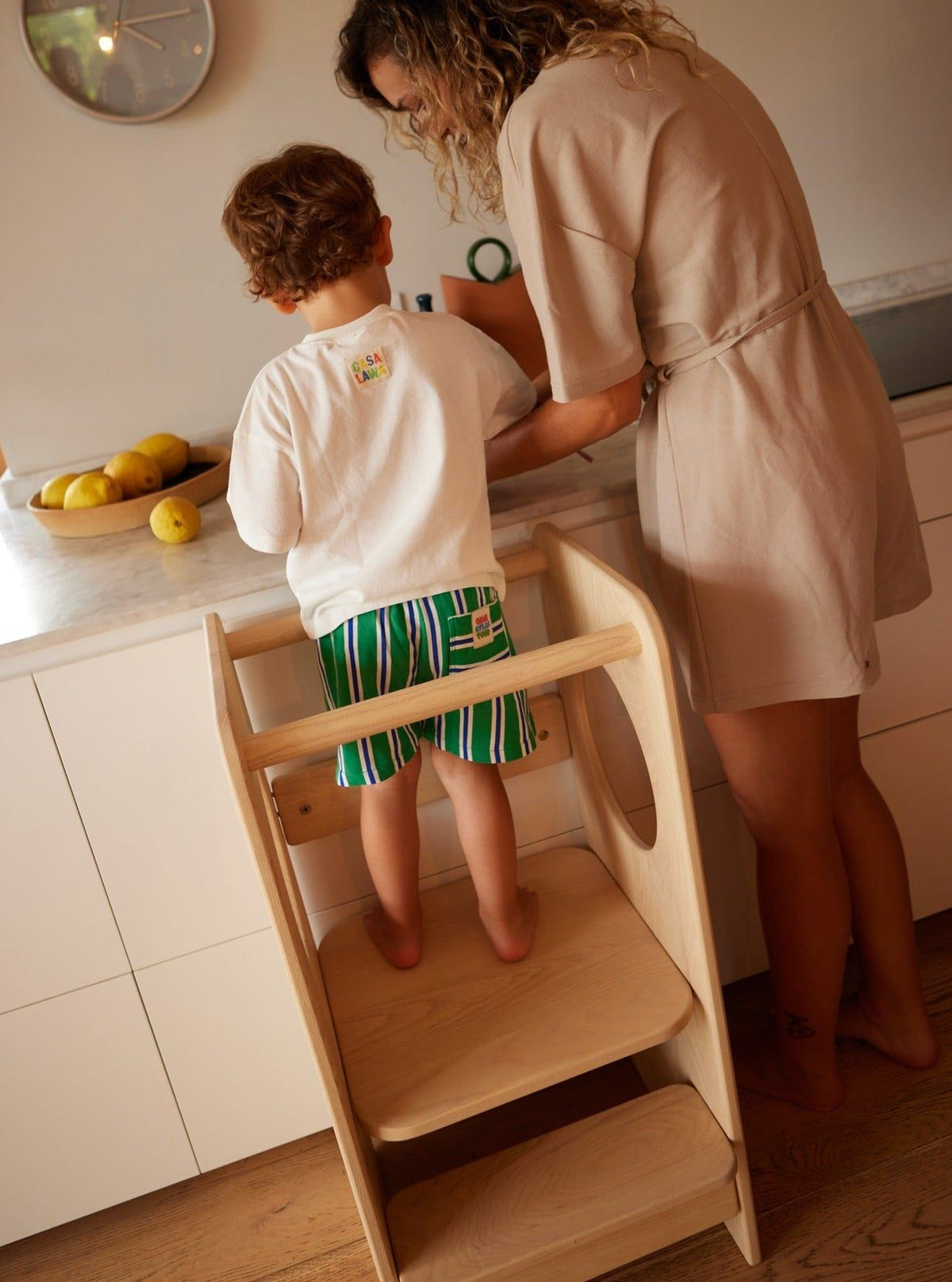
Learning tower or step stool: which to choose by age
Learning tower or step stool: how they differ in height, stability and use, when the Nubia bench is enough and when the Bambai tower is the better choice.
Read moreabout Learning tower or step stool: which to choose by age
Share: