
In short
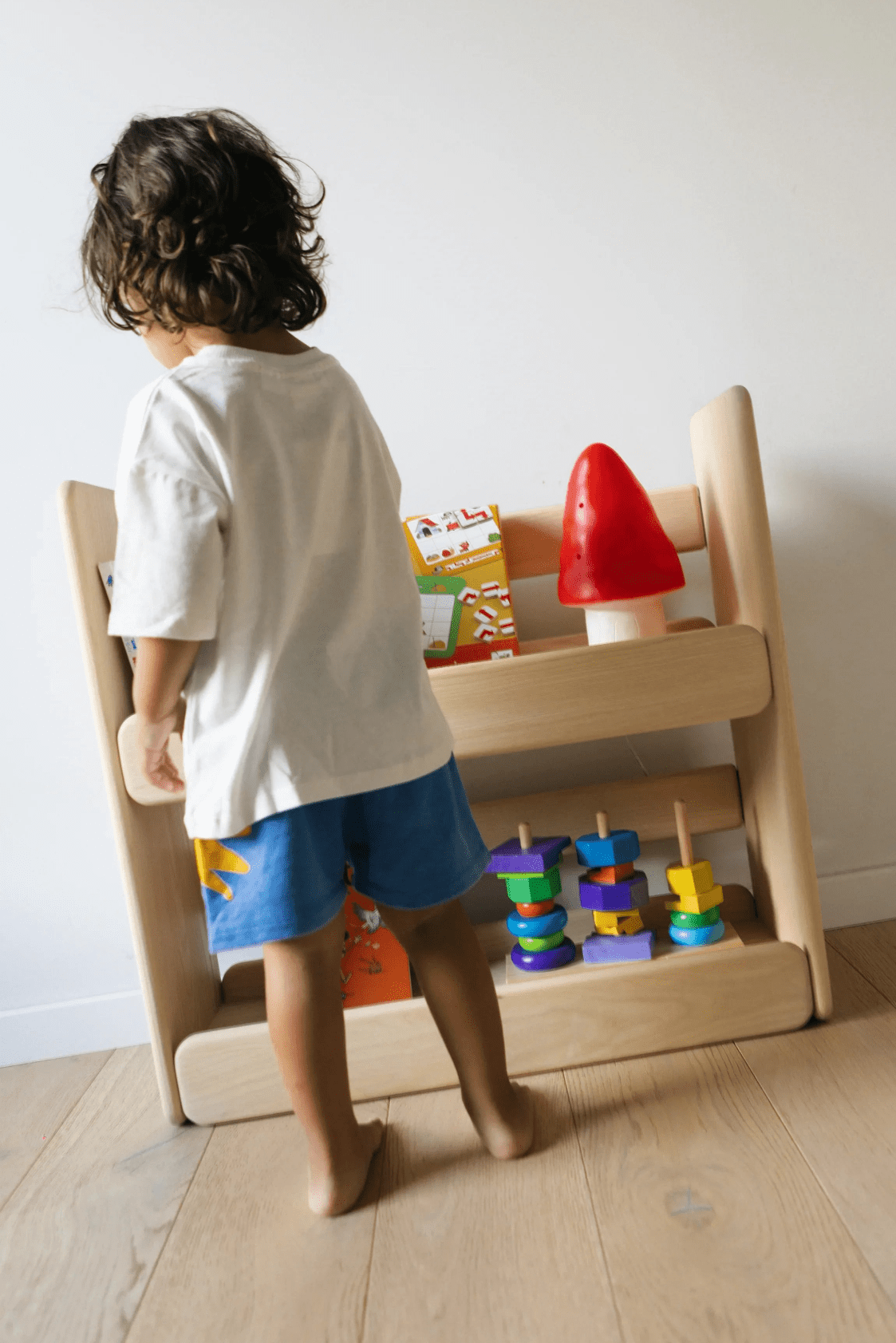
 Pombi shelf
A Montessori shelf is a low, open shelf designed so that children can see, reach and put back books and toys without asking for help. If you are setting up your little one's room, what matters most when choosing is the height (it should reach everything), the material (it should last for years of use) and the organisation (few things, in plain sight). Here is how to decide, using Circulari's two shelves as an example.
In the Montessori approach, the environment adapts to the child and not the other way round. A shelf at their scale does three things at once: it shows books face out (you see the cover, not just the spine), it lets them choose without an adult taking something down from a high shelf, and it makes tidying up a simple gesture, because everything has a visible place.
It doesn't need to be a “special” piece of furniture: what sets it apart is that it is low, open at the front, stable and with few things on display. If you are looking for broader ideas for the whole room, see our guide to wooden toy storage for kids.
The practical rule is simple: your child should reach the top shelf standing up and without help, and be able to take out and put back a book without the shelf moving. Before buying, measure your child with their arm stretched up and compare it with the height of the furniture.
According to the product pages, Bilka measures 73 × 20 × 70 cm and is designed for ages 1 to 6; Pombi measures 110 × 45 × 72 cm and is designed for ages 2 to 6. Always check the product page before deciding.
A kids' shelf gets loaded, leaned on, moved and filled with heavy books. That is why the material matters more than the design:
And if you are wondering what kids' furniture should carry, here is the guide to safety certifications.
Any tall or loaded piece of furniture can tip over if a child climbs on it or pulls at it. As a general recommendation, fix shelves to the wall with fittings suited to your type of wall, don't use them for climbing and check that they are stable before filling them. If you have doubts about anchoring a specific model, write to us and we will guide you.
| Bilka | Pombi | |
|---|---|---|
| Dimensions (product page) | 73 × 20 × 70 cm | 110 × 45 × 72 cm |
| Age | From 1 to 6 years | From 2 to 6 years |
| Main use | Books face out, in plain sight | Toys, books and materials; double height with 3 dividers |
| Extras | Accessible height, encourages reading independence | Fits 1 or 2 Olaki trolleys |
| Material | Solid pine, toxin-free water-based varnish | Solid pine, toxin-free water-based varnish |
| List price from | €149 | €359 |
Choose Bilka if you want a compact reading corner for books face out, especially for the youngest. Choose Pombi if you need more capacity for toys and materials, or if you want to add trolleys with wheels: with the Pombi pack with 2 Olaki trolleys you get the full set. You can see all the options in the kids' shelves and shelving collection.
Children move through stages quickly. At Circulari you can return the furniture in good condition and recover up to 30% of its value, so the wood gets a second life. That way, the shelf that holds board books today can later pass on to another family, and you get back part of what you invested. We explain it step by step in how the circular system works.
From when they stand up and move around on their own, around their first year. Bilka is designed for ages 1 to 6 and Pombi for ages 2 to 6.
Tall enough for your child to reach the top shelf without help and without standing on tiptoe. Measure your child with their arm stretched up and compare it with the dimensions on the product page.
For furniture used every day, solid wood stands up to use better, can be repaired and lasts longer. Circulari's shelves are made of solid pine with a toxin-free water-based varnish.
It is good practice with any shelf, especially if your child tends to climb or pull on it. Use fittings suited to your wall.
Between 6 and 8 books face out is a good starting point. Store the rest and rotate them every one or two weeks.
If you are setting up the whole room, you may also like our guide to a small or shared kids' room and the wooden kids' storage solutions for every age.
Ready for a Montessori shelf? Meet Pombi
Solid pine with a toxin-free water-based varnish, for ages 2 to 6 and made in Barcelona, with a return system to recover up to 30% when your little one outgrows it.
See Pombi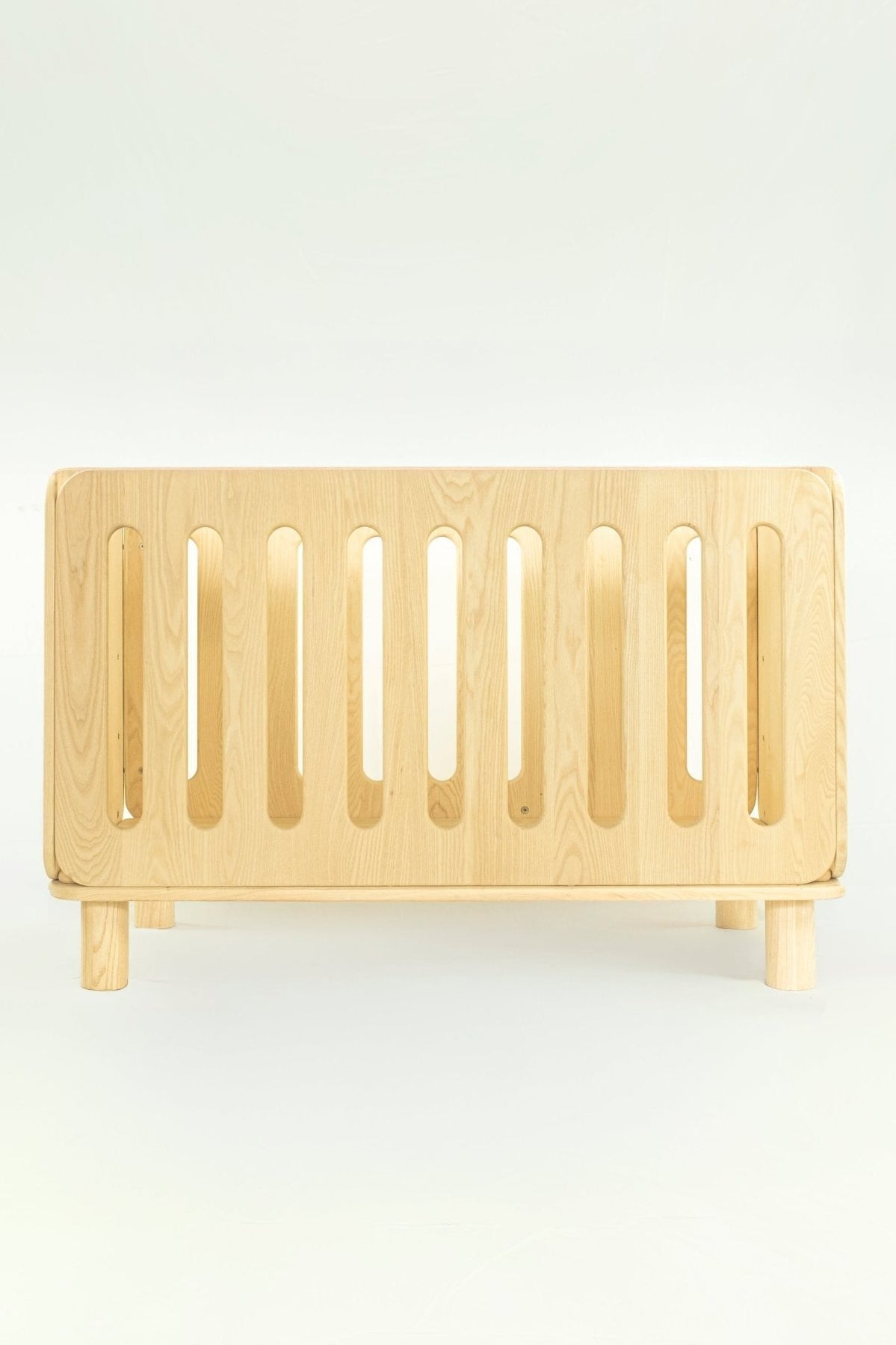
Cuna de madera maciza o cuna IKEA: diferencias y coste real
Read moreabout Cuna de madera maciza o cuna IKEA: diferencias y coste real
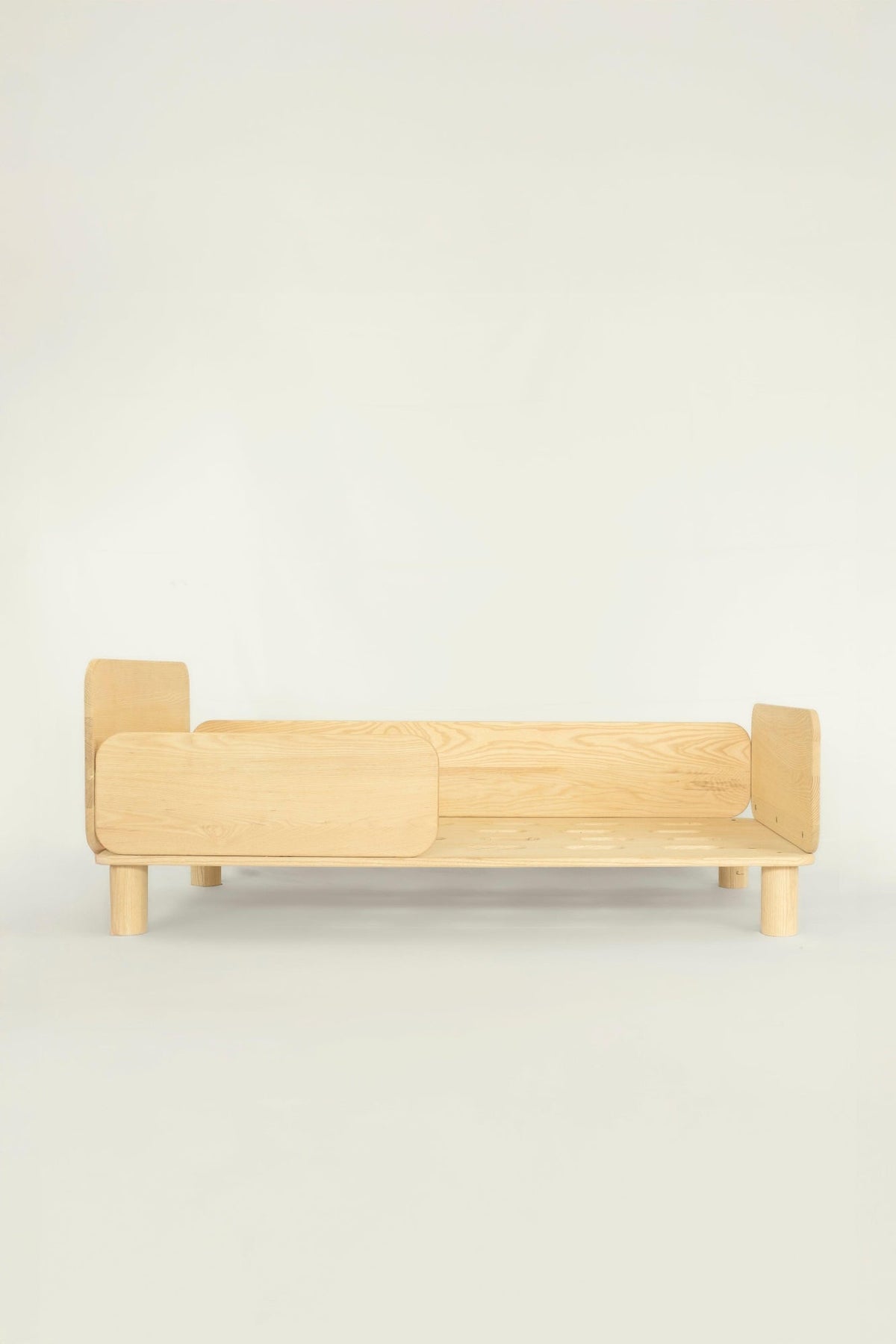
Kids furniture dimensions: chart for the whole range
Dimensions of every Circulari piece in one chart: width, depth and height, bed base, platform or seat height, age and floor space.
Read moreabout Kids furniture dimensions: chart for the whole range
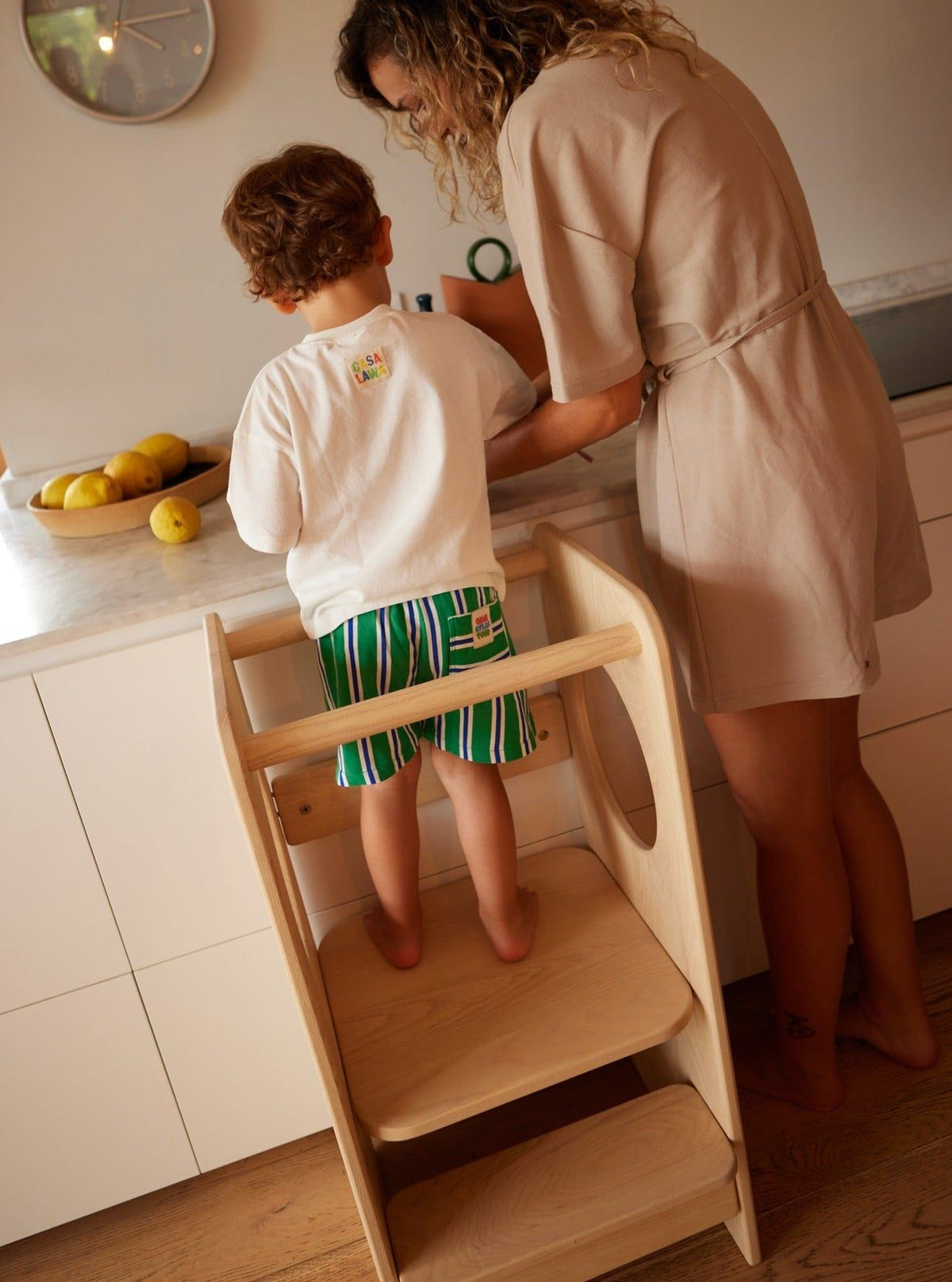
Learning tower or step stool: which to choose by age
Learning tower or step stool: how they differ in height, stability and use, when the Nubia bench is enough and when the Bambai tower is the better choice.
Read moreabout Learning tower or step stool: which to choose by age
Share: