
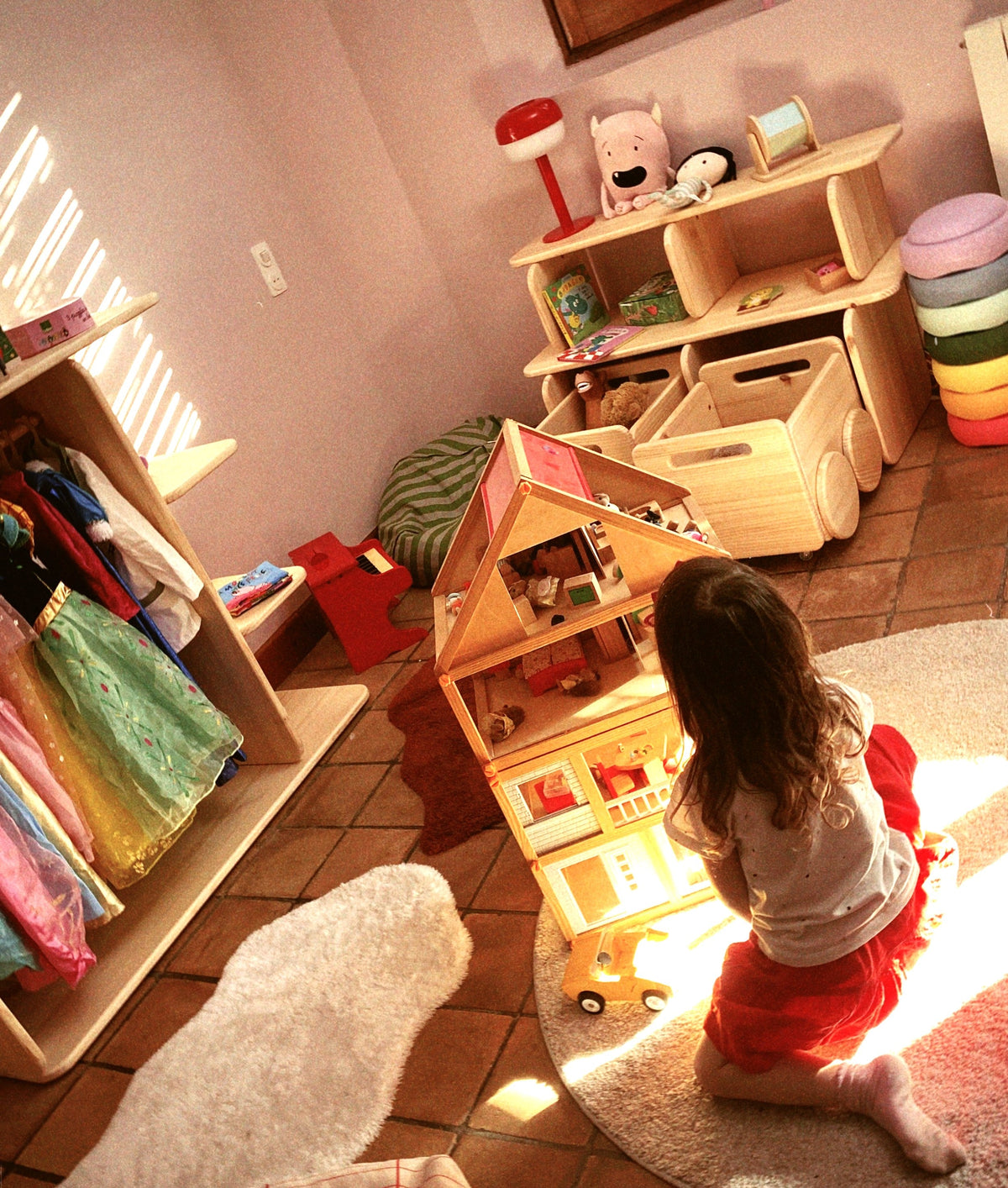
A small room isn't a problem if you decide well what goes in and where. And a shared room isn't either: the hard part isn't the space, but giving each child their own things without getting in each other's way. Here is one way to arrange it, so that children can reach everything on their own.
Start with what doesn't move
Before choosing furniture, measure the room and mark what is fixed: door, window, radiator and sockets. Keep the path between the door and the window clear: as a guide, a corridor of about 60 cm. Everything else is organised around that.
Think in four zones, not in loose pieces of furniture
- Sleeping: the biggest zone, the one that sets the rest.
- Storing: clothes, books and toys, always at their height.
- Playing: a free floor that can be cleared quickly.
- Drawing or studying: a small table now and a desk later.
Three layouts that work
- Beds in parallel, against opposite walls: they leave a central aisle for playing and a bedside table in the middle or at the head.
- Beds in an L: head to head in a corner, to free up a whole wall for storage.
- A single bed against the long wall (small room): the floor stays free and storage goes up the wall.
Sleeping: beds that grow with them
The Mimoa bed (from €599) is for the early years, from 2 to 6, with a side rail. As they grow, the Nono bed (from €799, for a 90 × 190 or 200 cm mattress) goes with them up to 12. Between the beds, a mobile bedside table like the Nuki (from €315) can be shared or moved aside depending on the day.
Storing: at their height and upwards
In a small space the trick is twofold: use the wall and keep within reach what they use every day.
- Naboa open wardrobe (from €499): rail and side shelving at their height, so they can choose and put away their clothes on their own.
- Pombi shelving unit (from €359): double height with dividers, for storing and for playing.
- Lilu pack of two shelves (from €69): wall shelves that free up floor space.
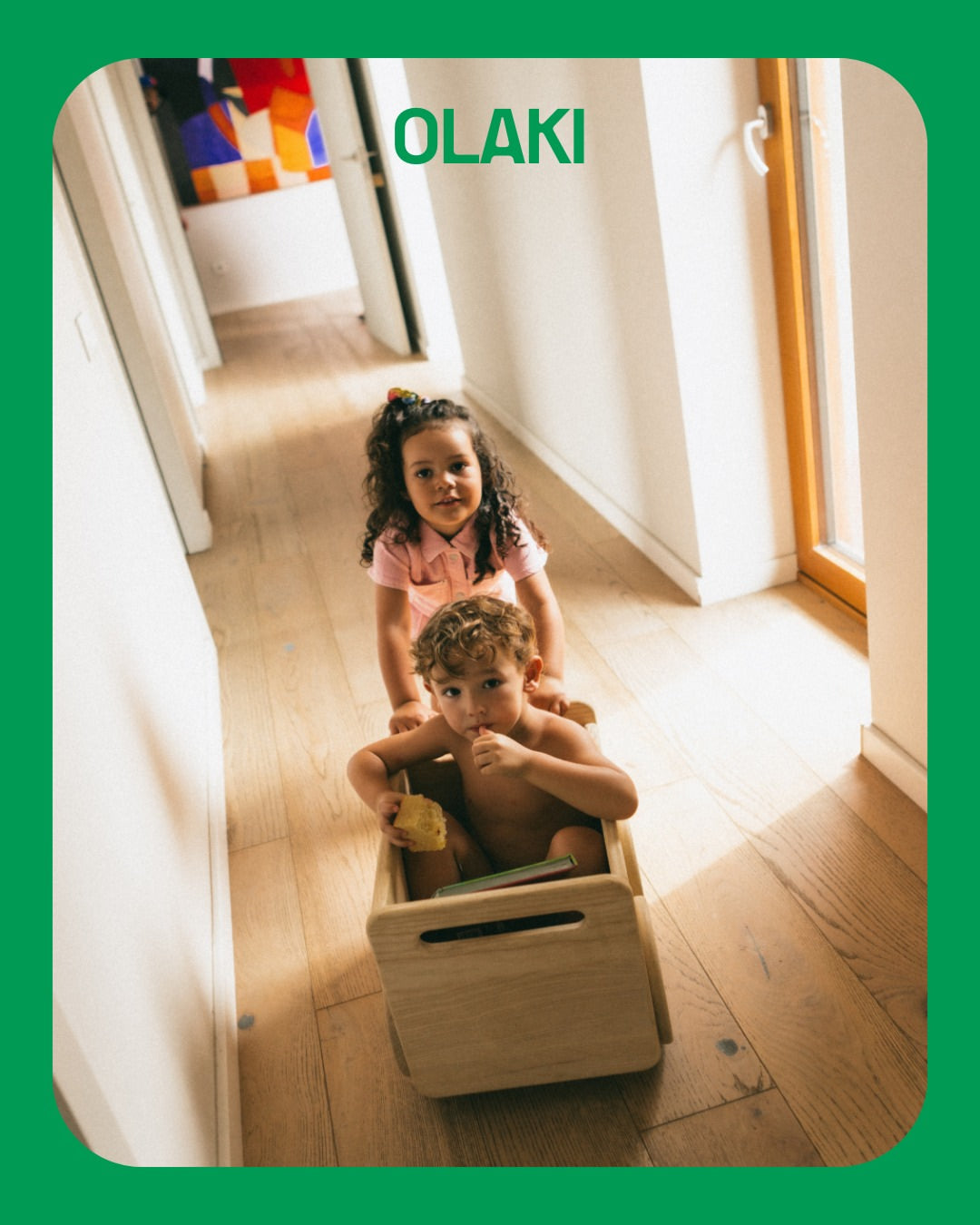
- Olaki rolling cart (from €175): storage that moves to where they play and gets put away when they're done.
A safety tip: always fix tall shelving units to the wall.
Sharing without arguments
- Each child has their own shelf, drawer or colour: personal things stay personal.
- Play belongs to both: a shared, clear area, with a chest or a cart to tidy it away.
- Less is more: only duplicate the essentials.
- Review it from time to time: what works at 3 gets in the way at 5.
Furniture that adapts to the next stage
A shared room changes fast: homework arrives, a younger sibling, or a change of bed. That's why it makes sense to choose solid wood and be able to return what no longer fits: at Circulari you return the furniture and recover up to 30%. Here is how it works. And if you're concerned about what they breathe in there, see why we choose solid wood over MDF.
Frequently asked questions
What furniture works best in a small kids' room?
Low pieces, movable pieces and those that make use of the wall: an open wardrobe, wall shelves and a cart on wheels, rather than large fixed wardrobes.
How do you organise a room shared by two children?
By giving each one their own space (a shelf, a drawer or a colour) and leaving a shared, clear play area. Beds in parallel or in an L usually work better than two separate beds in the middle.
How much free space should be left?
As a guide, a corridor of about 60 cm between the door and the window and a free floor for playing. If it doesn't fit, it's a sign that one piece of furniture is too many.
Storage at their height
Wardrobes, shelves and carts in solid wood to organise a small or shared room — and when it changes stage, you return them and recover part of what you paid.
Shop storage🎁 First order? Subscribe and get your welcome discount →
Share: