
The Montessori philosophy boils down to a very practical idea: the environment should let the child do things for themselves. Applied to a study corner, that doesn't mean buying the most expensive piece of furniture with the “Montessori” label, but designing a space where the child can sit down, pick up their materials, create and tidy away — all without depending on an adult.
Here's how to set it up well.
1. Everything at their height
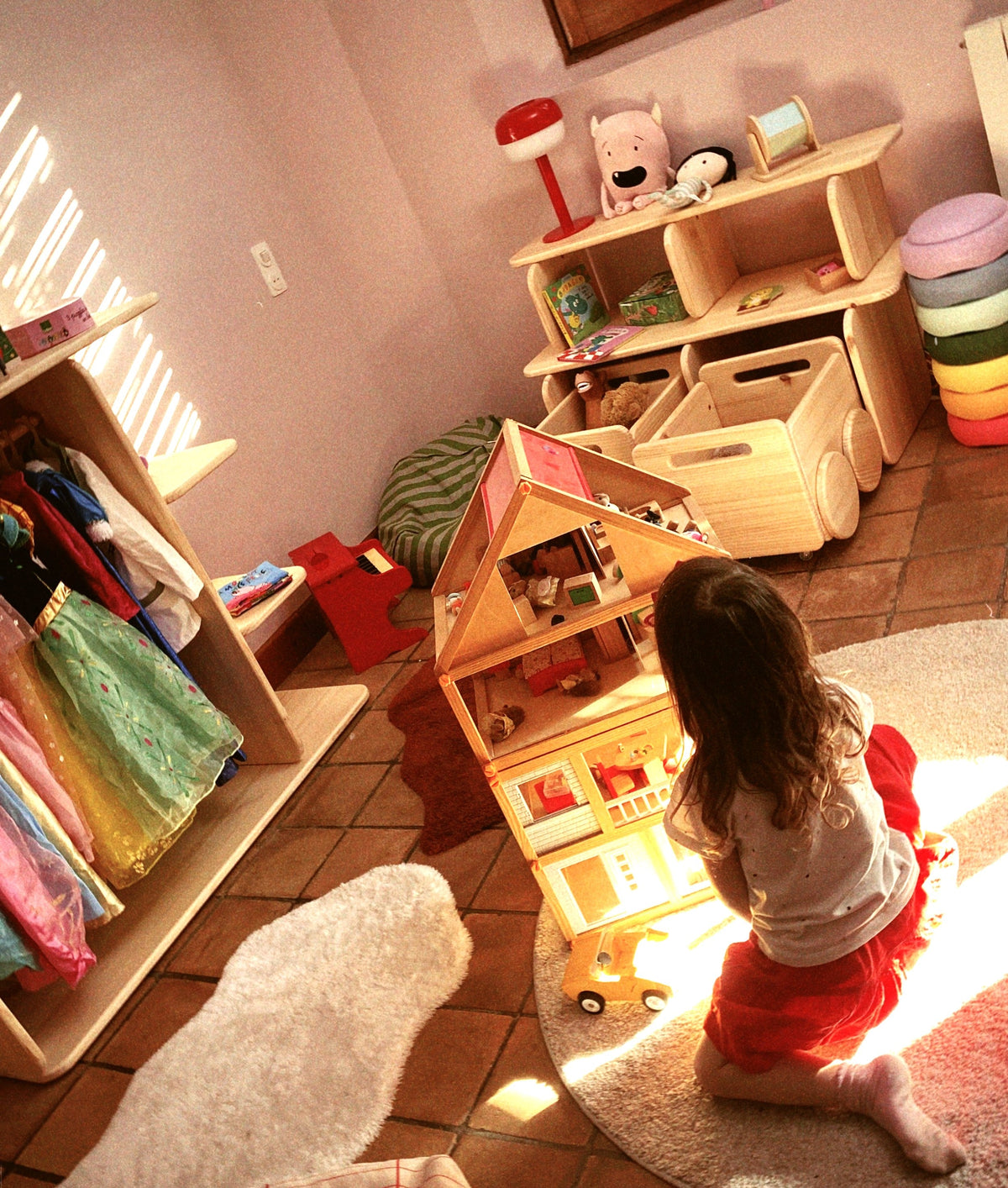
This is principle number one. The table and chair must match their stature so they work comfortably, and storage must be within their reach: low shelves, open boxes, a visible spot for what they use every day. If they have to ask for help to reach their things, they stop being autonomous. Desk and chair height by age.
2. Visible, limited order
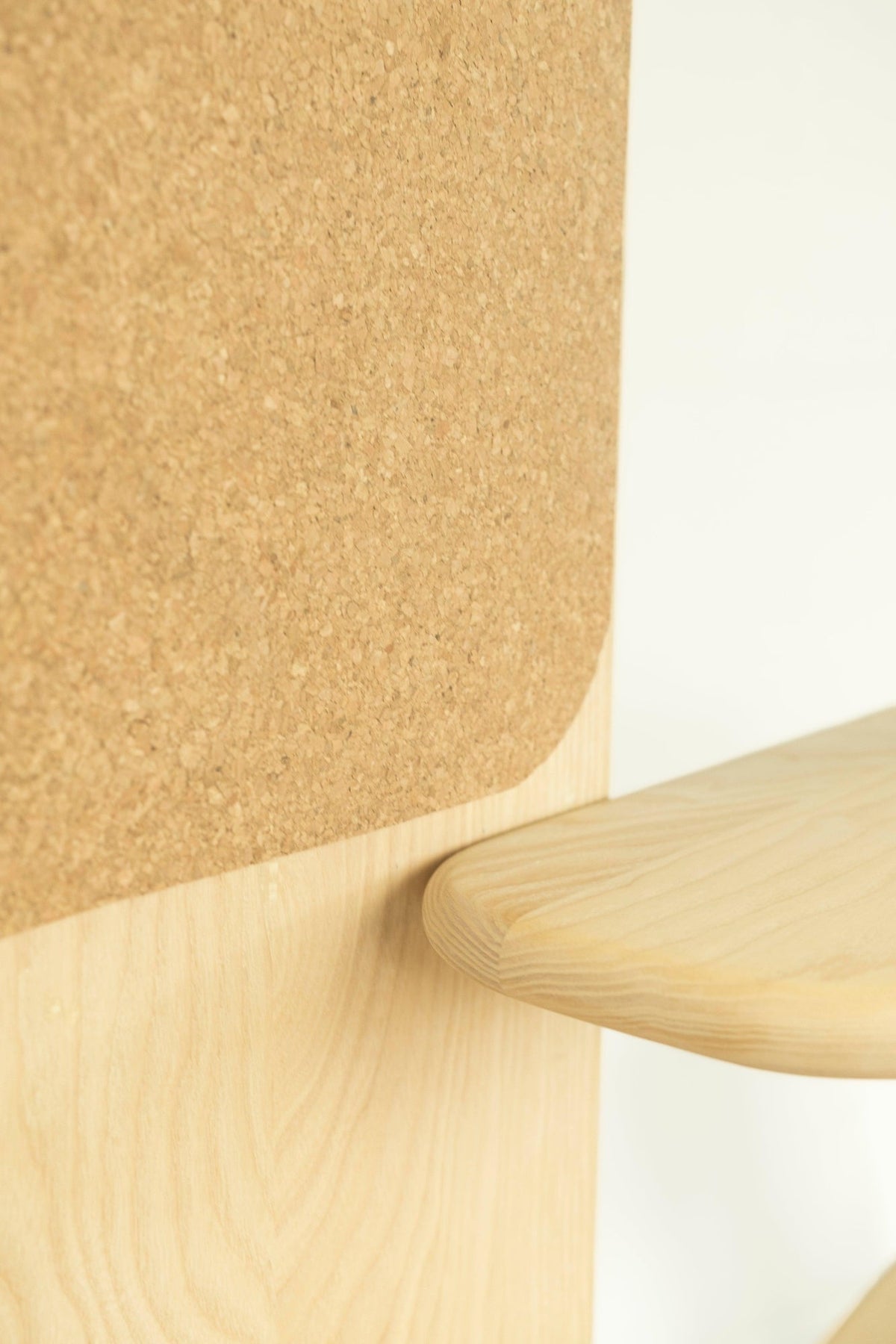
Montessori avoids saturation. Better a few materials, well organised and in view, than a drawer full of jumbled things. A panel to display their creations reinforces the sense of achievement and of having their own space.
3. Natural, healthy materials
The Montessori approach favours natural materials: real wood, authentic textures, no garish plastics. And on a surface where the child works up close, toxin-free finishes aren't a luxury. What does your child breathe? VOCs and finishes.
4. A space that invites, not one that imposes
The goal isn't to “make them sit down and study”, but to create a corner so pleasant they want to go there. Natural light, a chair that supports the back and a desk that feels like theirs do more than any rule.
From the baby corner to the study corner
The corner evolves with the child: from the learning tower in the kitchen and the floor-level bed, to the study corner when school age arrives. The logic is the same: autonomy and materials that last.
How we set it up
The Orian Desk (€379) fits this philosophy perfectly: solid wood, toxin-free finishes, two built-in shelves within reach and a cork panel to display their creations. With the Alune Chair (€119), with a wraparound backrest and at the right height, the corner is complete. And the Orian + Alune pack (€479) arrives already coordinated.
When your child grows, the circular system lets you change size by returning it and recovering up to 30%. How the return works.
Set up their Montessori study corner.
Frequently asked questions
What is a Montessori desk?
It isn't a specific type of furniture, but a desk designed for the child's autonomy: at their height, with storage within reach, natural materials and a space that feels their own.
From what age does a Montessori study corner make sense?
When the child starts creating or studying seated on a regular basis (often around 5–7 years old). Before that, an activity table at their height fits better.
Which materials fit the Montessori approach?
Natural materials such as solid wood, with toxin-free finishes, avoiding plastics and surfaces with a strong new smell.
Share: