
Cuando entras en una tienda de muebles infantiles y preguntas de qué está hecho ese armario tan bonito, la respuesta suele ser alguna variante de "madera de calidad", "tablero lacado" o, si tienes suerte, "MDF con acabado en melamina". Lo que casi nunca te dicen es lo que esos materiales hacen en la habitación de tu hijo durante los próximos cinco años mientras duerme, juega y respira a pocos metros de ellos.
Este artículo no está escrito para asustarte. Está escrito para que puedas tomar una decisión informada, que es exactamente lo que mereces cuando estás comprando algo para el espacio más íntimo de tu hijo.
Primero, aclaremos qué es cada cosa
El mercado usa los términos con una libertad que roza la trampa. Vamos a fijar definiciones.
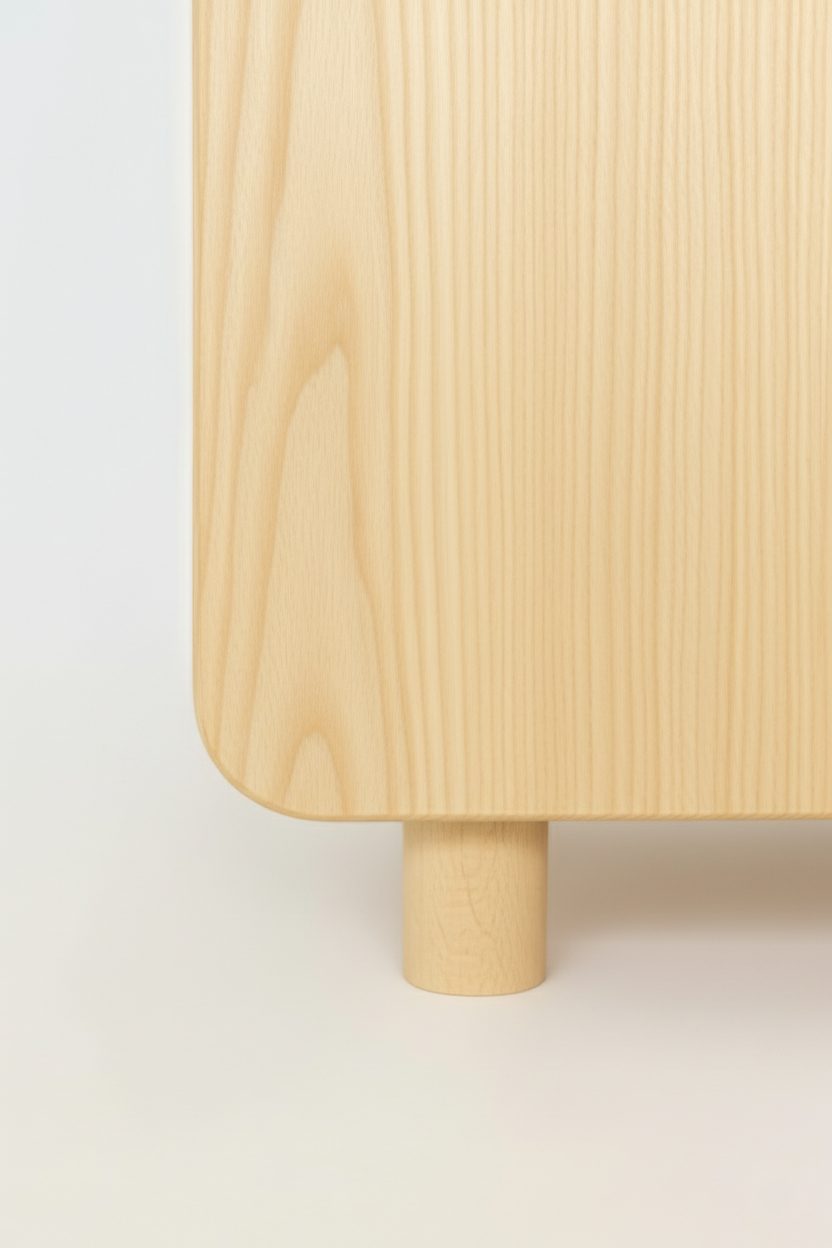
Madera maciza es exactamente lo que parece: un tablón, una viga o una pieza cortada directamente de un tronco, sin mezclas ni aglutinantes. El pino, el fresno, el roble, el haya. Lo que sale del árbol, secado y trabajado, pero sin transformaciones industriales que alteren su naturaleza. Cuando ves las vetas, cuando hueles ese olor característico, cuando notas el peso al coger una pieza, estás ante madera maciza.
MDF (Medium Density Fiberboard, o tablero de fibra de densidad media) es otra cosa completamente distinta. Se fabrica triturando madera hasta convertirla en fibras, mezclando esas fibras con resinas sintéticas —principalmente resinas de urea-formaldehído— y prensando la mezcla con calor y presión hasta obtener un tablero. El resultado es uniforme, liso, fácil de cortar y muy barato de producir. Pero no es madera. Es serrín reconstruido con pegamento industrial.
El aglomerado (o tablero de partículas) sigue el mismo principio, pero en lugar de fibras usa virutas y partículas de madera más gruesas. Tiene menos densidad que el MDF, es más poroso y reacciona peor a la humedad. Es el material más barato de los tres y el que encontrarás en la inmensa mayoría del "fast furniture".
Que quede claro desde el principio: ninguno de los dos —MDF ni aglomerado— es madera. Son derivados de la madera. La diferencia importa, y mucho, cuando hablamos de una habitación infantil.
El problema del formaldehído: el inquilino que nadie invitó
Las resinas que unen las fibras o partículas del MDF y el aglomerado contienen formaldehído. Esta sustancia, una vez el tablero está fabricado, no se queda quieta: se libera lentamente al aire en un proceso que los científicos llaman desgasificación o off-gassing.
No es un fenómeno marginal ni un riesgo teórico. La Agencia de Protección Ambiental de Estados Unidos (EPA) clasifica el formaldehído como carcinógeno humano conocido. En Europa, el Reglamento UE 2023/1464, de plena aplicación en agosto de 2026, establece límites máximos de emisión para artículos de interior precisamente porque la exposición crónica a niveles bajos de formaldehído tiene efectos documentados sobre la salud respiratoria.
¿Por qué importa especialmente en habitaciones infantiles?
Porque los niños respiran el doble de aire por kilogramo de peso que un adulto. Porque pasan más horas en su habitación, especialmente durmiendo. Y porque sus sistemas respiratorio e inmunológico están en pleno desarrollo, lo que los hace más vulnerables a irritantes ambientales. La exposición prolongada a formaldehído en interiores se asocia con irritación de las vías respiratorias, agravamiento del asma y, en exposiciones intensas o muy prolongadas, efectos más graves.
La tasa de emisión es más alta cuando el mueble es nuevo y va disminuyendo con el tiempo. Pero "con el tiempo" puede significar entre dos y diez años. No es el tipo de espera que uno hace de buen grado en la habitación de un bebé.
La buena noticia es que los tableros de MDF y aglomerado se clasifican según sus niveles de emisión: la clase E0 tiene emisiones casi nulas, la E1 tiene emisiones bajas (aceptables para uso interior), y la E2 tiene emisiones elevadas y no debería usarse en espacios habitados, y menos aún en habitaciones infantiles. El problema es que muchos fabricantes no especifican qué clase usan, o lo mencionan en letra pequeña que nadie lee.
La madera maciza no tiene este problema. No lleva resinas sintéticas. No emite formaldehído. Su único "off-gassing" son los compuestos orgánicos naturales de la madera, que en maderas como el pino tienen propiedades antimicrobianas documentadas y no representan riesgo para la salud.
Resistencia real: qué pasa cuando vive con un niño
Aquí es donde el MDF y el aglomerado muestran su lado más frágil, y donde muchos padres se llevan la mayor decepción.
Frente a la humedad, los tableros de partículas son particularmente vulnerables. Un vaso de agua derramado, la humedad acumulada de un invierno mal ventilado o simplemente la diferencia de temperatura entre el suelo frío y el ambiente cálido pueden provocar que el aglomerado se hinche, se deforme y pierda la cohesión interna. Cuando eso ocurre, la recuperación es mínima. No se puede lijar, no se puede restaurar, no se puede dar una segunda vida. Se tira.
El MDF aguanta algo mejor, pero tiene su propio talón de Aquiles: los tornillos. En madera maciza, un tornillo agarra la fibra natural y puede apretarse, aflojarse y volver a apretarse sin perder agarre. En MDF, cada vez que aflojas y vuelves a apretar un tornillo estás triturando un poco más el serrín comprimido que rodea la rosca. Al tercer o cuarto montaje, el tornillo ya no agarra nada. En el contexto de un mueble infantil que se desmonta para una mudanza, o que se devuelve a un sistema de economía circular para ser restaurado, esto es un problema estructural, no un detalle menor.
La madera maciza envejece de otra manera. Un arañazo en un tablero de MDF lacado rompe la capa superficial y deja ver el interior grisáceo del tablero, sin posibilidad real de reparación estética. Un arañazo en madera maciza de pino es solo un arañazo en madera: se lija, se barniza, y el mueble vuelve a estar como nuevo. Esta diferencia tiene un nombre en economía circular: remanufacturabilidad. La capacidad de un objeto de ser reparado, restaurado y relanzado sin perder sus propiedades esenciales. La madera maciza la tiene de forma innata. El MDF y el aglomerado, no.
La trampa del precio: lo barato que sale caro
Un armario de aglomerado puede costar 150 euros. Uno de madera maciza equivalente, 450. La diferencia de 300 euros parece enorme hasta que haces las cuentas completas.
El armario de aglomerado, en condiciones normales de uso infantil —humedad, golpes, desmontajes—, aguanta entre tres y cinco años antes de empezar a mostrar un deterioro irreversible. Al final de su vida útil, su destino casi garantizado es el punto limpio o el contenedor. Valor de segunda mano: cero, en el mejor de los casos.
El armario de madera maciza, bien construido, puede durar veinte años. Puede restaurarse. Puede venderse, donarse o incorporarse a un sistema de recogida y remanufactura. Su valor residual es real y recuperable.
Pero hay otra trampa más sutil en el precio del MDF que pocas marcas mencionan: el coste de la habitación nueva. Un mueble que dura tres años te obliga a volver a comprar. Y cada vez que compras un mueble nuevo de MDF o aglomerado, estás introduciendo en la habitación de tu hijo otra ronda de desgasificación de formaldehído, en su punto más alto, que es cuando el mueble acaba de salir de la caja. El ciclo se reinicia.
Con madera maciza, compras una vez —o con un sistema de intercambio circular, compras el mueble correcto para cada etapa— y no tienes que volver a plantear la pregunta de si el material es seguro.
¿Y el MDF de alta calidad? ¿El lacado premium?
Esta es la pregunta que siempre llega, y merece una respuesta honesta.
Existe MDF de clase E0, fabricado con resinas de baja emisión o incluso libres de formaldehído añadido. Existe MDF con certificaciones como CARB Phase 2, que es el estándar californiano más exigente del mundo en emisiones de tableros. Si un fabricante usa MDF E0 certificado por un laboratorio externo y puede demostrarlo, el problema del formaldehído es prácticamente inexistente.
El problema no es el MDF per se. El problema es que la mayoría de los fabricantes no especifican la clase de su tablero, y la mayoría del mercado de precio medio-bajo usa tableros E1 o incluso E2 sin decirlo claramente. Y que, aun con MDF E0, los problemas de resistencia a la humedad, de agarre de tornillos y de imposibilidad de restauración siguen siendo inherentes al material.
El acabado lacado premium mejora la estética y puede proteger el tablero de la humedad superficial. Pero no cambia lo que hay debajo. Un mueble de MDF de alta calidad seguirá siendo un mueble de MDF: bello mientras está nuevo, frágil ante los imprevistos, y sin posibilidad real de segunda vida.
Pino, fresno: por qué estas maderas en particular
En Circulari trabajamos con pino y fresno de proximidad, y no es una decisión arbitraria.

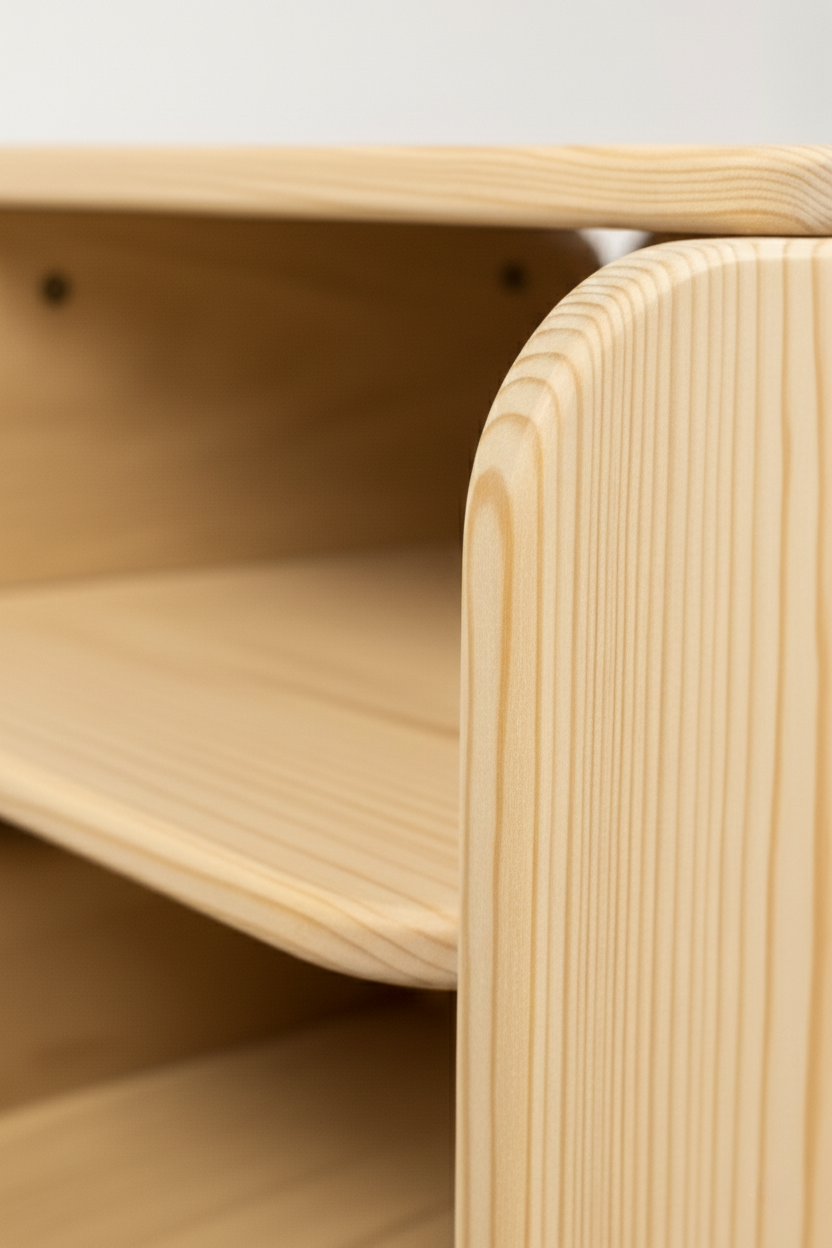
El pino es una madera blanda y ligera, lo que significa muebles menos pesados y más fáciles de mover. Tiene una densidad y una estructura de fibra que le dan una resistencia sorprendente para su peso. Es la madera de proximidad por excelencia en la Península Ibérica: hay gestión forestal certificada, los tiempos de transporte son cortos y la huella de carbono de su extracción y procesado es significativamente menor que la de maderas tropicales o de importación. Y tiene una propiedad que nos parece especialmente relevante para habitaciones infantiles: sus resinas naturales tienen propiedades higroscópicas, lo que significa que regula de forma pasiva la humedad del ambiente. Un detalle pequeño, pero que en la habitación donde tu hijo respira diez horas al día no es irrelevante.

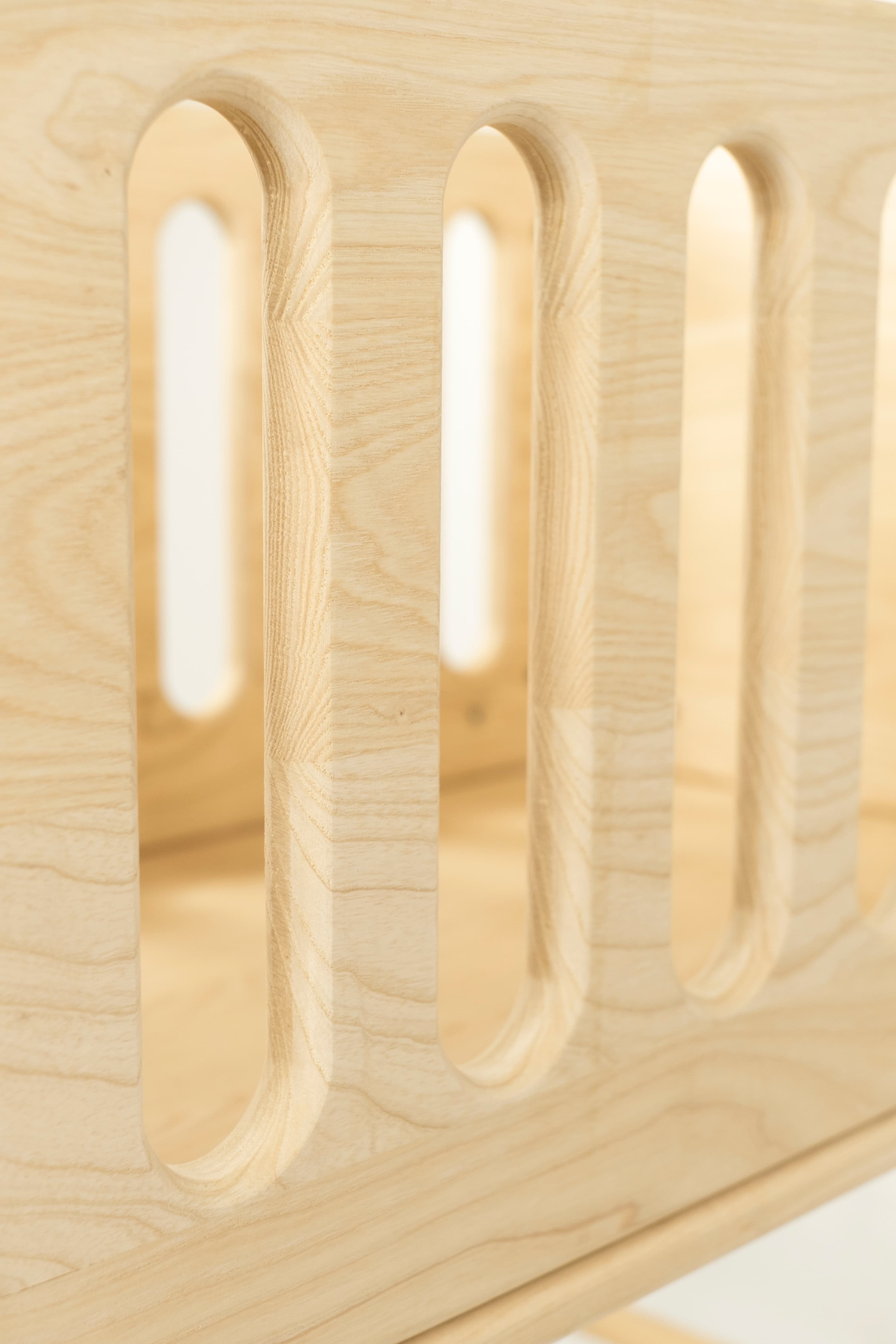
El fresno aporta más dureza y una veta más uniforme, ideal para piezas que necesitan mayor resistencia estructural, como literas o escritorios de uso intensivo. También es una madera de gestión europea bien regulada.
Ambas son maderas que, cuando llegan a nosotros y luego a tu casa, no llevan resinas sintéticas, no emiten nada que no debieran emitir y pueden ser lijadas, barnizadas y restauradas tantas veces como haga falta.
Lo que esto significa para el Sistema Siete Vidas
Aquí está el nudo de todo.
Un mueble de aglomerado o MDF no puede tener una segunda vida digna. Puedes intentar venderlo en segunda mano, pero la mayoría de los compradores de muebles usados lo saben o lo intuyen: un tablero de aglomerado que ha vivido tres años con un niño no es una ganga, es un problema. Puede pintarrajearse, puede hacer ruidos, puede estar hinchado en las esquinas. La mayoría acaba en el contenedor.
Un mueble de madera maciza bien construido, en cambio, llega a nuestro taller de Barcelona y puede ser lijado, retocado, barnizado de nuevo y enviado a otra familia con la misma dignidad que tenía cuando salió por primera vez. No estamos hablando de remendar algo roto. Estamos hablando de renovar algo que, por su naturaleza, acepta la renovación.
Es por eso que el Sistema Siete Vidas solo es posible con madera maciza. No es solo una decisión de calidad. Es la única manera de que el sistema funcione de verdad: que el mueble que devuelves no sea un residuo disfrazado de devolución, sino una pieza que de verdad puede empezar una nueva historia.
Cuando devuelves tu mueble Circulari, nosotros lo recogemos en tu casa, te entregamos un vale del 30% de lo que pagaste (o el 15% en efectivo si lo prefieres), y el mueble pasa por nuestro taller antes de llegar a otra familia. Tú estrenas el siguiente mueble perfecto para la nueva etapa de tu hijo. El planeta no recibe un mueble más en el vertedero. Y el círculo se cierra de verdad.
La pregunta que deberías hacerte antes de comprar
No es "¿cuánto cuesta?". Es "¿qué le va a pasar a este mueble en tres años, en cinco, en diez?".
Si la respuesta honesta es "acabará en el punto limpio", entonces el precio de compra nunca fue el precio real. El precio real incluye el coste ambiental del residuo, el coste de salud de los años de desgasificación y el coste económico de volver a comprar cuando el ciclo se repita.
Con madera maciza, la respuesta a esa pregunta es diferente. El mueble puede sobrevivir a la infancia de tu hijo, a la de otro niño y, si está bien construido, a la de un tercero. No porque sea un objeto irrompible, sino porque es un objeto que acepta el tiempo, la reparación y el cuidado de una manera que el serrín prensado simplemente no puede.
¿Quieres ver cómo funciona en la práctica? Descubre nuestros muebles de madera maciza de proximidad y el Sistema Siete Vidas: compra el mueble perfecto para hoy, y cuando llegue el momento del cambio, nosotros nos ocupamos del resto.
Share: