
Hay una pregunta que casi ningún padre se hace cuando compra un mueble infantil: ¿dónde se fabricó esto?
No el país que aparece en la etiqueta obligatoria. La pregunta real: ¿en qué taller, con qué materiales, bajo qué condiciones, supervisado por quién?
La mayoría de las veces, la respuesta está a miles de kilómetros de distancia, en una fábrica que el importador nunca ha visitado, usando materiales que cumplen los estándares del país de origen —que no siempre son los mismos que los europeos—, y cuyo control de calidad final ocurre en el puerto de destino, cuando el mueble ya está embalado y no hay vuelta atrás.
Este artículo no es un alegato nacionalista. Es una explicación honesta de por qué el origen de fabricación de un mueble infantil no es un detalle menor, sino uno de los argumentos de seguridad, calidad y sostenibilidad más sólidos que existen, y que casi nadie usa.
Lo que no te cuentan sobre los muebles que vienen de lejos
Importar muebles desde Asia o Europa del Este es perfectamente legal y muy habitual. Casi todas las grandes cadenas de distribución lo hacen. El proceso funciona así: el importador hace un pedido a una fábrica extranjera, negocia el precio y las especificaciones, espera entre seis y doce semanas a que el contenedor cruce el océano, y cuando el producto llega a España, verifica que cumple la normativa europea antes de ponerlo a la venta.
El problema no es la ilegalidad. El problema es la distancia entre la intención y la verificación.
Cuando el taller está en otro continente, el importador no puede visitar la línea de producción regularmente. No puede ver qué resina usan ese mes porque cambiaron de proveedor. No puede detectar que un lote de barniz no cumple la EN 71-3 (en el artículo ¿Qué certificados de seguridad debe tener una cuna o cama infantil? te explicamos estas normas) antes de que ese barniz esté ya aplicado sobre cien cunas embaladas y en ruta. Puede exigir certificaciones y recibirlas —los documentos viajan más fácil que las personas—, pero verificar que esas certificaciones corresponden exactamente al producto que llega en la caja es otro asunto.
Esto no es una teoría conspirativa. Es la razón por la que existe el Reglamento UE 2023/988 sobre seguridad general de productos, que endurece precisamente las responsabilidades de los importadores respecto a la trazabilidad de lo que traen de fuera. La propia normativa europea reconoce que la cadena de verificación es más frágil cuando el fabricante está lejos.
El viaje que hace un mueble antes de llegar a tu casa
Pensemos en un mueble fabricado en China y vendido en España. No como ejercicio abstracto, sino como secuencia real de decisiones que afectan a lo que acabas montando en la habitación de tu hijo.
La madera —o más frecuentemente el aglomerado o el MDF— se produce en origen con las resinas disponibles en ese mercado. Las clasificaciones de emisión de formaldehído varían entre países: lo que en la UE se considera E2 (no apto para espacios habitados) puede ser el estándar habitual en otros mercados. Los acabados se aplican con las pinturas disponibles localmente, y aunque el importador especifique que deben cumplir la EN 71-3 europea, la verificación real de eso requiere análisis de laboratorio independiente, no solo la declaración del fabricante.
Después viene el transporte. Un contenedor marítimo de Shanghai a Barcelona recorre aproximadamente 20.000 kilómetros. El transporte marítimo emite alrededor de 16 gramos de CO₂ por tonelada-kilómetro, lo que significa que un armario de 50 kilogramos acumula durante ese viaje una huella de carbono equivalente a la que tendría un año de uso doméstico intensivo. Y eso sin contar la fabricación.
Cuando el contenedor llega a puerto, los productos se inspeccionan. Pero la inspección aduanera no es un laboratorio de seguridad de producto: comprueba documentos, revisa aleatoriamente y aplica la normativa de importación. Si hay un problema con el barniz o con las emisiones de un tablero, lo más probable es que no se detecte en ese momento.
El mueble llega a un almacén. De ahí a una tienda o a un operador logístico. De ahí a tu casa. Tú lo desembalsas, montas, y lo colocas en la habitación donde tu hijo dormirá los próximos años.
Toda esa cadena, con todas sus decisiones delegadas y sus distancias, ocurrió antes de que tú pudieras preguntar nada.
Lo que cambia cuando el taller está en Barcelona
En Circulari fabricamos en nuestro taller de Barcelona. No es una elección sentimental ni una etiqueta de marketing. Es una decisión que tiene consecuencias concretas en cada una de las preguntas que debería hacerse cualquier padre antes de comprar un mueble infantil.
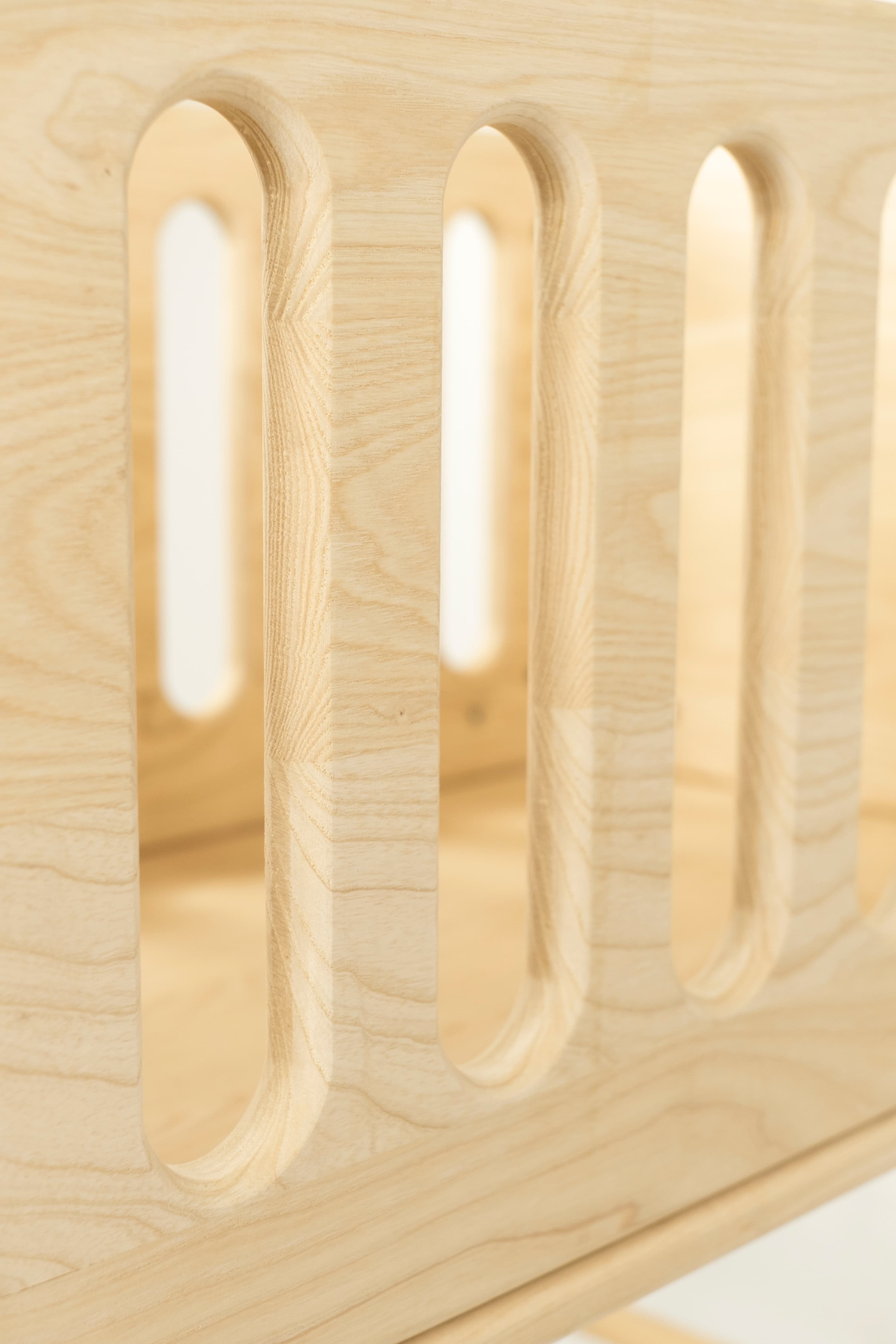
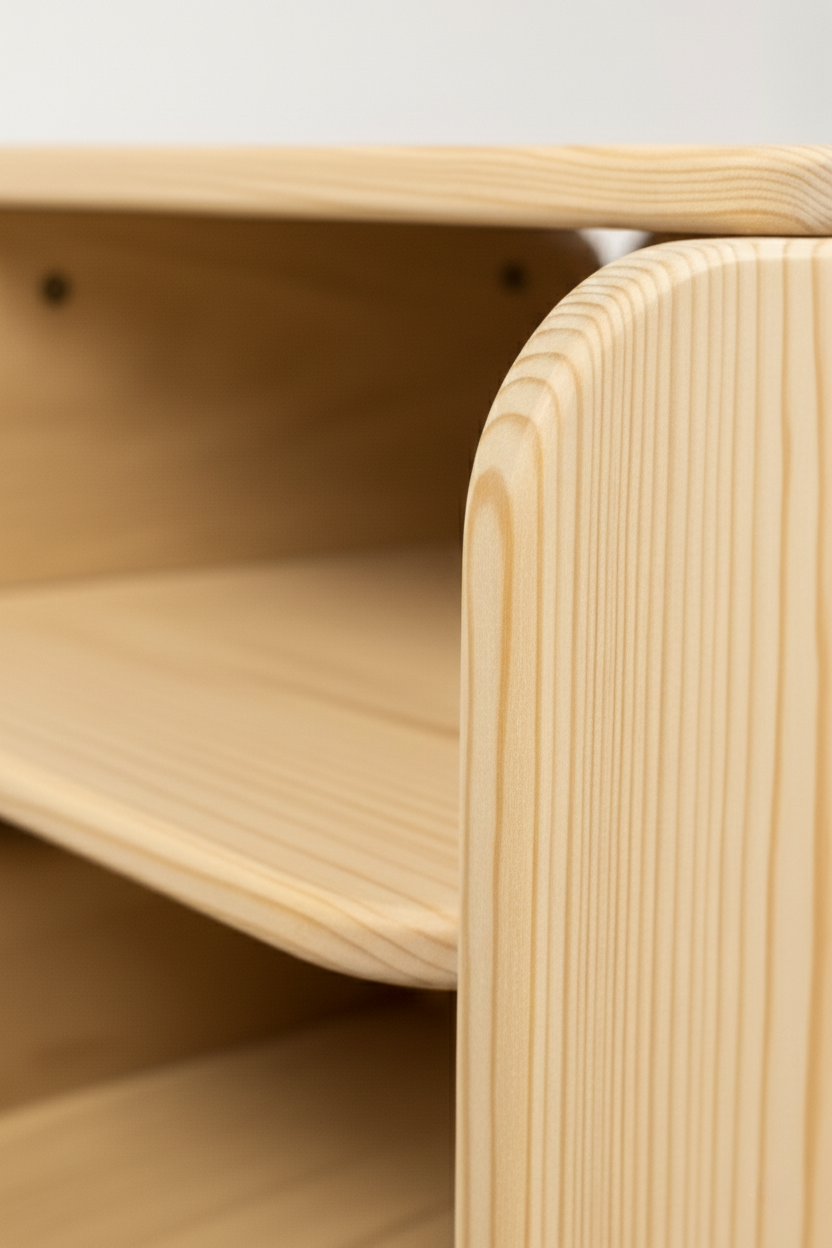
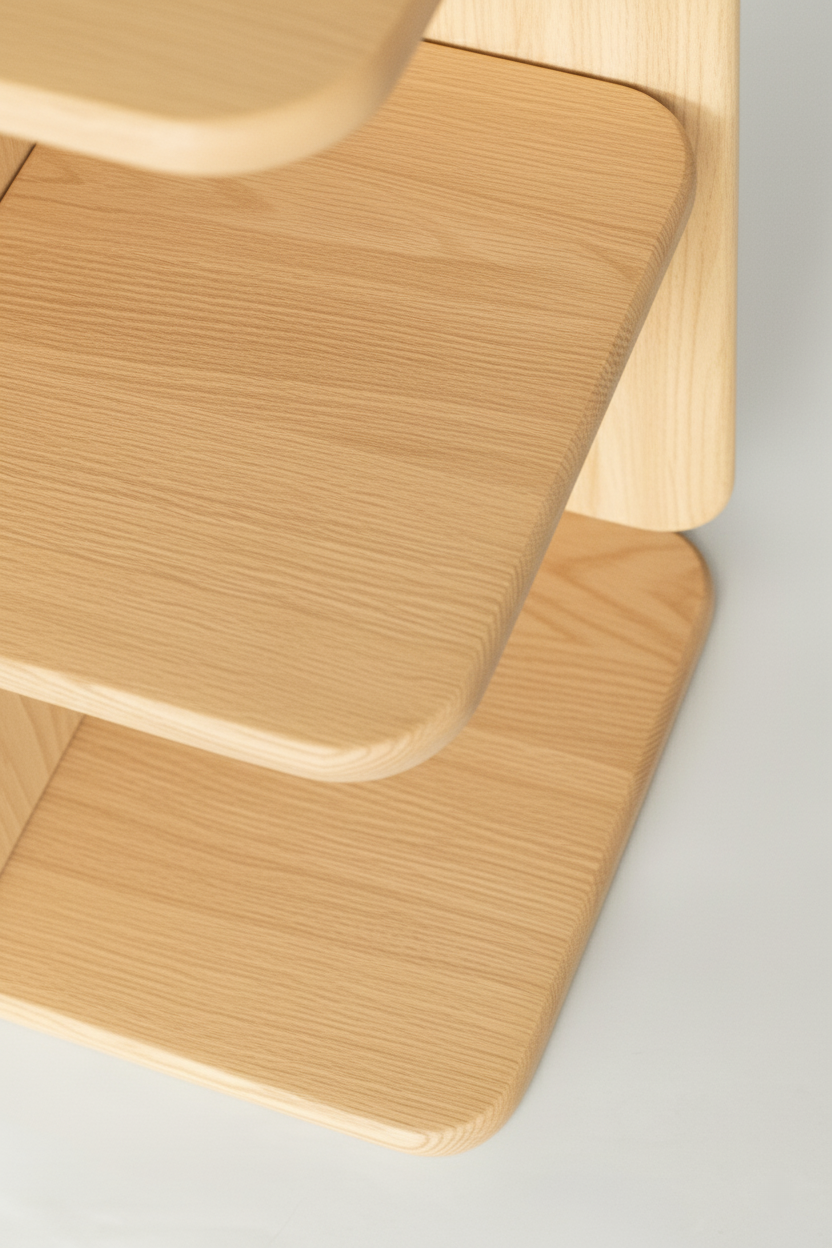
¿De dónde viene la madera? De bosques ibéricos gestionados de forma certificada. El pino y el fresno que usamos recorren cientos de kilómetros desde el árbol hasta nuestro taller, no miles. Podemos rastrear el origen de cada lote porque trabajamos con proveedores que conocemos y que están a una distancia que permite esa relación directa.
¿Qué resinas y acabados se usan? Pinturas al agua sin COV, barnices naturales compatibles con la EN 71-3. Podemos decirlo con seguridad porque nosotros mismos elegimos esos materiales, los aplicamos en nuestro taller y podemos cambiar o rechazar un proveedor si algo no cumple nuestros estándares. No dependemos de lo que un fabricante a 10.000 kilómetros decida usar ese mes.
¿Quién controla la calidad? Nuestro propio equipo, en cada pieza, antes de que salga del taller. No es un control de muestra estadística en un puerto de llegada. Es la revisión de alguien que conoce el producto, que lo ha visto fabricarse y que va a responder por él.
¿Puedo verificarlo? Sí. El taller está en Barcelona. Se puede visitar. Las decisiones de materiales y proceso son verificables porque son nuestras, no las de un tercero al que no tenemos acceso.
La huella de carbono que nadie pone en la ficha del producto
Cuando una marca habla de sostenibilidad y vende muebles fabricados en Asia, hay una contradicción que pocas veces se hace explícita: el transporte marítimo de larga distancia tiene una huella de carbono que ninguna certificación ecológica del producto en sí puede compensar completamente.
No estamos hablando de una diferencia marginal. Un contenedor de 20 toneladas viajando de Shanghai a Barcelona emite aproximadamente 5.000 kilogramos de CO₂ solo en el transporte. Dividido entre los muebles que contiene, eso puede representar entre 50 y 150 kilogramos de CO₂ por unidad, dependiendo del peso y el espacio que ocupe cada pieza.
Un mueble fabricado en Barcelona y entregado en Madrid recorre unos 600 kilómetros. En transporte por carretera, con un camión moderno, esa misma unidad genera una fracción mínima de esas emisiones.
La sostenibilidad de un mueble no empieza cuando tú lo compras. Empieza cuando se tala el árbol, continúa durante la fabricación, se acumula durante el transporte y termina —o no termina— cuando el mueble deja de usarse. Si solo miramos uno de esos eslabones, estamos haciendo la cuenta incompleta.
El argumento que las grandes cadenas no pueden usar
Hay algo que ninguna marca que fabrica en Asia puede ofrecerte, por mucho que invierta en marketing de proximidad: la posibilidad real de restaurar el mueble cuando lo devuelves.
En el Sistema Siete Vidas de Circulari, cuando tu hijo supera una etapa y nos devuelves el mueble, ese mueble llega a nuestro taller de Barcelona. Nuestro equipo lo recibe, lo evalúa, lo lija, retoca los acabados, comprueba la estructura y lo prepara para empezar una nueva historia con otra familia.
Eso es posible porque el taller existe, porque está cerca, porque conocemos el producto desde que nació y sabemos exactamente qué tiene y qué necesita. Un sistema de recogida y restauración real —no un servicio de recogida para llevar al punto limpio disfrazado de circularidad— requiere esa proximidad. No puedes restaurar dignamente lo que está a 10.000 kilómetros, ni puedes comprometerte a hacerlo con la seriedad que merece si el proceso depende de una logística transoceánica.
Cuando te devolvemos el 30% del valor en crédito para tu siguiente mueble, ese valor existe porque el mueble que devuelves va a tener una segunda vida real. No es un descuento comercial. Es el reflejo de que el material es bueno, que el taller puede trabajarlo, y que otra familia va a querer ese mueble restaurado.
Fabricar en España en 2026: lo que los números dicen
El sector del mueble español cerró 2025 con un crecimiento del 3,4%, alcanzando los 4.779 millones de euros en volumen de negocio, y con 66.102 trabajadores empleados. Es un sector que exporta —récord histórico de 2.887 millones de euros en exportaciones en 2025—, pero que también mantiene una tradición artesanal y un tejido de pequeños talleres con conocimiento real del oficio.
Cataluña es una de las tres comunidades líderes del sector en España. Cuando Circulari fabrica en Barcelona, no está reinventando nada: está siendo parte de una industria con décadas de conocimiento acumulado, acceso a proveedores locales de calidad y una cultura de taller que es difícil de replicar desde un catálogo de importación.
Comprar un mueble fabricado en España no es solo una declaración de principios. Es elegir un producto cuya cadena de valor puedes seguir, cuyo fabricante puedes localizar, y cuyo impacto económico revierte en el territorio donde vives.
La pregunta que deberías añadir a tu lista
Cuando evalúes tu próxima compra de mobiliario infantil, a las preguntas sobre materiales, certificaciones y durabilidad, añade esta: ¿dónde se fabricó y quién puede decirme exactamente cómo?
Si la respuesta es vaga, si el origen real está desdibujado detrás de una marca europea con producción externalizada, si no existe manera de verificar lo que te cuentan sobre los materiales, ese silencio ya es un dato.
La trazabilidad no es un lujo. Es la única manera de saber de verdad qué está durmiendo en la habitación de tu hijo.
En Circulari fabricamos en nuestro taller de Barcelona, con madera maciza ibérica y acabados sin COV. Si tienes curiosidad por cómo funciona nuestro proceso —desde el árbol hasta tu casa, y de vuelta a nosotros cuando llega el momento del cambio— estamos aquí para contártelo.
Share: