
Cuando buscas una cuna o una cama para tu hijo, la primera pregunta que te asalta no es el color ni el precio. Es algo más visceral: ¿esto es seguro?
Y tienes razón en preguntarlo. El mercado de mobiliario infantil está lleno de productos que parecen sólidos en la foto, cuestan poco y vienen en una caja con instrucciones de montaje en cinco idiomas. Pero entre esa caja y la seguridad real de tu hijo hay una distancia que solo cubren los certificados. El problema es que casi nadie te explica qué significan, cuáles son obligatorios y cuáles son simplemente marketing.
Esto es lo que deberías saber antes de comprar.
El error más común: confundir "tiene certificado" con "está certificado"
Cualquier fabricante puede imprimir un logo en una caja. Lo que marca la diferencia es que ese logo corresponda a un ensayo real realizado por un laboratorio acreditado, con un número de expediente verificable.
Cuando hablamos de certificación en muebles infantiles, hablamos de normas técnicas europeas —las llamadas normas EN— que establecen exactamente qué pruebas debe pasar un producto: resistencia de los barrotes, distancia entre ellos, estabilidad de la estructura, ausencia de sustancias tóxicas en los acabados, comportamiento de los mecanismos de cierre...
No son recomendaciones. Son el estándar mínimo que separa un mueble apto para un bebé de uno que no lo es.

Las normas que importan: qué buscar y por qué
EN 716 — La norma de las cunas
La norma UNE-EN 716 (en su versión actualizada de 2018) es la referencia europea para cunas y cunas plegables de uso doméstico. Tiene dos partes: la primera define los requisitos de seguridad, la segunda los métodos de ensayo.
¿Qué verifica exactamente? Principalmente tres cosas:
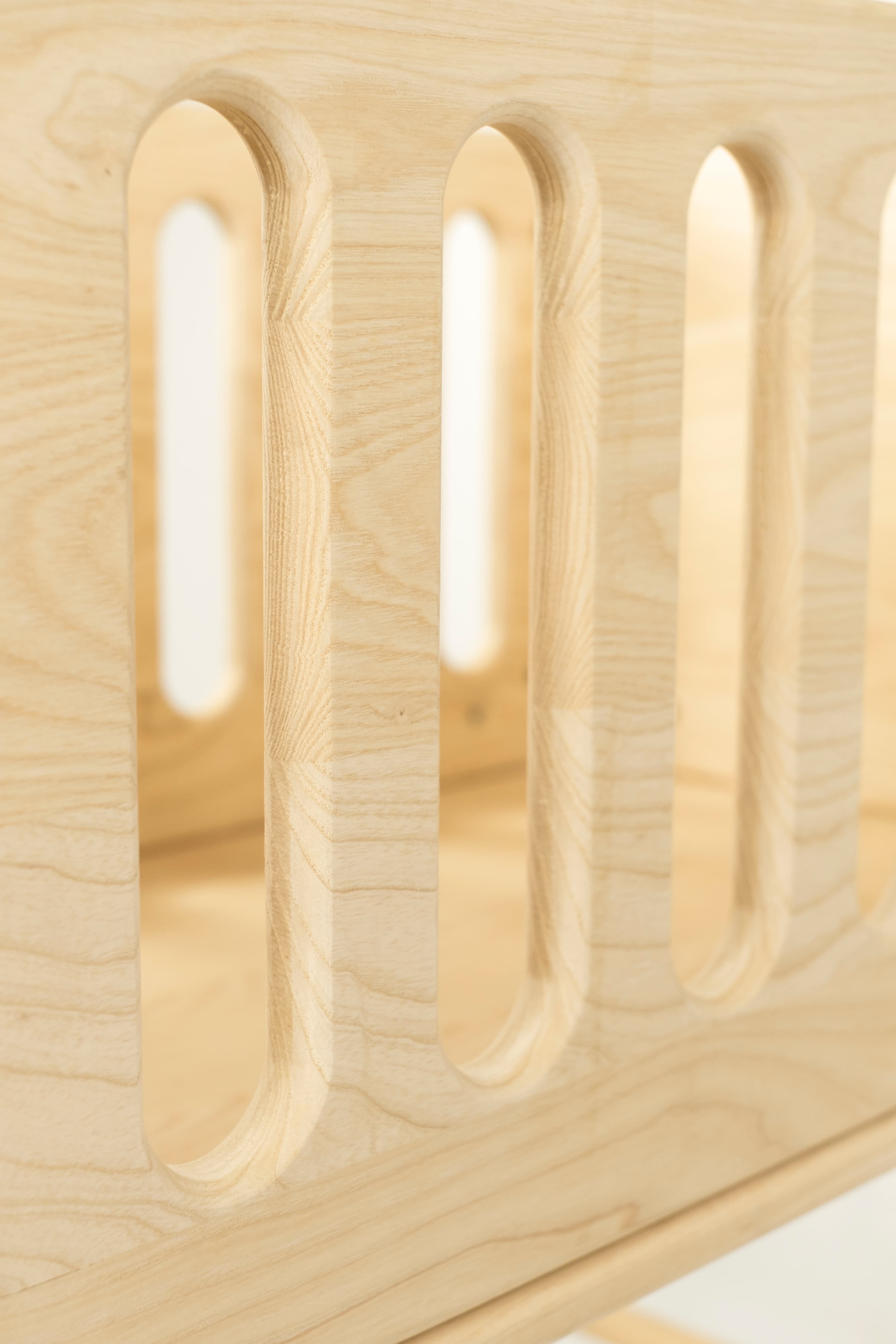
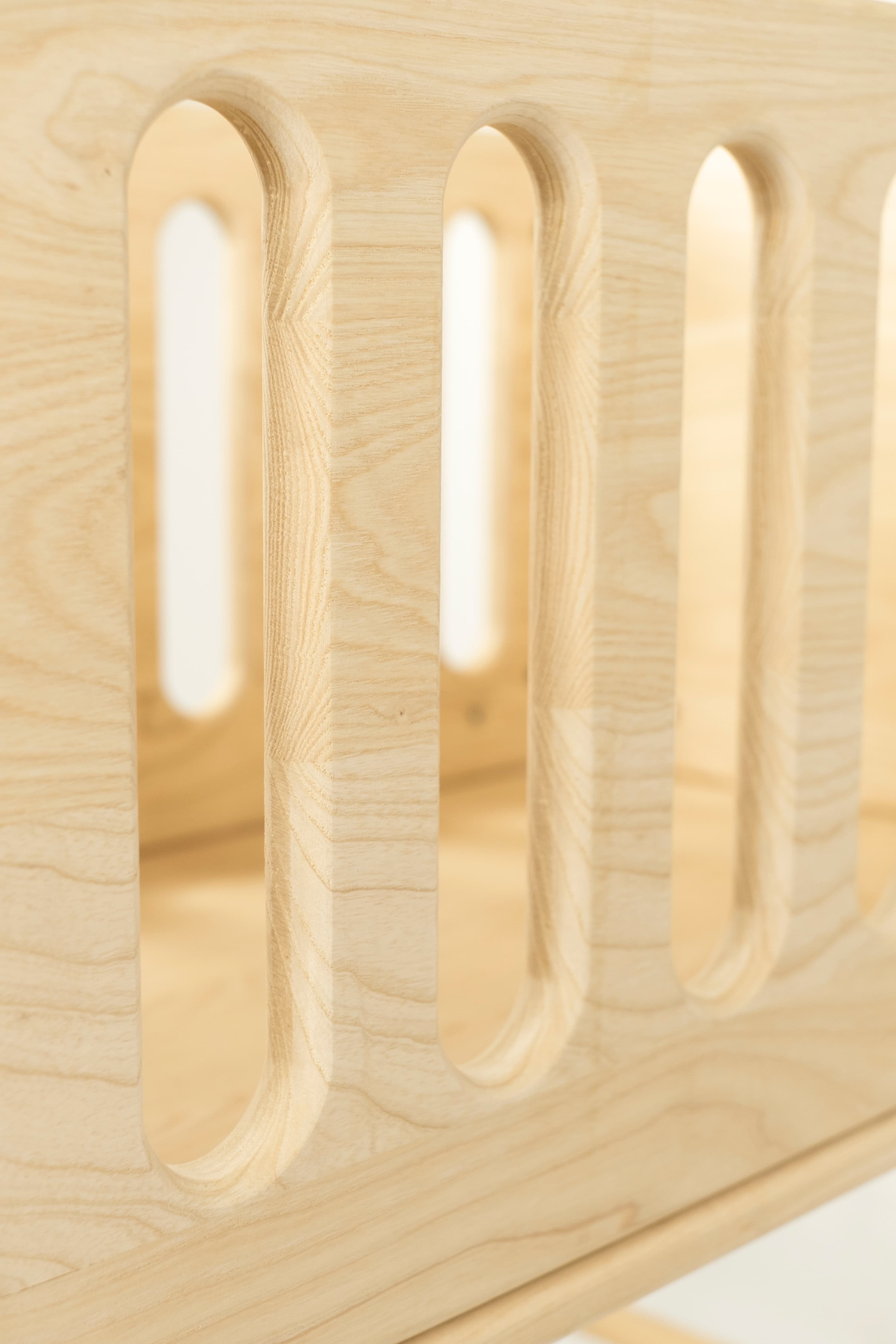
La distancia entre barrotes. Debe estar entre 4,5 y 6,5 cm. Por debajo de ese rango, el cuerpo del bebé puede quedar atrapado. Por encima, la cabeza puede pasar y provocar estrangulamiento. Es un margen estrecho y no es negociable.
La resistencia estructural. La cuna se somete a cargas estáticas y dinámicas que simulan el uso real —y el uso brusco— de un bebé. Si hay piezas que ceden, tornillos que se aflojan o juntas que se separan, el producto no pasa.
La ausencia de huecos peligrosos. Cualquier abertura en la que pueda introducirse la cabeza de un niño (entre 4,5 y 23 cm, aproximadamente) es un riesgo. La norma mapea todos esos puntos.
Un mueble que cumple la EN 716 lo dice explícitamente en su documentación técnica. Si no lo encuentras ni en la ficha del producto ni al preguntar al fabricante, ese silencio ya es una respuesta.
EN 747 — La norma de las literas y camas elevadas
Cuando llega el momento de dar el salto a la litera o a una cama con altillo, entra en juego la norma EN 747. Esta norma cubre las camas altas —donde el colchón está elevado del suelo— y establece requisitos específicos de estabilidad, altura de las barandillas de seguridad y resistencia de la estructura a cargas dinámicas.
Un dato que muchos padres desconocen: la normativa recomienda que ningún niño menor de 6 años duerma en el nivel superior de una litera. No porque la cama no sea segura, sino porque a esa edad los niños aún no tienen desarrollados los reflejos que necesitan al despertar a oscuras en un espacio elevado.
EN 71-3 — Los acabados: lo que no ves puede hacerte daño
Una cuna puede superar los ensayos estructurales con nota y aun así tener un problema serio: la pintura.
La norma EN 71-3 regula la migración de elementos químicos en materiales destinados a estar en contacto con niños. Metales pesados como el plomo, el cadmio, el cromo o el mercurio tienen límites estrictos de presencia en los acabados. Esta norma nació para juguetes, pero su aplicación se ha extendido al mobiliario infantil precisamente porque los bebés chupan, muerden y lamen todo lo que tienen a mano, incluidos los barrotes de su cuna.
Si el fabricante usa pinturas al agua con certificación ecológica y bajas emisiones de COV (compuestos orgánicos volátiles), mejor todavía. Pero como mínimo, la conformidad con EN 71-3 debería ser un requisito innegociable.
REACH y el formaldehído — El veneno invisible en los tableros
Aquí entra uno de los temas menos conocidos y más importantes: el Reglamento REACH de la Unión Europea.
REACH obliga a los fabricantes a identificar y gestionar los riesgos de las sustancias químicas presentes en sus productos. En el caso del mobiliario, el principal sospechoso es el formaldehído, un gas que emiten de forma natural los tableros de aglomerado, el MDF y la madera contrachapada cuando están fabricados con colas de resina de urea-formaldehído.
¿El problema? Que ese gas se libera lentamente al ambiente durante años. En adultos, en espacios ventilados, sus efectos son menores. En una habitación infantil cerrada, con un bebé que pasa 12 horas diarias durmiendo a pocos centímetros de un tablero que emite formaldehído... la ecuación cambia.
La nueva regulación europea (Reglamento UE 2023/1464, de plena aplicación en agosto de 2026) establece límites máximos de emisión de formaldehído para artículos de interior, incluido el mobiliario. Los muebles fabricados en madera maciza natural, sin colas ni aglutinantes sintéticos, no tienen este problema. Los fabricados en tableros de partículas o MDF deben demostrar que sus emisiones están por debajo del umbral permitido.
La trampa del "cumple normativa europea"
Muchas marcas usan esta frase como si fuera un certificado en sí misma. No lo es.
"Cumple la normativa europea" puede significar que el propio fabricante ha hecho una declaración de conformidad sin que ningún laboratorio externo haya verificado nada. Es legal —se llama autocertificación— y es perfectamente insuficiente cuando hablamos de la seguridad de un bebé.
Lo que deberías exigir es que el cumplimiento esté respaldado por un ensayo realizado por un organismo notificado o un laboratorio acreditado independiente. Marcas como AENOR, TÜV, Bureau Veritas o LGAI (Applus+) son referencias habituales en España para este tipo de verificación.
Si el fabricante no puede darte ese documento, sigue buscando.
Una forma adicional de certificación es saber dónde se ha fabricado el mueble, esto te dará información muy valiosa de sus estándares, normativas y pasos que ha seguido. Un mueble fabricado un taller en España, bajo normativa española y europea en cada paso del proceso, es verificable de una manera que una fábrica en el otro extremo del mundo no lo es
Madera maciza: la certificación más honesta de todas
Más allá de los ensayos y los sellos, hay una forma de simplificar mucho la ecuación: elegir madera maciza de procedencia conocida.
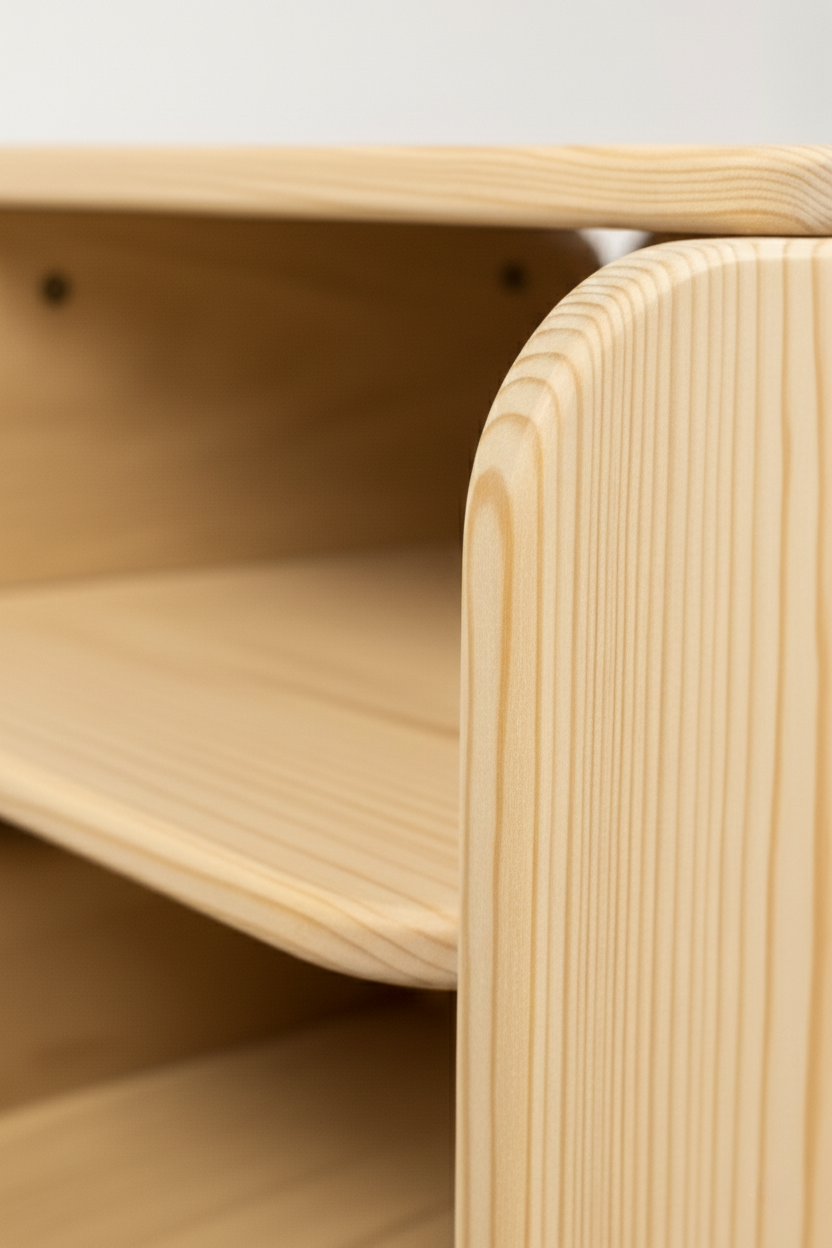
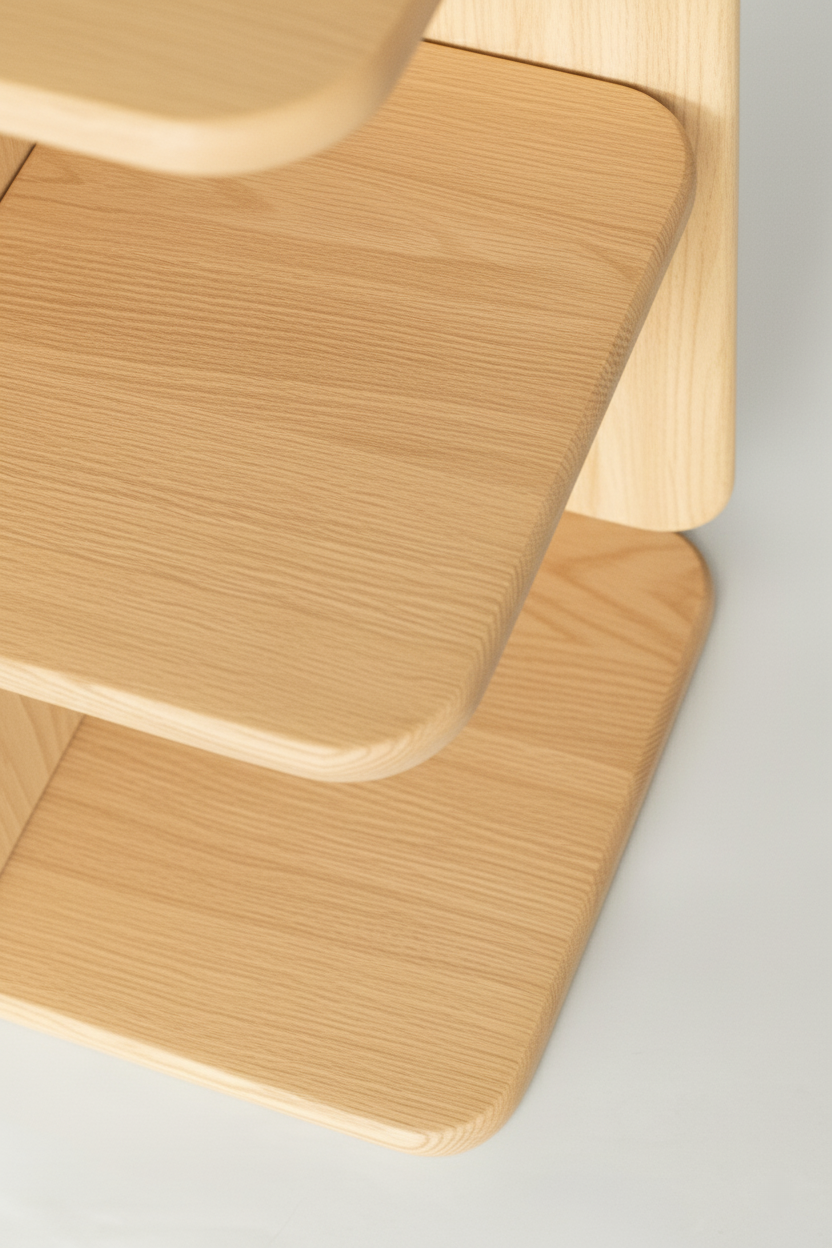
Un mueble fabricado en madera maciza de pino o fresno, sin tableros de aglomerado ni colas de resina, elimina de raíz el problema del formaldehído. Sus acabados con pinturas al agua y barnices naturales reducen al mínimo la presencia de compuestos volátiles. Y su estructura sólida supera con facilidad los ensayos de resistencia de la EN 716 o la EN 747, porque no depende de la integridad de un núcleo de serrín prensado.
Esto no significa que todo mueble de madera maciza sea automáticamente seguro. Los ensayos siguen siendo necesarios. Pero cuando el punto de partida es un material noble y sin artificios, el camino hacia la certificación es mucho más corto, y el margen de error, mucho menor.

Lo que Circulari hace diferente
En Circulari fabricamos con madera maciza de proximidad —pino y fresno de origen local en nuestro taller de Barcelona — y nuestros acabados son pinturas al agua sin COV (compuestos orgánicos volátiles). Cada pieza está diseñada para cumplir con las normas EN 716 y EN 747 desde su concepción, no como un trámite final, sino como parte del proceso de diseño.
Pero hay algo más que nos importa tanto como la seguridad del mueble nuevo: la seguridad del mueble cuando ya no lo necesitas.
Un tablero de aglomerado que acaba en el punto limpio no deja de emitir formaldehído porque lo hayas tirado. Un mueble de madera maciza bien construido, en cambio, puede desmontarse, restaurarse y volver a ser el mueble perfecto para otra familia. Sin residuos. Sin materiales que se degradan en un vertedero.
Por eso existe el Sistema Siete Vidas: cuando tu hijo supera la etapa de la cuna, nosotros vamos a recogerla. Te devolvemos el 30% de lo que pagaste en crédito para el siguiente mueble —o el 15% en efectivo si lo prefieres— y nosotros nos encargamos de restaurarla en nuestro taller de Barcelona para que empiece una nueva historia.
La seguridad no termina cuando el mueble sale de tu casa. Empieza ahí también.
Lista de verificación rápida antes de comprar
Antes de confirmar cualquier compra de cuna o cama infantil, hazte estas preguntas:
- ¿El fabricante menciona explícitamente la EN 716 (cunas) o la EN 747 (literas/camas elevadas)?
- ¿Existe un ensayo realizado por un laboratorio externo acreditado que lo respalde?
- ¿Los acabados están libres de metales pesados y cumplen la EN 71-3?
- ¿El fabricante puede acreditar el cumplimiento del Reglamento REACH respecto al formaldehído?
- ¿El mueble está fabricado en madera maciza o en tableros de partículas/MDF?
- ¿Tienes claro qué pasará con ese mueble cuando tu hijo lo supere?
- ¿Dónde se fabrica el mueble?
Si la respuesta a alguna de estas preguntas es "no lo sé" o "no me lo han dicho", ya sabes qué hacer: seguir preguntando. O buscar un fabricante que te las responda todas sin que tengas que pedírselo.
¿Quieres ver cómo funciona el Sistema Siete Vidas? Descubre la Cuna Kokozi y la Cama Nono: diseñadas para el momento exacto de tu hijo, fabricadas para durar una generación y pensadas para que tú nunca tengas que preocuparte por qué hacer con ellas cuando llegue el cambio.
Share: