
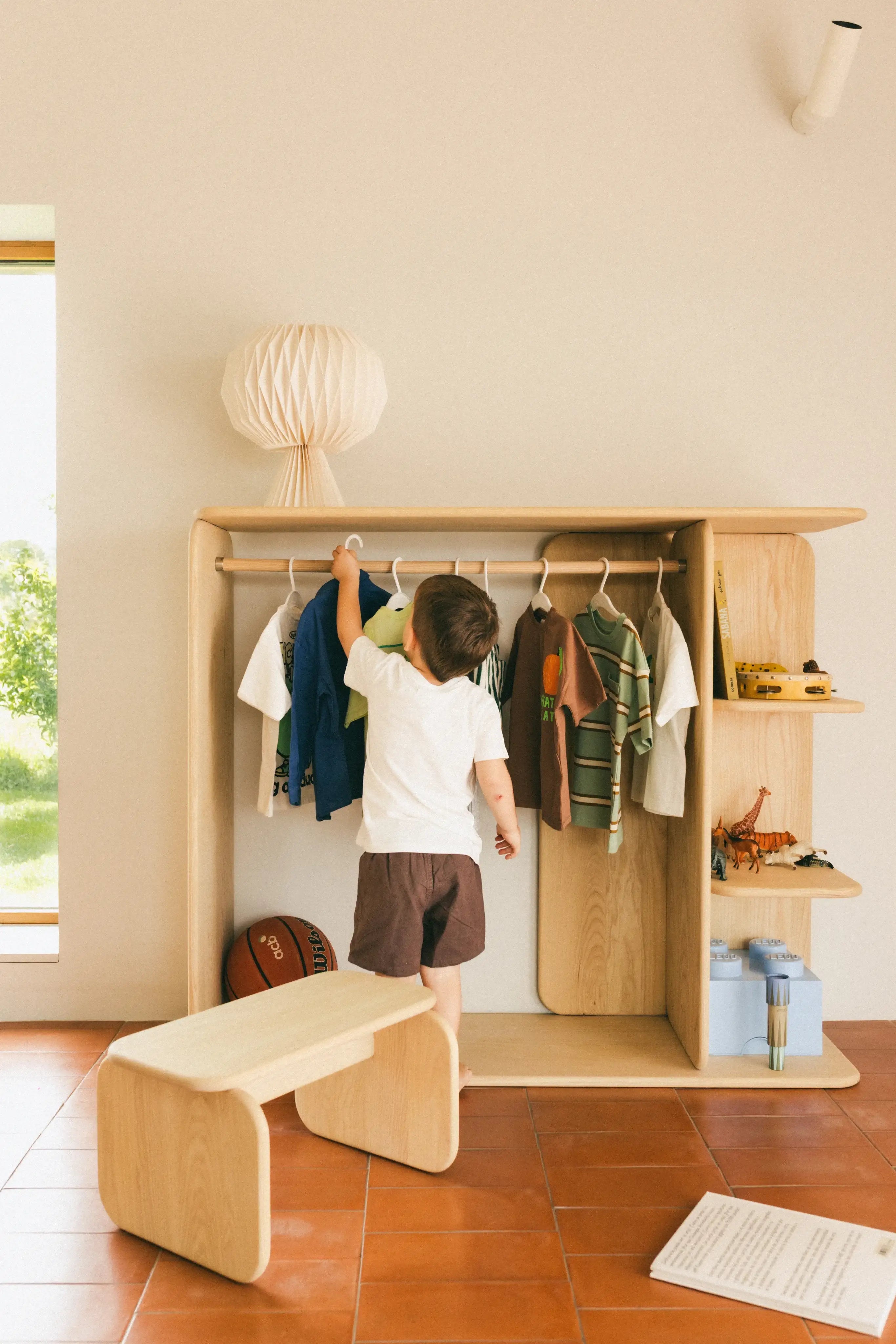
La economía circular aplicada a muebles infantiles es un sistema en el que el mueble no termina su vida cuando tu hijo crece. En lugar de acabar en el contenedor o en el trastero, vuelve al fabricante, se restaura y empieza una nueva historia con otra familia. El resultado: menos residuos, más valor y una lógica de consumo que por fin tiene sentido.
Es la alternativa real al modelo de siempre: comprar barato, usar poco y tirar cuando ya no sirve. Y en el caso de los muebles infantiles, ese ciclo es especialmente absurdo, porque los niños crecen en meses y los muebles acaban perfectamente útiles en un vertedero.
El problema que nadie calcula
Cada año, la Unión Europea genera más de 10 millones de toneladas de residuos de muebles. La mayoría acaba incinerada o en vertederos. Y los muebles infantiles son especialmente problemáticos: un árbol tarda 30 años en crecer, y la media de vida útil de una cuna o un escritorio infantil en un hogar es de 3 años.
No porque el mueble se rompa. Sino porque el niño crece, cambia de etapa y el mueble deja de encajar. Si ha sido fabricado con aglomerado o MDF barato, nadie lo quiere de segunda mano. Si no está diseñado para desmontarse y restaurarse, no tiene segunda vida posible. Fin del ciclo.
¿Qué significa "circular" en la práctica?
Un mueble circular no es solo el que usa madera certificada o barniz al agua, aunque eso forme parte de ello. Lo que lo hace circular es que está diseñado desde el principio para tener más de una vida. Eso implica tres cosas concretas:
- Materiales nobles y duraderos. Madera maciza, acabados naturales, uniones sólidas. Nada que se hinche con la humedad ni que se astille al primer golpe.
- Diseño pensado para restaurarse. Las piezas se pueden desmontar, lijar y volver a acabar sin perder integridad estructural. No hay componentes de un solo uso ni ensamblajes que se destruyen al abrirlos.
- Un sistema de retorno real. El fabricante recoge el mueble, lo remanufactura en taller y lo devuelve al mercado. Sin ese circuito cerrado, lo demás es greenwashing.
¿Es lo mismo que segunda mano o alquiler?
No, y la diferencia importa.
La segunda mano depende de que tú encuentres comprador, negocies el precio, organices la recogida y confíes en que el siguiente usuario cuide el mueble. Es útil, pero no es un sistema: es suerte organizada.
El alquiler implica que nunca es tuyo del todo. Hay condiciones de uso, penalizaciones por desperfectos y la incertidumbre de si podrás seguir usándolo cuando quieras.
La economía circular con sistema de retorno es diferente: compras el mueble, es tuyo, lo usas sin miedo, y cuando ya no lo necesitas el fabricante te lo recoge, te devuelve parte de su valor y le da una nueva vida. Tú no gestionas nada. El valor no desaparece. Y el mueble no acaba en el vertedero.
Cómo funciona el sistema circular de Circulari
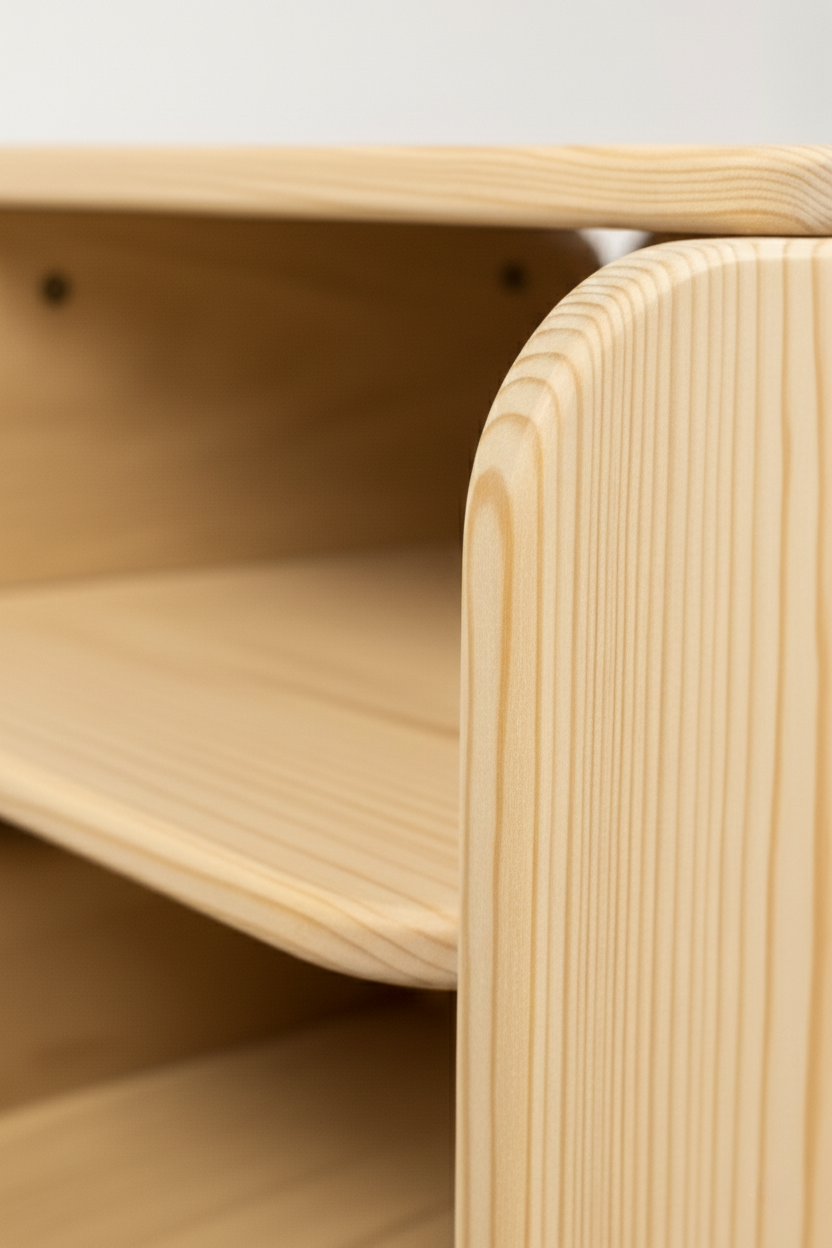
En Circulari fabricamos muebles infantiles de madera maciza de pino y fresno, con barnices al agua sin poliuretanos ni COVs, en un taller artesanal cerca de Barcelona. Pero el sistema no acaba en la venta.
Cuando tu hijo crece y el mueble ha cumplido su función, nos lo devuelves. Nosotros lo recogemos sin coste, lo restauramos en taller y le damos una nueva vida con otra familia. Tú recibes un vale del 30% del valor original para tu próxima compra, o un abono directo del 15%.
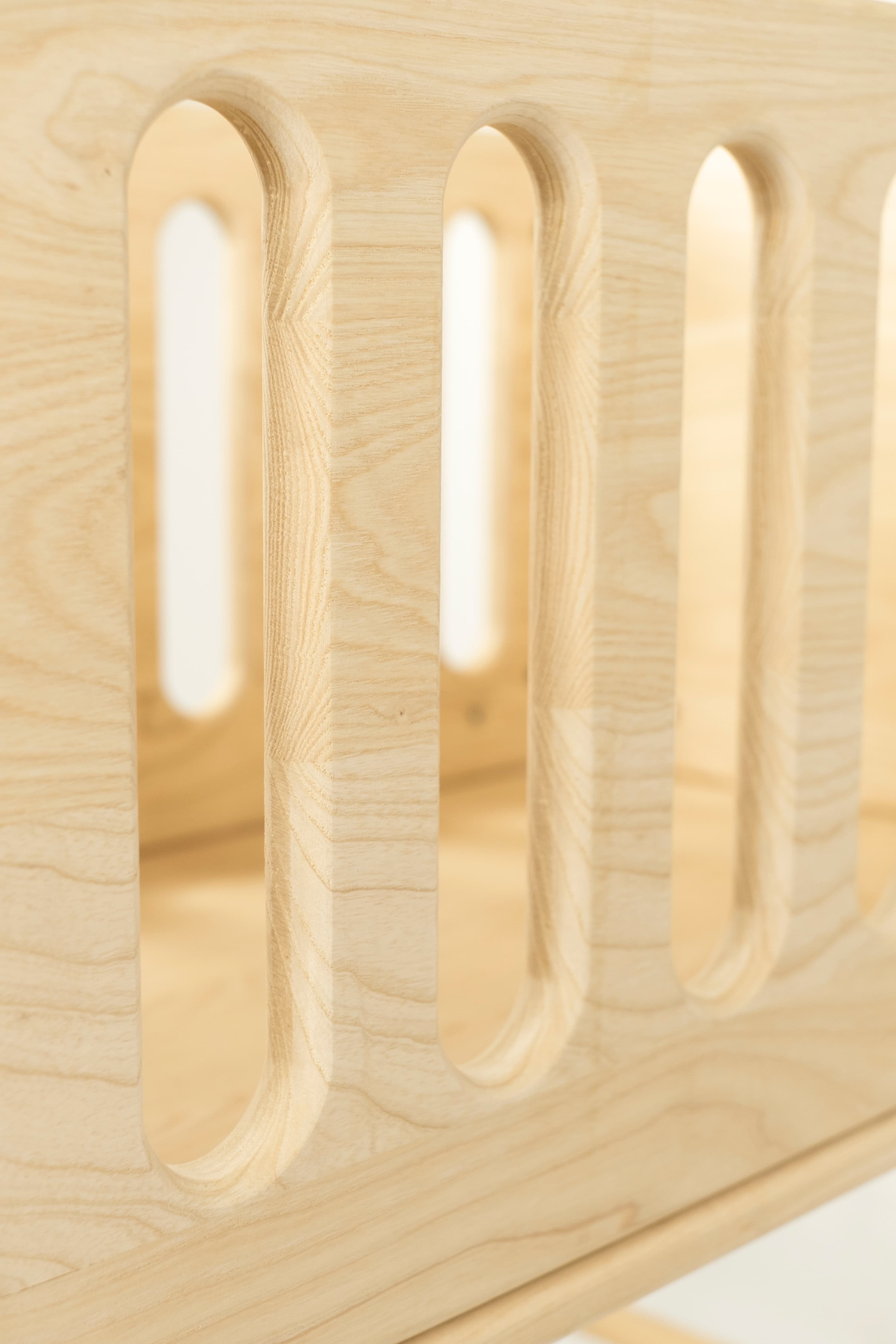
Cada pieza está diseñada para pasar por varios ciclos de restauración sin perder calidad. No es una promesa de marketing: es la razón por la que usamos madera maciza en lugar de aglomerado, y por la que cada unión está pensada para poder desmontarse y volver a montarse.
¿Qué gana una familia eligiendo un sistema circular?
Más allá del impacto ambiental, hay razones muy prácticas:
- El coste real es menor. Un mueble de calidad con retorno del 30% sale más económico a largo plazo que comprar barato cada vez que el niño cambia de etapa.
- No tienes que gestionar qué hacer con el mueble. No hay anuncios de segunda mano, no hay discusiones sobre el precio, no hay viajes al punto limpio.
- El mueble aguanta bien el uso. Está fabricado para tener múltiples vidas, así que aguanta mejor el día a día que una pieza diseñada para durar solo una.
- Tienes la tranquilidad de saber qué hay en casa. Madera maciza certificada, barnices sin tóxicos, fabricación local auditada. Sabes exactamente de qué está hecho lo que toca tu hijo.
La pregunta que deberías hacerte antes de comprar
Antes de elegir cualquier mueble para la habitación de tu hijo, hay una pregunta que casi nadie hace: ¿qué va a pasar con este mueble cuando ya no lo necesitemos?
Si la respuesta es "no lo sé" o "supongo que lo venderemos", el sistema no está resuelto. La economía circular en muebles infantiles existe precisamente para que esa pregunta tenga una respuesta clara desde el primer día.
Nosotros la tenemos: vuelve a nosotros, recupera parte de su valor y empieza una nueva historia. Así de simple. Así de circular.
Share: