
Cuando buscas muebles infantiles de madera sostenible, tarde o temprano aparecen dos logos: FSC y PEFC. Casi todas las marcas que se presentan como ecológicas los mencionan. Pero muy pocas explican qué significan realmente, en qué se diferencian y —lo más importante— qué garantizan y qué no garantizan cuando compras un mueble para la habitación de tu hijo.

Esta es la guía que debería existir en la web de cada marca de muebles infantiles sostenibles y que casi ninguna tiene.
Qué es la certificación FSC
FSC son las siglas de Forest Stewardship Council (Consejo de Administración Forestal), una organización internacional independiente fundada en 1993. Su misión es garantizar que los bosques del mundo se gestionan de forma responsable: que no se talan más árboles de los que crecen, que se protege la biodiversidad, que se respetan los derechos de las comunidades locales y que los trabajadores forestales tienen condiciones laborales dignas.
Cuando un producto lleva el sello FSC, significa que la madera que contiene puede rastrearse desde el árbol original hasta el producto final, y que en cada paso de esa cadena se han cumplido los estándares FSC. Eso incluye el bosque, el aserradero, el fabricante y el distribuidor.
El FSC tiene dos tipos de certificación principales:
- FSC 100%: toda la madera del producto viene de bosques certificados FSC.
- FSC Mix: la madera combina material certificado FSC con madera de otras fuentes controladas. No todo es bosque certificado, pero ninguna fuente es ilegal ni de bosques en riesgo.
Qué es la certificación PEFC
PEFC son las siglas de Programme for the Endorsement of Forest Certification (Programa para el Reconocimiento de la Certificación Forestal). Nació en 1999 como alternativa al FSC, impulsada principalmente por el sector forestal europeo privado.
Su enfoque es diferente: en lugar de un estándar global único, PEFC reconoce y avala sistemas nacionales de certificación forestal que cumplen sus requisitos mínimos. En España, el sistema nacional reconocido por PEFC es PEFC España, adaptado a las características de los bosques ibéricos.
Esto hace que PEFC sea especialmente relevante para la madera de proximidad europea. Los pequeños y medianos propietarios forestales —que gestionan la mayoría del monte privado español— tienen en PEFC un sistema más accesible y adaptado a su escala que el FSC, sin por ello renunciar a estándares serios de gestión sostenible.
FSC vs PEFC: ¿cuál es mejor?
La pregunta que todo el mundo hace, y la respuesta honesta es: depende de qué valoras más.
| FSC | PEFC | |
|---|---|---|
| Reconocimiento internacional | Muy alto, especialmente fuera de Europa | Alto en Europa, menos conocido fuera |
| Rigor del estándar | Muy alto, con fuerte componente social y ambiental | Alto, con mayor flexibilidad por países |
| Accesibilidad para pequeños productores | Menor (coste y proceso más exigente) | Mayor (proceso más adaptado) |
| Relevancia para madera española/europea | Alta | Muy alta |
| Respaldo de ONGs ambientales | WWF, Greenpeace | Sector forestal privado |
En la práctica, para un padre que compra muebles infantiles en España, ambas certificaciones garantizan lo esencial: que la madera viene de bosques gestionados de forma legal y sostenible, con trazabilidad verificable. La diferencia entre FSC y PEFC es relevante para los profesionales del sector forestal, no para la decisión de compra de un mueble.
Lo que sí importa es que alguna de las dos esté presente. Un mueble de madera sin ninguna certificación forestal no puede garantizarte nada sobre el origen de sus materiales.
Qué NO garantizan FSC y PEFC
Aquí está el punto que casi nadie explica y que más confusión genera.
FSC y PEFC certifican el origen de la madera. No certifican el proceso de fabricación del mueble, los acabados que se usan, las emisiones de los tableros, la seguridad estructural del producto ni las condiciones laborales del taller donde se ensambla.
Un mueble puede tener madera FSC y estar fabricado con aglomerado con resinas de formaldehído. Puede tener PEFC y estar acabado con lacas de poliuretano que emiten COVs durante años. Puede ser fabricado en un taller al otro lado del mundo con una huella de carbono de transporte enorme.
FSC y PEFC son necesarios pero no suficientes. Son el punto de partida, no el punto de llegada.
Qué más deberías mirar junto a FSC o PEFC
Para que un mueble infantil sea realmente sostenible y seguro, la certificación forestal debería ir acompañada de:
- Especificación del material: ¿madera maciza o tableros de partículas? Si es aglomerado o MDF, ¿qué clase de emisiones tiene (E0, E1)?
- Tipo de acabados: barnices al agua sin COVs, pinturas certificadas sin metales pesados (EN 71-3).
- Certificaciones de seguridad del producto: EN 716 para cunas, EN 747 para literas, verificadas por laboratorio externo acreditado.
- Origen de fabricación: cuanto más cerca, menor huella de transporte y mayor posibilidad de verificar las condiciones reales de producción.
Si quieres una guía completa sobre qué mirar en cada elemento de la habitación, aquí la tienes.
La madera de Circulari: pino y fresno de proximidad
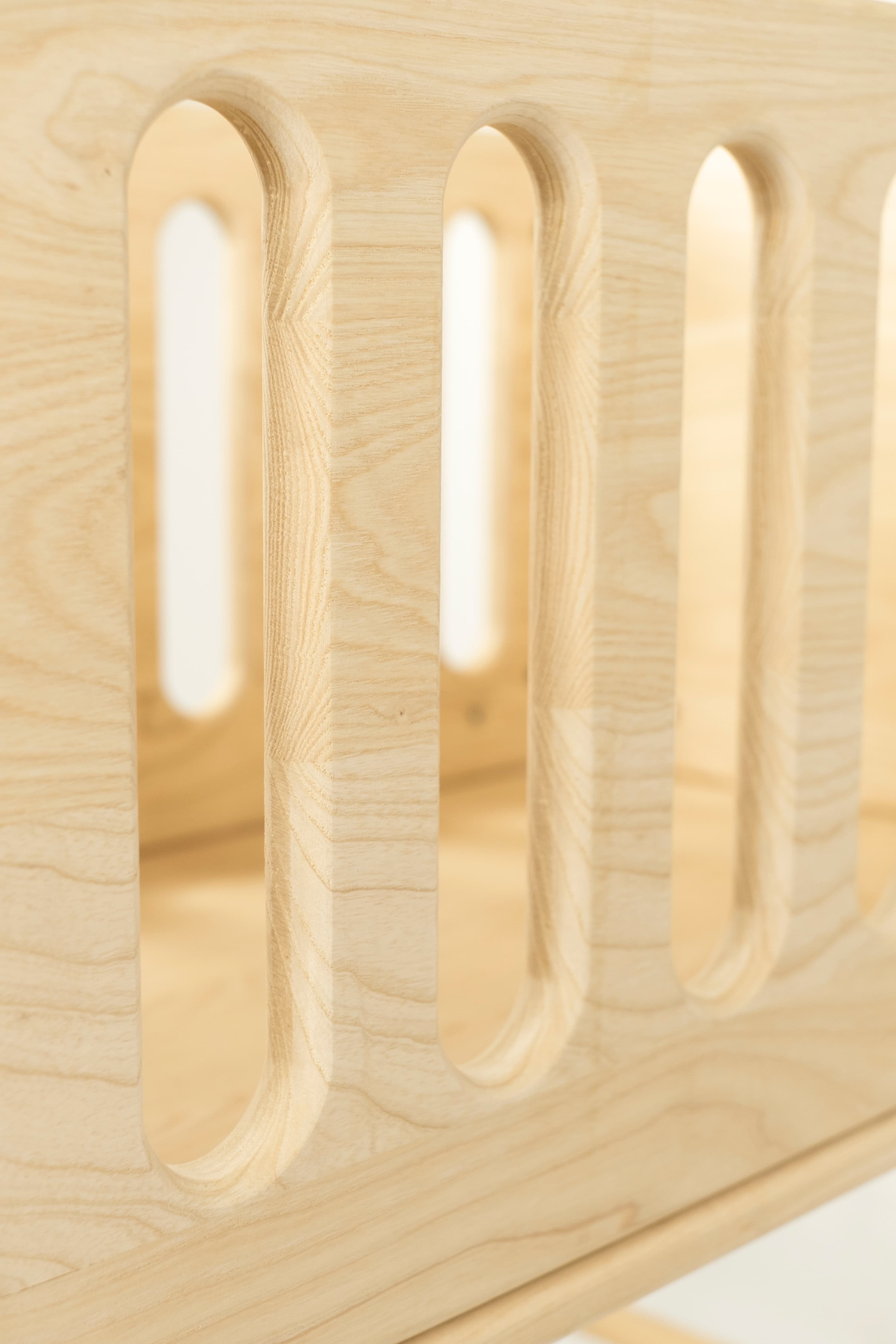
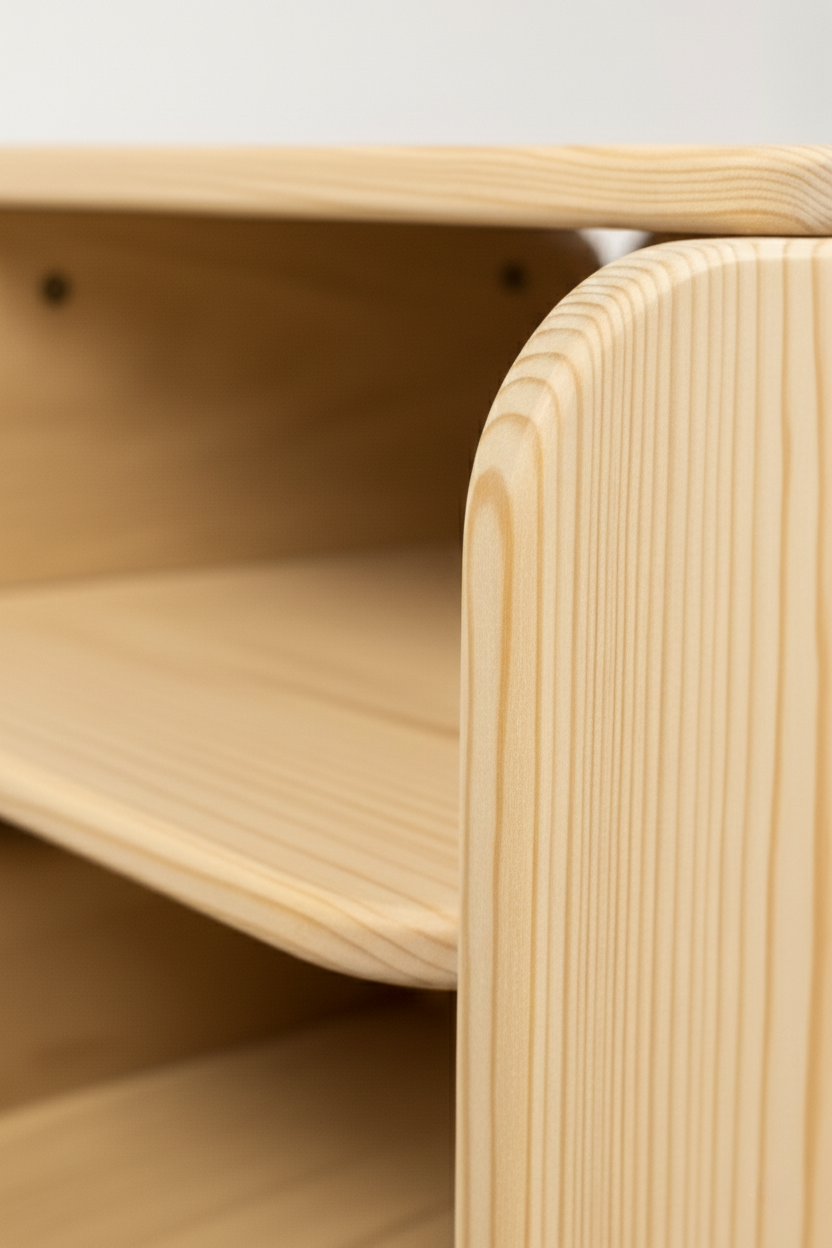
En Circulari usamos pino y fresno de origen ibérico con certificación de gestión forestal sostenible. Pero lo que más nos importa no es solo el papel del certificado: es que podemos rastrear el origen de cada lote porque trabajamos con proveedores a los que conocemos y que están a una distancia que permite esa relación directa.
Fabricamos en nuestro taller de Barcelona. La madera recorre cientos de kilómetros desde el árbol hasta el mueble, no miles. Los acabados son al agua, sin poliuretanos, sin COVs. Y cuando el mueble ya no te sirve, lo recogemos, lo restauramos y le damos una nueva vida con otra familia.
La certificación forestal es el punto de partida. Lo que hacemos con la madera a partir de ahí es lo que marca la diferencia.
Share: