
In short
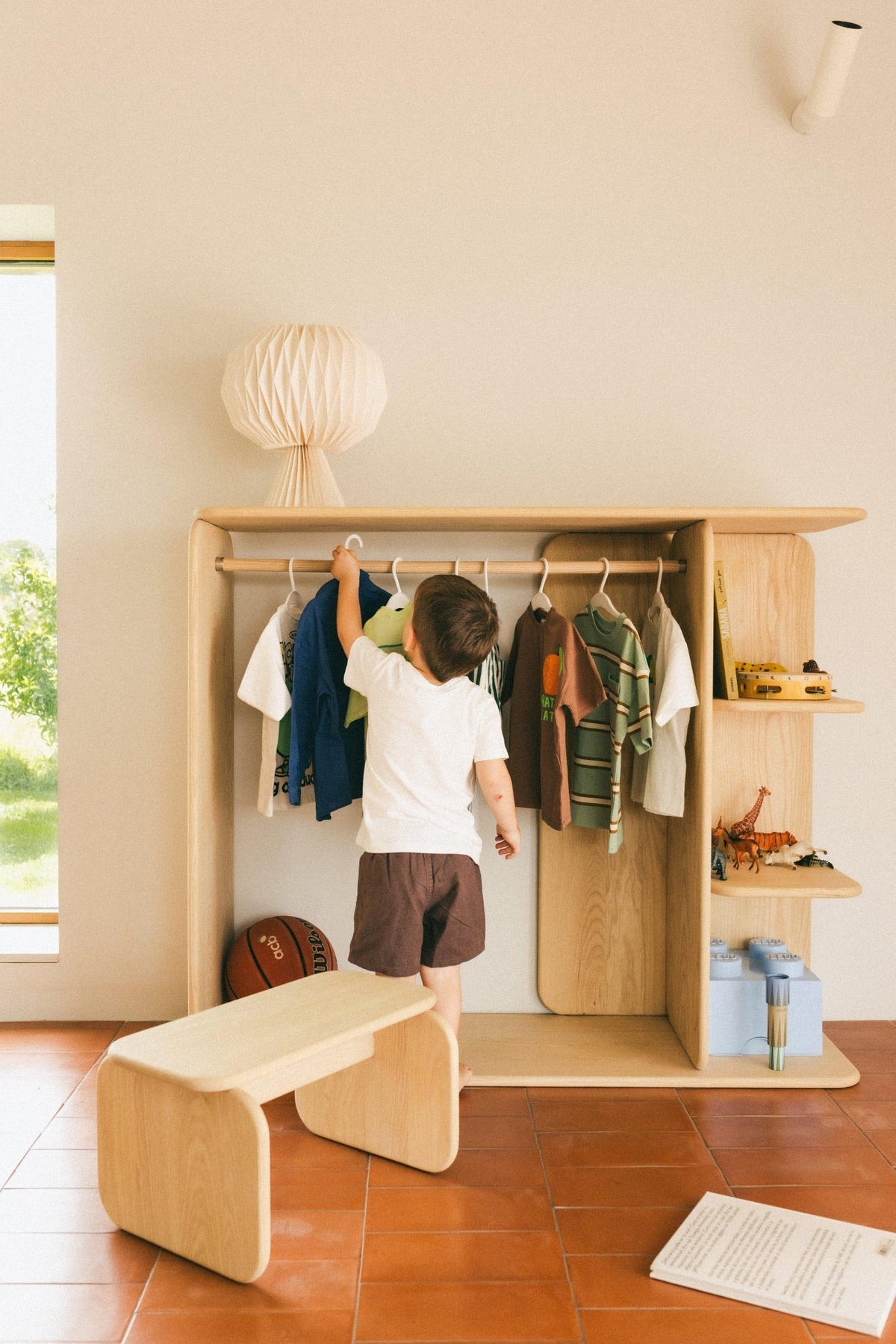
 Naboa open wardrobe
A Montessori wardrobe is an open, low wardrobe built to a child's scale, so they can see their clothes, choose what to wear and put them away themselves. If you are setting up your little one's room, what matters most is the height (everything within reach), the amount of clothing (little and clearly visible) and a piece of furniture that is stable and sturdy. Here is how to decide, using the Naboa open wardrobe as an example.
In the Montessori approach, the environment adapts to the child. An ordinary wardrobe is designed for adults: doors, high rails and drawers that jam. One at their level changes every morning routine: the child decides what to wear, dresses with more independence and learns to look after their things because everything has a visible place.
It does not have to be a «special» piece of furniture: what sets it apart is that it is open (no doors to open), low (rail and shelves within reach) and holds few items on display. If you are also organising toys and books, see our guide to the Montessori shelf.
The rule of thumb is the same as for a shelf: your child should reach the rail and the top shelf standing up and without help, and be able to hang and unhang a coat hanger without the furniture moving. Before buying, measure your child with their arm stretched up and compare it with the furniture's dimensions.
According to the product page, the Naboa open wardrobe measures 120 × 40 × 110 cm, has a hanging rail and a side shelf unit, and is designed for children aged 1 to 6. Always check the product page before deciding.
An open wardrobe packed to the top is a battle: the child can't see what is there, everything falls out and tidying up is impossible. The key is to display little.
Naboa arrives for you to assemble, and its product page includes the assembly guide and plans. You will also find the general summary on our assembly and disassembly page. As a guide, the process is this:
As a general recommendation, fix the wardrobe to the wall with fittings suitable for your type of wall, don't let your child climb it or hang from the rail, and check that it is stable before filling it. If you have doubts about anchoring a specific model, write to us and we will guide you. If you want to know what children's furniture should carry, here is our guide to safety certifications.
The Naboa open wardrobe (499 €) is made in Barcelona from solid pine with a toxin-free water-based varnish. Its natural companion is the Nubia bench (119 €): a multi-purpose solid pine stool where your child sits to put on their shoes and that later serves at the sink or in the kitchen. If you prefer to buy both together, there is the Naboa pack with Nubia bench (599 €).
For more ideas on making the most of the space, read our guide to a small or shared kids' room, and if you are concerned about the material, the comparison of solid wood versus MDF.
Children change size and stage quickly. At Circulari you can return the furniture in good condition and receive a voucher for 30 % of what you paid (it doesn't expire and is transferable) or a 15 % credit note by bank transfer. With Naboa, the voucher would be 149,70 € and the real cost, 349,30 €. The furniture goes to the workshop, is checked and passes to another family.
An open wardrobe at child height, with the rail and shelves within reach, so children can see their clothes, choose them and put them away themselves.
When they start choosing and reaching for their things, around 18 months or 2 years. The Naboa open wardrobe is designed for ages 1 to 6.
At a height your child can reach standing up, without tiptoeing and without help. Measure your child with their arm stretched up and compare it with the product page dimensions (Naboa: 120 × 40 × 110 cm).
Few: only the current season's everyday clothes. The rest is stored and rotated with each change of season or when they grow.
It is good practice with any furniture that has a rail, especially if your child tends to climb or hang from things. Use fittings suitable for your wall.
Ready for the clothes corner? Discover the Naboa
Open solid pine wardrobe with rail and shelf within reach, made in Barcelona, with a return system so you can get back up to 30% when your little one outgrows it.
See the Naboa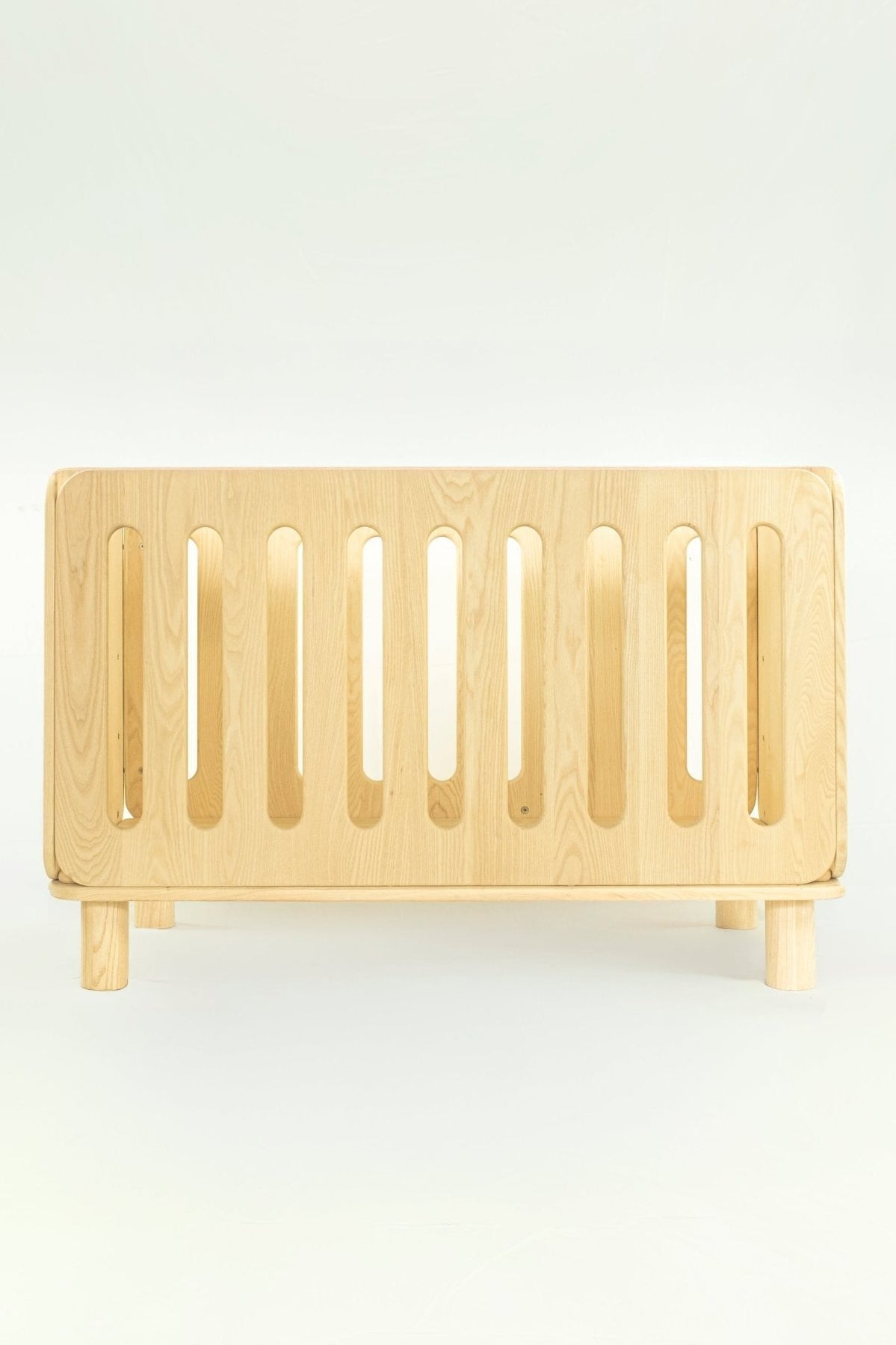
Cuna de madera maciza o cuna IKEA: diferencias y coste real
Read moreabout Cuna de madera maciza o cuna IKEA: diferencias y coste real
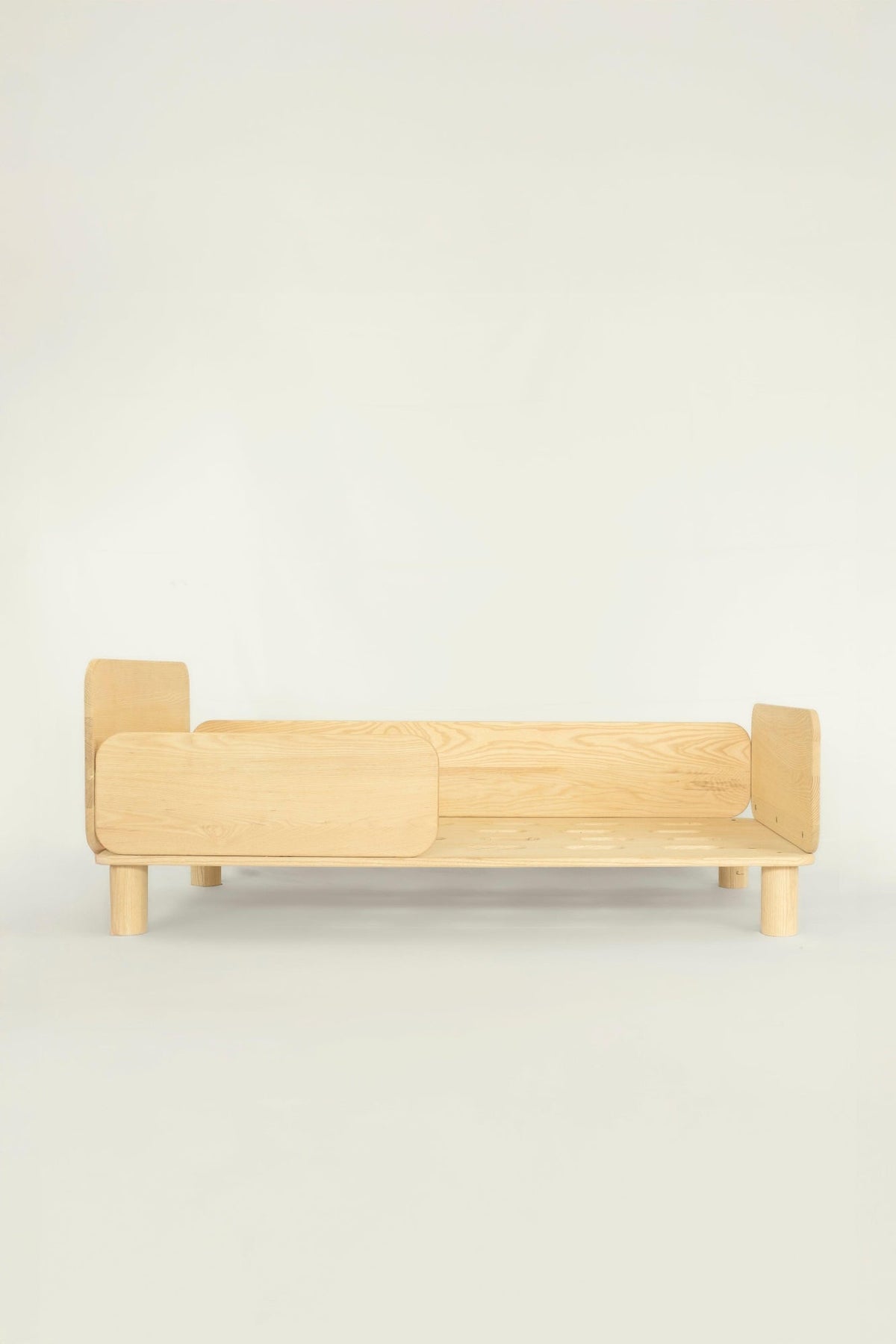
Kids furniture dimensions: chart for the whole range
Dimensions of every Circulari piece in one chart: width, depth and height, bed base, platform or seat height, age and floor space.
Read moreabout Kids furniture dimensions: chart for the whole range
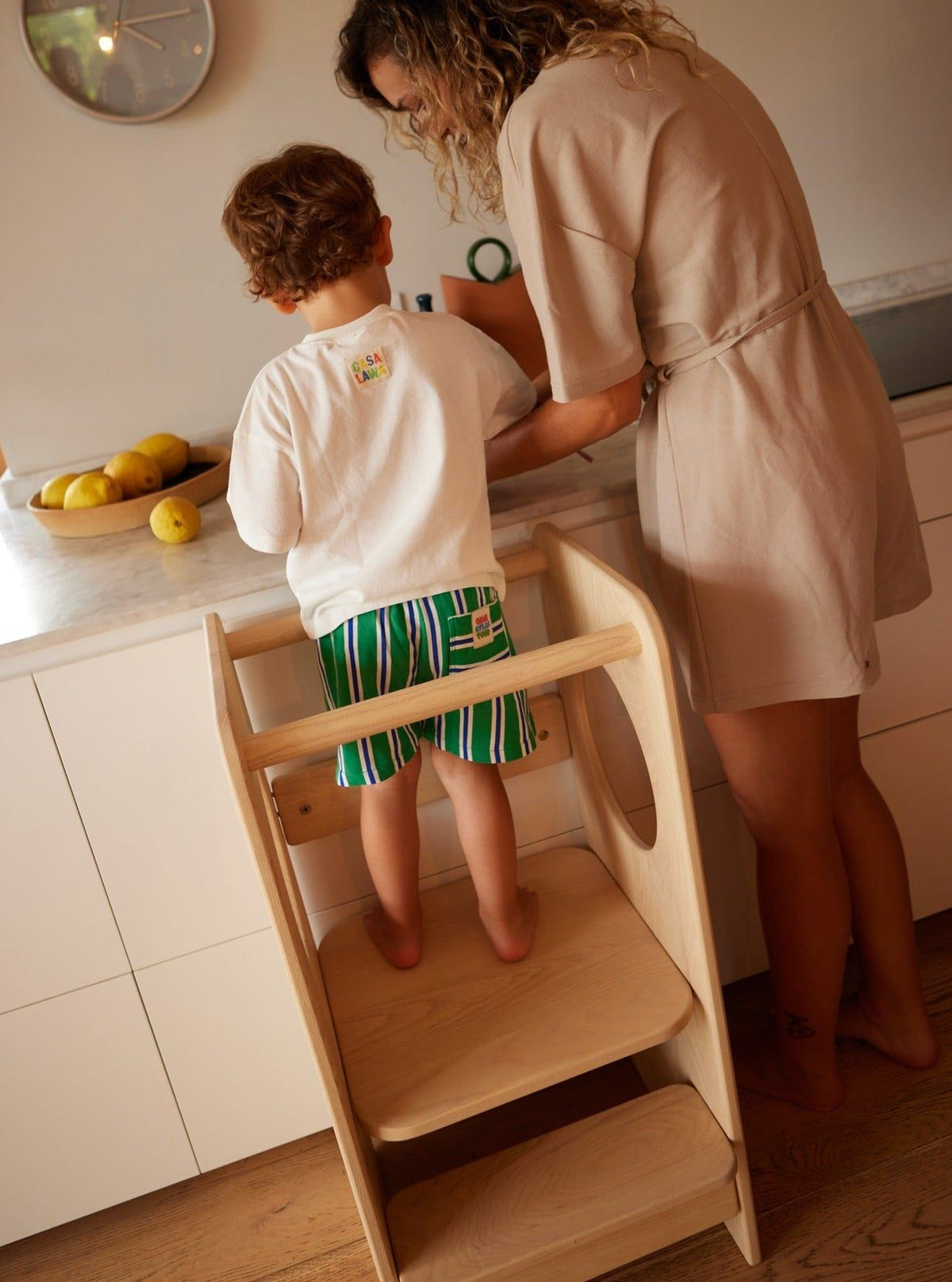
Learning tower or step stool: which to choose by age
Learning tower or step stool: how they differ in height, stability and use, when the Nubia bench is enough and when the Bambai tower is the better choice.
Read moreabout Learning tower or step stool: which to choose by age
Share: